Monthly Archives: April 2010

“I Cannot Tell A Lie: They Were Under My Bed.”

Those of us who have sheepishly returned an overdue library book and paid the seventy cent fine can be a bit less embarrassed now — because thanks to some recent record scrubbing by the New York Society Library, we found out we’re in good company: George Washington has two overdue books.

According to the story in the Guardian:

The library’s ledgers show that Washington took out the books on 5 October 1789, some five months into his presidency at a time when New York was still the capital. They were an essay on international affairs called Law of Nations and the twelfth volume of a 14-volume collection of debates from the English House of Commons.

The ledger simply referred to the borrower as “President” in quill pen, and had no return date.

Sure enough, when the librarians checked their holdings they found all 14 volumes of the Commons debates bar volume 12.

Under the rules of the library, the books should have been handed back by 2 November that same year, and their borrower and presumably his descendants have been liable to fines of a few cents a day ever since.

Doing the math, that adds up to an overdue fee of about $300,000.  My pal Mark Bartlett, the NYSL’s head librarian, approaches this matter delicately and with a diplomacy that would likely have made the first president proud.  “We’re not actively pursuing the overdue fines,” Mark says. “But we would be very happy if we were able to get the books back.”

Conference Call

A few things.

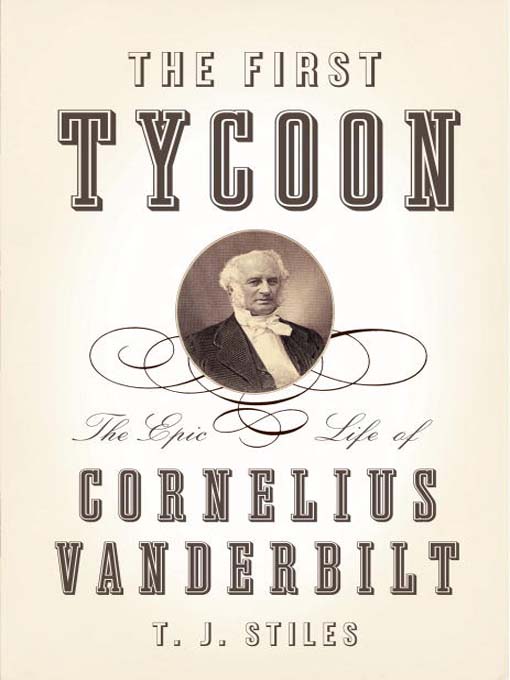
First, here’s a laurel and hearty handshake extended to T.J. Stiles, winner of the 2010 Pulitzer Prize for Biography for The First Tycoon: The Epic Life of Cornelius Vanderbilt. Stiles pulled off a literary hat trick, of sorts, by having his biography awarded both the Pulitzer and the National Book Award for non-fiction.  Plus he’s a Caro fan, which gives him even more points in my book.  Not that he needed them. Anyway, congratulations all around.

Speaking of Pulitzer Prize winners (watch what I do here), we’re less than a month away from the first Compleat Biographer Conference, hosted by the Biographers International Organization (BIO) in Boston on May 15.  It’s your chance to immerse yourself in biography for a day, talking with, listening to and learning from some of the best — including interim BIO President and Pulitzer Prize winner Debby Applegate, the aforementioned T.J. Stiles, Charles J. Shields, Kitty Kelley, James McGrath Morris, and tons more.  It’s a daylong series of workshops and panel discussion on the practical aspects of the craft and art of biography, including a session with agents who represent biographies and non-fiction.  Come on, it’ll be fun.

For more information on the conference, go here.  While you’re at it, stroll over to the home page for The Biographer’s Craft — soon to be the official newsletter of BIO — and put yourself on the mailing list.

At The Gates

Hey, are you wondering why you haven’t heard much on Project Blue Harvest lately?  It’s because after nearly two years of research, conversations, more research, e-mails, more conversations, writing, talking, phone calling, rewriting and revising . . . well, we’re finally ready to go Out on Submission — three of the most exciting words a writer can hear.

Agent J and I haven’t put our horse in the race yet, but we’ve trotted it out to the starting gates.  Early next week, if all goes as planned, the gate drops, the bell rings, and we’re off and running — so stay tuned.  And that’s the last time I’ll use a horseracing metaphor, I promise.

Have a good weekend.

Batteries Not Included

I was in a sporting goods store the other evening, looking at the rows and rows and shelves and shelves of equipment and clothing available for almost any kind of sport or activity, and it got me thinking: I’m not sure if it’s an American thing exactly, but we seem to love our gear and accessories.

When we pick up a new hobby — whether it’s baseball or lacrosse or running  — we love to go out, before we’ve even set foot on a ball field or track, and buy all the gear.  Wanna play golf?  Apart from the clubs, balls and tees that are the required equipment, you can buy golf shoes designed by aerospace engineers, and golf shirts with almost any kind of logo. There are golf bags with jillions of little pockets that can fold up to fit in a briefcase, and golf umbrellas that span large enough to protect Montana from the rain. There are ball markers and ball cleaners and spike tighteners and club scrapers — all of which seem to have bottle openers on them — and countless other little toys and accessories to make life on the links that much easier.  We take all of that stuff, put it on, throw everything in the car, head for the golf course and discover…

…well, we discover that golf can be hard work.  We find out that no matter how fancy the gear is, how great as all the accessories might be, what looks like a fun game still takes a certain amount of skill and work to do well. Even if you never want to join the PGA tour — or even want to become a scratch golfer — it still takes some skill and practice to keep from spraying your ball into the trees and spending all your afternoon in the rough.  Which sucks.  Take it from me.

It can be the same way with writing.  Writing looks fun and relatively easy — after all, the only real equipment you need is a computer with some sort of word processing program or, if you’re old school, a pen and notepad.  And there are plenty of accessories, too — we like desks and laptops and colored pens and stationery and printers and Post-It notes. We picture everything in our work space being just right, precisely conducive to the creative process, so we can get to work.

There’s a great moment in the movie Funny Farm where Chevy Chase — who’s moved from the city to a picturesque farm house so he can write that novel he’s been thinking about — finally sits down at the typewriter in his perfectly ideal and secluded office, types the three-word title at the top of the first page (“THE BIG HIT”) and then . . . sits and stares.

We’ve all been there — that moment when you realize that it doesn’t matter whether you’re on a Mac or a PC, whether you’re using a chewed up pencil or a Mont Blanc pen, or whether you’re at a mahogany desk or the Formica-topped kitchen table.  Regardless of your accessories, you’ve got to get something on that piece of paper.  Writing — like golf or baseball — is suddenly about more than the accessories.  It’s time to create words, to create worlds — and while writers love doing it, it’s still work. As the brilliant William Zinsser says: “I hate writing, but I love having written.”

What tends to happens, then, whether it’s writing or golfing, is we start paring down on our accessories, settling into what’s comfortable — and comforting — to use. Sometimes its a matter of experimentation — maybe the most expensive golf ball doesn’t fly as far for you as a cheaper brand, simply because of the quirks of your particular swing.  Writers do the same thing, discarding gel pens in favor of ball points, using old fashioned, beat up filing cabinets to store story ideas, research notes, and interesting photos, or coming to realize that that great slab of polished oak you’re using for a desk is too intimidating and moving back to the cozier climes of the smaller, coffee-stained IKEA modular.

Or maybe you do find you need a leather golf glove on each hand to keep your swing under control, or you write better with a gold-nibbed fountain pen at a spartan mahogany desk.  Maybe you don’t even need it, maybe you just like it and want it. And that’s okay, too.  Accessories can be a fun part of your work — but it is work, so it’s up to you to determine what you need and what you don’t to get it done. No one else gets to decide that for you.  As I’ve said here before, you just have to go with what works for you.

Now if you’ll excuse me, the new Levenger catalog just arrived.  Surely, there’s something in it I have to have. No, really.
Credit Where Credit’s Due…

Remember several weeks back when I told you of my struggles to find an easy way to transcribe lengthy interviews? (It’s right here if you missed it.  Go ahead. I’ll wait.) At that time, I purchased the Scribe program from MacSpeech, only to find it didn’t work the way I needed. It can’t handle multiple speakers, for example, and has to “learn” the sound of your own voice — at which point you can then speak into the computer and have your words magically appear on screen.  That’s cool and all, but since I don’t write by dictating, that’s not what I wanted or needed.

When I called MacSpeech to let them know of my issue, I was told that since the program was “working as it should,” it was likely I would not be issued a refund — the problem was on my end, not theirs.  I groaned at that, but fair enough — I wrote it off to the Lesson Learned Department.

Well.  To my surprise, several days ago, I noticed that MacSpeech had credited my bank account for the cost of the program.  Yes, they refunded my money — no real hassles, no follow up questions, no fireworks. They didn’t even notify me that they were doing so.

So, since I initially grumbled a bit after my initial contact with MacSpeech, I wanted to follow up and give them a shout out and some credit where credit’s due.  Thanks for understanding my issue, MacSpeech, and for refunding my money. I appreciate it.

And while we’re at it, let me also give a plug to the transcription company I’m using to have my interviews transcribed.  It’s Production Transcripts out in California, and they’ve been nothing short of fantastic.  I got an electronic file within two days, and the transcript was accurate and virtually error-free.  Their costs are based on the length of your recorded interview — they charge by the recorded minute — which allows you to get a fairly good ballpark figure on costs before you send anything. It was a top-notch job, and I’ll be sending more work their way.

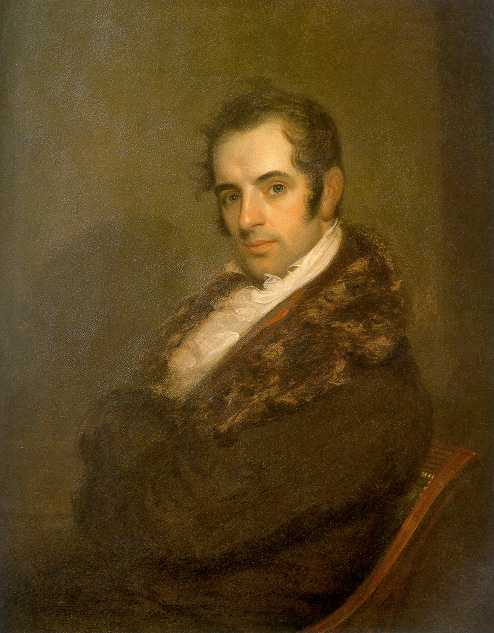
Happy Birthday, Washington Irving!

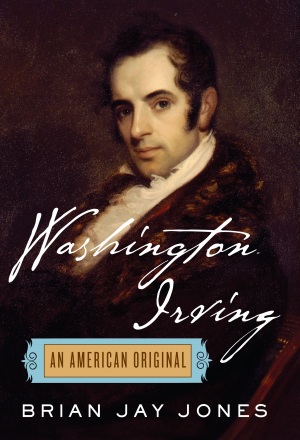
American Literature’s first international superstar was born on this date in 1783, in a New York City still scorched by the fires of the American Revolution.  By the age of five, he would be declared a dunce.  He would barely complete his formal education, yet by age seventeen, would make his debut in print with nine pseudonymous letters in the New York newspapers.

He would miserably study law while wooing the  daughter of his legal mentor — and at her death, would immerse himself in a mock history of his home town, which would explode into the public on the back of a literary hoax.  In that work, he would also give his home town a new sense of identity, wrapped up in the persona of a crusty Dutch historian named Diedrich Knickerbocker.

At age 35, while living in England, he would create the first American international bestseller and introduce to literature Ichabod Crane and Rip Van Winkle.  Yet, he would remain unsure of his ability to earn a living by his pen and would accept a government post in the British embassy, where he would surprise a U.S. President, and future president, with his political acumen.

And still, the so-called dunce would teach himself several languages, study in the Spanish archives, and publish books on Spanish history, Christopher Columbus, and the prophet Mohammed. Years later, his expertise in all things Spanish would lead to his appointment as ambassador to Spain.

Adored by the public, courted by politicians, and admired by fellow writers, he would spend his later years writing a five-volume biography of George Washington, the president and American icon after whom he had been named. His death would be mourned by a nation, his legacy celebrated by the literary lions of the day. And while his reputation took a pummeling in the early part of the 20th century, his creations have become a part of our American cultural DNA, and his reputation is, deservedly, on the rise.

Celebrate Washington Irving today, on his 227th birthday.