Sorry for the lack of updates lately — I’ve been plugging away to take care of some things for Project Blue Harvest. But I didn’t want the snow pictures to be the most recent post on the blog, since a brief rain storm (and temperatures in the high 40s) washed most of the snow away. Now it’s just cold and dry, which makes for Great Fun and Games with Static Electricity.
With the holidays just around the corner, I can’t vouch that I’ll be checking in over the next week or so. But if I don’t see you before 2010, have a great holiday and happy new year. Here’s to you!
Fall seems to be officially here. Temperatures have settled squarely into the low- to mid-70s, and the air is starting to get that delicious crisp edge. Some evenings you can smell fireplace smoke, cutting its way through the chill to find your nose. The weather is that odd combination of brisk and balmy, so you can wear shorts as you work in the yard, but still need a sweatshirt, preferably with the sleeves pushed up to your elbows. It’s my favorite time of year.
Fall also means Halloween is just around the corner, as hard as that is to believe. My wife is an absolute Halloween Junkie. While she’s not a fan of the horrifying, she does delight in the goofy fake-scary decorations, from signs that say “EEK!” to life-size plastic skeletons we do all sorts of terrible things to. And at the end of the season, we’re always very careful to pack the skeletons up again with their upper bodies in one box and their legs in another. That way, if they come to life and want to go on a killing spree, we’ve at least made them easier to outrun. Because you can never be too sure.
If you’ve never been to either event, try like heck to make it. I’ll try to do a better job taking pictures this year so I can put up a few to give you an idea of just how neat these events can be. Plus, I’m working with Historic Hudson Valley to see if we can come up with something fun and Washington Irvingish to do when I’m there. I’ll keep you posted.
Finally, I’m working hard on some sample chapters for my latest project, to see if I can make anything come of it. I’m pleased with what I have so far — and Barb gave me some spectacularly good edits on the first chapter — but we’ll see what happens. If this comes together, I really will explain everything that’s been going on for the last 18 months. Hopefully, all will become clear at that time.
September 17, 2009 marks the 222nd anniversary of the day 39 delegates to the Constitutional Convention in Philadelphia signed their names to their completed document and, in a burst of what can only be called skeptical optimism, sent the Constitution to the states for formal ratification. (My home state of Maryland, I’m pleased to say, while it made a generally poor showing at the Convention itself—two of its five delegates didn’t even sign the thing — was the seventh state to ratify, officially approving the document on April 26, 1788.)
Constitution Day is one of those holidays like Flag Day—it gets a mention on most pre-printed calendars, but we rarely stop to reflect on what the day actually means. I want you to do so today, if only for a moment.
Just before the Constitution was signed, Benjamin Franklin asked to make a few remarks—which the ailing Franklin would have read aloud by fellow Pennsylvanian James Wilson. Franklin had issues with the Constitution, but indicated he would support and sign the document, for “having lived long,” he said, “I have experienced many instances of being obliged by better information, or fuller consideration, to change opinions even on important subjects, which I once thought right, but found to be otherwise.” In other words, even Ben Franklin can get it wrong from time to time.
The next part of Franklin’s speech is, I think, particularly appropriate today, given the increasingly rancorous partisan bickering that not only makes tempers flare, but also makes it seemingly impossible to agree on anything:
Most men indeed as well as most sects in Religion, think themselves in possession of all truth, and that wherever others differ from them it is so far error. Steele, a Protestant, in a Dedication tells the Pope, that the only difference between our Churches in their opinions of the certainty of their doctrines is, the Church of Rome is infallibleand the Church of England is never in the wrong. But though many private persons think almost as highly of their own infallibility as of that of their sect, few express it so naturally as a certain French lady, who in a dispute with her sister, said “I don’t know how it happens, Sister, but I meet with no body but myself, that’s always in the right.”
Ultimately, said Franklin, “I consent, Sir, to this Constitution because I expect no better, and because I am not sure, that it is not the best. The opinions I have had of its errors, I sacrifice to the public good.”
You can see Franklin’s statement in its entirety here.
If you’re looking for a good read on the Constitutional Convention, I’m going to buck the trend here and recommend David O. Stewart’s The Summer of 1787 over Catherine Drinker Bowen’s Miracle At Philadelphia. While Bowen’s book will probably always be the definitive version of events, I like Stewart’s decision to concentrate on personalities and politics, and not just process. And I say that not because David’s a friend, but because it’s the truth.
And once you finish reading about the creation of the Constitution, the Library of America will give you the rest of the story in two gorgeous volumes, The Debate on the Constitution: Federalist and Antifederalist Speeches, Articles, and Letters During the Struggle over Ratification. As I said of these books years ago, if you think that mud-slinging, negative campaigning, and assaults on the integrity of the opponent are modern day creations, you’ll need to think again. Our 18th century pundits could be just as nitpicky, petty, and ascerbic as their present day decendants. And they did it all in more than 140 characters.
Finally, pause for a moment and remember the Founding Fathers who created the greatest system of government in the world–and did it in only four pages, no less. We have a tendency to elevate our Founders to near-mythical status—just as Thomas Jefferson (who was not at the Convention) called those in attendance an “assembly of demigods.” But the truth is, they were something much more wonderful, much more interesting: human beings. They bickered, they politicked, they called each other names, they rushed through work when they wanted to go home, and yes, just as politicians do today, they postured and swaggered, even behind closed doors.
But they could also listen, compromise, see the greater good, argue persuasively, and write beautifully — and those qualities, ultimately, are what make the Constitution such a wonderfully human — and, in this case, uniquely American — invention. And thanks to them, that unique invention is all yours. Take good care of it.
Let’s go out on a little something for my fellow Gen Xers:
We returned from our quick sprint through Rome last night, boarding our plane in Rome on Saturday night at 4:00 p.m., Maryland time, and finally arriving at BWI yesterday afternoon. We’re exhausted, and I’m nursing a weird cross between allergies and a head cold (and my ears have yet to unplug from the pressure change on the airplane), but the trip was a rousing success.
Despite the brevity of our visit and the time Barb had to devote to her conference, we still managed to hit all the big sites in the area, snapping lots of photos (a few of which I might post here) and dodging speeding Roman traffic. Roman pedestrians, we found, are absolutely fearless about stepping off a curb into the whoosh of traffic, casually holding up one hand to slow oncoming traffic even as they step directly into the path of a speeding Fiat. We felt rather wimpy standing there — in a crosswalk, no less — waiting helplessly for traffic to break, before finally following close behind an elderly gentleman who went around us and stepped in front of a screaming milk truck, confident it would stop if he barely raised his hand. And it did.
The weather was colder than normal — we seem to have a knack for hitting places during an unseasonable spell of weather — but the cold also kept the sites virtually free of vistors, so we were able to get into the Sistene Chapel and St. Peter’s with absolutely zero wait. Our only real disappointment came when we located the church of San Luigi dei Francesi and found that the three Caravaggio paintings in the Contarelli Chapel were being restored and were therefore unavailble for viewing.
But we’ll be back — we know so, because we threw coins over our shoulders into the Trevi Fountain.
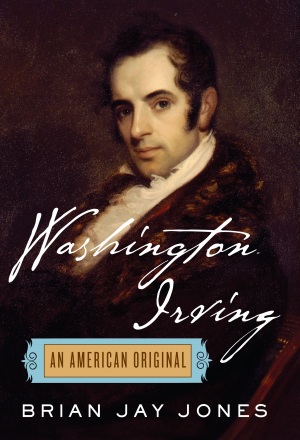
First Things magazine — a magazine and blogging site which calls itself the “Journal of Religion, Culture, and Public Life” — has a really thoughtful piece on Washington Irving, and how Americans would do well not only to re-embrace the man, but to learn from the lessons he taught us:
Washington Irving is of particular importance, especially now that so many of those who howled at the specter of a systemically evil nation are silent at the election of Barack Obama. What will many faculties do, now that their view has been thus radically altered or at least thrown into question? The culture of iconoclasm can only endure so long as one wants to smash an icon. Once one reveres the icon, an inevitable conservatism sets in—there is a natural desire to preserve memories and eventually even the traditions and institutions recognized as having been virtuous.
Intrigued? You should be. You can get the rest of it right here. And my thanks to Eric Seddon at First Things for his column — and for the very kind tip of the hat in the first paragraph. I’m delighted to be considered one of the “saner minds.”
Buried on the back page of today’s Washington Post is an obituary for one of jazz’s truly unique voices: singer, songwriter and sophisticate Blossom Dearie, who passed away over the weekend. She was 82.
Born April 29, 1926, in East Durham, N.Y., Marguerite Blossom Dearie dropped her first name to bolster a musical career that began with early training in piano and moved to jazz vocals. By the mid-1940s, she was a member of the Blue Flames, associated with Woody Herman’s orchestra and with the Alvino Rey band.
What the Associated Press article doesn’t mention, however, is that there’s an entry on her resume that makes Blossom Dearie a major figure in the Pop Culture Pantheon of GenXers: she was the voice behind several Schoolhouse Rock! tunes.
It’s true. Blossom lent her unique little girl voice to two of SHR’s most memorable songs, “Figure Eight” and “Unpack Your Adjectives.” The song “Figure Eight” is probably remembered best for its creepy melody, which Dearie sings in a spooky “I see dead people!” sing-song sorta tone. Once you heard it, it was a song you couldn’t forget, even if you changed the channel with a shudder the moment you heard its faux vibraphone opening notes on Saturday morning.
Put a bowl of Freakies cereal in your lap and listen as Blossom does her thing for the number eight:
While Mother Nature was an enormous tease all day yesterday — and the weatherpeople didn’t help things by wringing their hands and declaring that the big one is on the way! only to find that it wasn’t — the snow is finally falling here in Maryland. Small, drizzly flakes falling as fast as rain, and coating everything with a powdery white blanket. School is cancelled, as are most evening events. And it’s cold.
However, there is someone who is definitely not cold today: blog pal Jamie Ford, whose debut novel Hotel on the Corner of Bitter and Sweet arrives in bookstores today. And the great reviews are already pouring in. Here’s Garth Stein, for example, author of The Art ofRacing in the Rain:
“Jamie Ford has written a tender and satisfying novel that is tucked into a part of Seattle history we would rather not face. Set in a time and a place lost forever, Hotel on the Corner of Bitter and Sweet gives us a glimpse of the damage that is caused by war–not the sweeping damage of the battlefield, but the cold, cruel damage to the hearts and humanity of individual people. Especially relevant in today’s world, this is a beautifully written book that will make you think. But, more importantly, it will make you feel.”
And then there’s the Library Journal, which says:
“Ford expertly nails the sweet innocence of first love, the cruelty of racism, the blindness of patriotism, the astonishing unknowns between parents and their children, and the sadness and satisfaction at the end of a life well lived. The result is a vivid picture of a confusing and critical time in American history. Recommended for all fiction collections.”
Jamie’s homepage is here, and there’s a really terrific interview with him here. And, of course, you can order his book right here. And congratulations, Jamie!
In the course of a recent conversation with a lifelong Marylander — which I am not — I asked if she could provide me with directions that would help me avoid a particularly busy intersection on my way home.
“Which way do you usually take to go home?” she asked.
We live in a mostly rural part of the state, so much of our coming-and-going is via small, two-lane Maryland State Highways with official names like MD 355 and MD 27. Locally, we sometimes call them “Frederick Road” or “Ridge Road,” but on a map, they’re MD 355 and MD 27.
“Well,” I said, almost unconsciously drawing a map in the air with my hands like I always do, “I take the 355 to the 27, up past the 124….”
She barely stifled a laugh. “You’re not from around here, are you?”
“Come again?” I said.
“What’s with ‘the’?” she said. “THE 355. THE 27…”
And you know, that’s actually not the first time that’s been pointed out to me. I grew up in New Mexico, where the long distances between towns make highways a normal mode of transportation, and we tend to refer to highways as THE 25, or the 40, or the 247. Ask us how to get from Albuquerque to Roswell, and we’ll tell you to take the 40 east to the 41 south, follow it down to the 42 at Willard — which becomes the 247 at Corona — then take the 285 south into Roswell.
Not Marylanders. They’d tell you to take 40 east to 41 south, and so on, completely omitting the article “the.” Is it done in the name of efficiency? Probably not. It’s just the way it’s done — and I had hardly noticed until it was pointed out to me.
And that got me to thinking about other local or regional language choices — they’re not even necessarily colloquialisms or colorful turns of phrase distinct to an area — no “you ‘uns” or aphorisms like “white on rice.” They’re just everyday, informal word choices.
Here’s another one: at the grocery store, how would you ask for carbonated beverages, which might be sold under names like Coca-Cola or Pepsi or 7-Up?
I call it soda. But move a bit further east over on the eastern shore of Maryland, and signs advertise it as “soda pop.” My cousins in Kansas, meanwhile, just call it “pop,” while some of my friends from the south call it “coke” as a generic.
What do you call it? And what other quirky word choices do you hear made in your particular area?
Made it safely back from Richmond late Monday night — we took back country roads to avoid the I-95 and any potential bottlenecks of DC-bound traffic, but the roundabout route meant it took us a bit longer to reach home. So the dog had to spend an extra night in the doggy hotel, which I’m sure she didn’t mind a bit, actually.
We decided to avoid the crowds and the cold and stay home and watch the inauguration on television. I left the house only briefly, at 7:30 a.m., to go pick up the aforementioned dog at the kennel, and while the roads were dead, the electronic signboards over the I-270 were flashing notices that the Metro was already full and parking was gone.
As it turns out, it didn’t get as messy in the District as we worried it might. It was perhaps more packed than it has ever been, but crowds were orderly and — thank god — no one was hurt or died from exposure, as local authorities were fearing. Good show, everyone.
I’ll confess to getting choked up, as I always do, while watching the smooth transition of executive authority — the true and thrilling miracle of a republican government. Two men — one president, one not — enter the Capitol together and emerge forty minutes later with the other man as president, while the former president returns to life as a private citizen. And you can thank George Washington for that particular precedent.
As for Obama’s speech . . . I’ve heard some grumbling that it didn’t rise to a level of soaring rhetoric some were expecting — that there were no “Ask not what your country can do for you…” moments. I agree that it wasn’t full of the Sound Bites many might have been waiting for; but Tuesday wasn’t really the day for that sort of speech. This was his Working Speech — one of these You And I Need To Talk kind of speeches. It was more frank and sophisticated than it was beautiful — more T.S. Eliot than Robert Frost.
But it worked. And there were still moments that I think will come crawling out and etch themselves in granite in coming years. “We reject as false the choice between our safety and our ideals,” is a declaration worthy of Roosevelt or Reagan or Lincoln.
My favorite line, however, is one that got a bit lost in the wash, but I liked for its punchy language and defiant optimism: “…because we have tasted the bitter swill of civil war and segregation, and emerged from that dark chapter stronger and more united, we cannot help but believe that the old hatreds shall someday pass.”
Any time you can work the words “bitter swill” into a presidential speech, you’ve got yourself a winner.
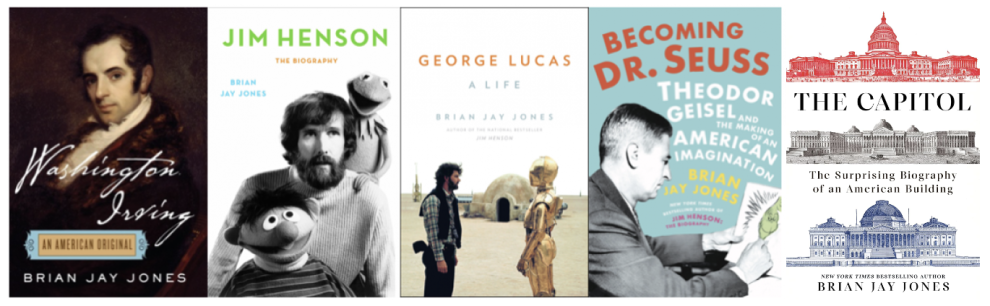
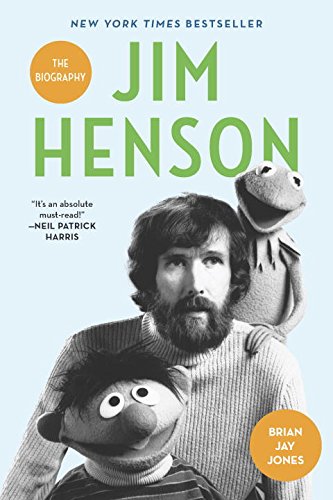
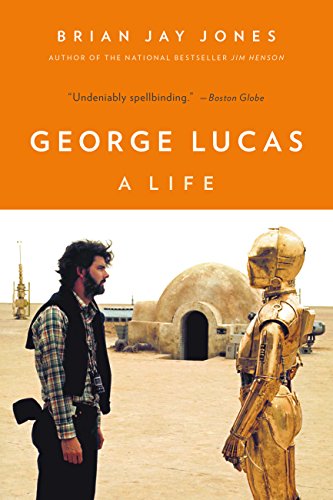
Welcome to the official website of Brian Jay Jones - that’s me, the writer and biographer and not the dead Rolling Stone. Or the live aeronaut. Keep trying.
 September 17, 2009 marks the 222nd anniversary of the day 39 delegates to the Constitutional Convention in Philadelphia signed their names to their completed document and, in a burst of what can only be called skeptical optimism, sent the Constitution to the states for formal ratification. (My home state of Maryland, I’m pleased to say, while it made a generally poor showing at the Convention itself—two of its five delegates didn’t even sign the thing — was the seventh state to ratify, officially approving the document on April 26, 1788.)
 over Catherine Drinker Bowen’s
  . While Bowen’s book will probably always be the definitive version of events, I like Stewart’s decision to concentrate on personalities and politics, and not just process. And I say that not because David’s a friend, but because it’s the truth.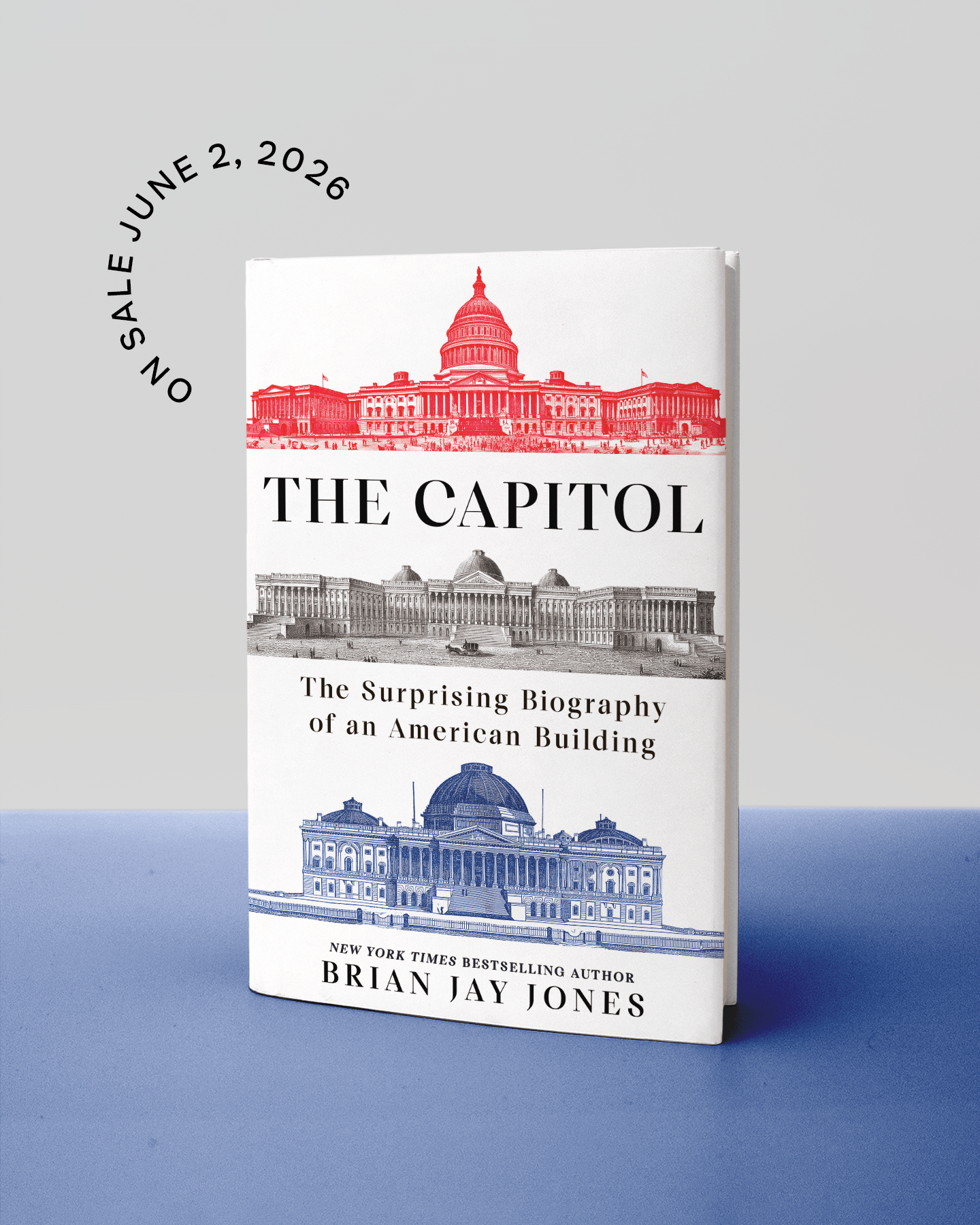


 Brian Jay Jones