
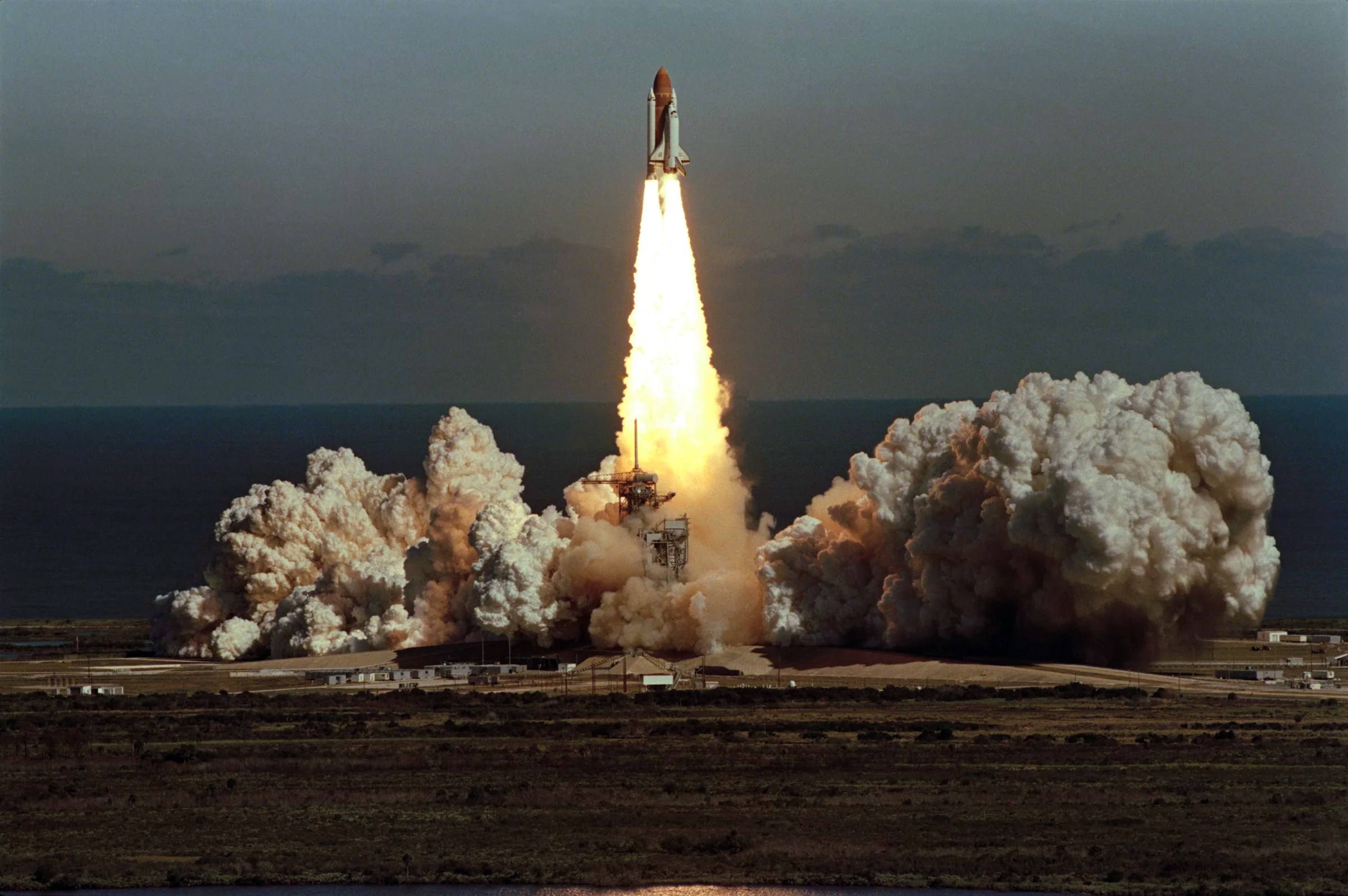
Forty years ago today, the Space Shuttle Challenger disintegrated nine miles above Cape Canaveral, seventy-three seconds after takeoff, following the explosion of its main booster rocket.
It was a pivotal moment in GenX’s collective memory, the one we thought was going to be “our JFK assassination”–the “where were you when…?” question–until a September morning 15 years later. But it’s still a moment seared into our psyche–and yeah, we all remember where we were, when . . .
Me, I didn’t see it happen live. In January of 1986, I was a freshman at The University of New Mexico (and wow, does that make me feel old) and had a job working as the night editor for the campus newspaper, which kept me up into the early morning hours nearly every day. So I was barely out of bed on Tuesday morning when a friend of mine came to pick me up in my dorm room to walk to our 11:00 a.m. class. He asked me if I’d heard the news about the space shuttle. I said I hadn’t.
“It blew up an hour ago,” he told me.
All I remember is stammering the stunned question, “Did the astronauts survive?” He shook his head sadly.
We walked to class not knowing much more–and in the days before cell phones and iPads and lightweight TVs hanging in nearly every classroom, we didn’t get to see any footage until we watched the news much later in the day.
That wasn’t true for a lot of my fellow GenXers, though. An awful lot of you watched in classrooms, on a television rolled in on a wobbly metal cart, to see the launch of the shuttle carrying the first civilian–a schoolteacher–into space. GenX saw the entire thing happen live, a communal cultural experience that shaped a generation as excitement and awe turned to shock and horror. And all broadcast live on CNN, which was the only 24-hour news channel at that time.
Here’s CNN’s live feed from that day–a morning that looked like just another regular January morning and a run-of-the-mill shuttle launch. What we didn’t know is that a combination of politics, parsimony, and publicity had likely made what happened 73 seconds after takeoff mostly inevitable.
I was absolutely captivated by the Challenger story, and over the next decades, read everything I could about it. I was always particularly fascinated by the investigation that happened afterwards, which featured its own kind of political intrigue and drama, with secret informers, passed documents, even a “Deep Throat” figure who would help break open the entire investigation into the cause of the explosion.
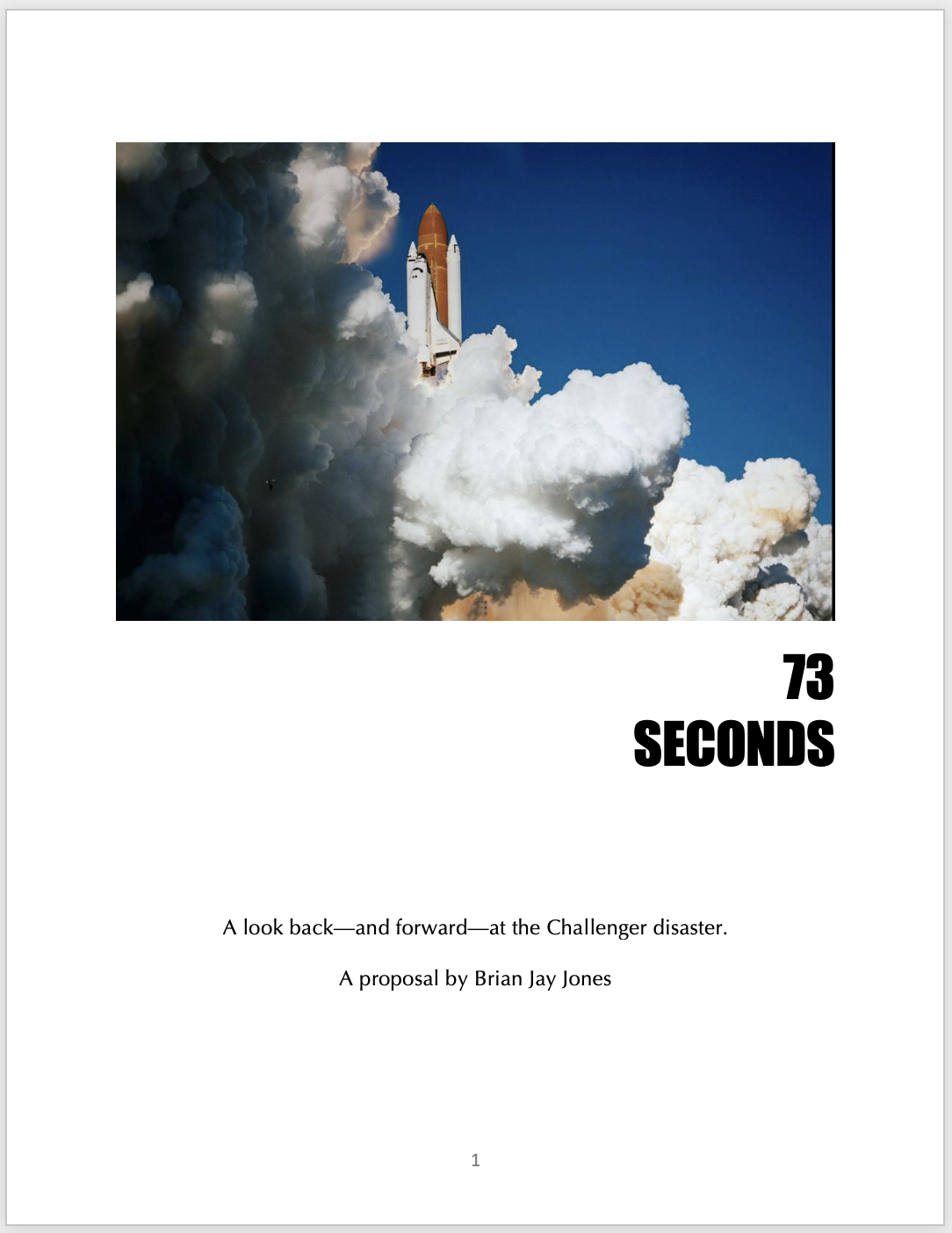
Back in early 2020, in fact, I briefly considered making the Challenger and the subsequent investigation my next Big Project, envisioning it as a kind of political thriller. I had even gotten as far as putting together a proposal for a project I was calling 73 Seconds that had been enthusiastically received by my editor . . . when we learned that Adam Higginbotham, the same author who had written the terrifyingly terrific Midnight in Chernobyl, was also taking on the subject.
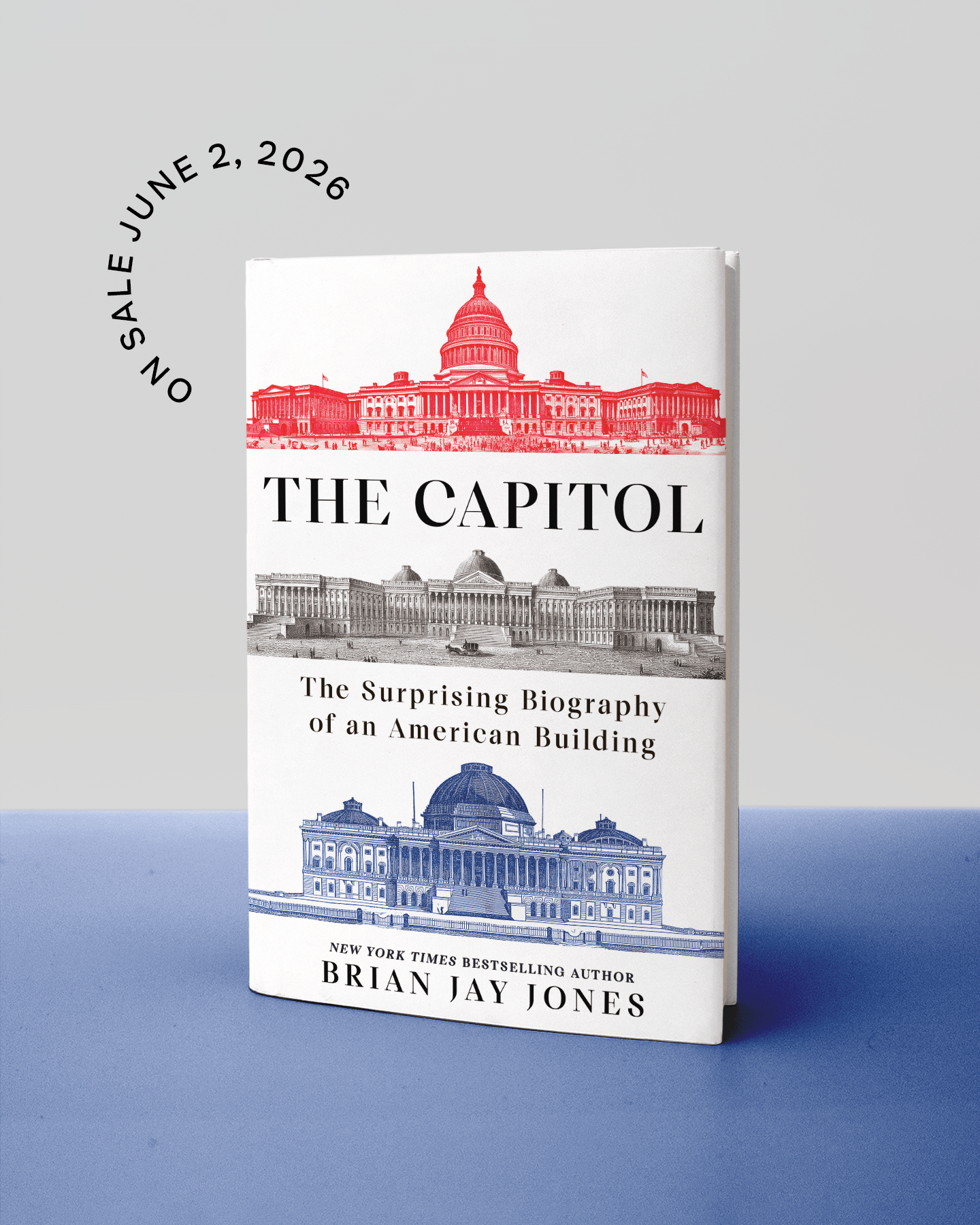
I couldn’t even be mad about it; there are certain writers who are just made for certain subjects, and as far as I was concerned, there was no better writer to take on Challenger than Adam. I pulled my proposal, and moved on to The Capitol a little more than a year later. Adam, meanwhile, finished his book, which came out in 2024 to rave reviews. Go read it. That cat can write, man.
Anyway, that’s where I was on January 28, 1986 — a major turning point in American history and in the modern American identity. How about you?


 Brian Jay Jones