Running In Place

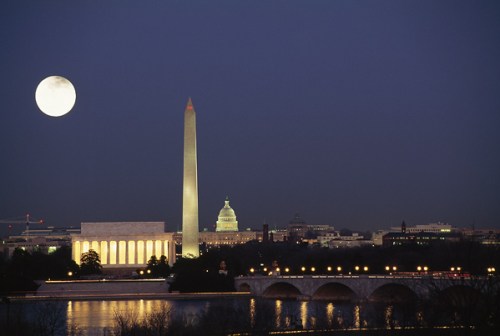
During May’s BIO conference, Lyndon Johnson biographer Robert Caro was presented with the BIO Lifetime Achievement Award—a moment that brought the crowd enthusiastically to its feet. On receiving the award, Caro gave a typically thoughtful—and moving—speech on one of my favorite topics, the importance in biography of “sense of place.” It’s all great stuff–and take it from someone who lives here, you will never hear the U.S. Capitol building described quite so majestically anywhere else. You’d be running, too.

Confused? Don’t be. Have a look, and enjoy:

A Sense of Place from Biographers International Org on Vimeo.

Literary Detectives? Or Just Plain Nosy?

Over at the Washington Independent Review of Books, my colleague Charles J. Shields discusses the art and craft of research in biography—from rooting through personal belongings and private letters and papers, to rummaging through newspapers and digital archives.  Has the rise of the internet and online sources made it easier to research a life? Or has it merely made for more “I Wake Up Screaming” moments?

Charles discusses it all with his usual good humor (and a really great headline), and picks the brains of other biographers—including, I must humbly admit, yours truly.  But don’t let that stop you from reading it.  Go get it — and there’s more to come, so stay  tuned.

Take The A Train . . . Provided It’s Going The Right Way, Of Course.

I hopped the 6:21 a.m. Acela train to New York yesterday, on my way up to have my second extended sit-down session with An Amazing (and Important) Person. It was my first time on the Acela — normally I’m a Northeast Regional kinda guy, but I couldn’t make the generally skittish NER work, as one arrived waaay too early, while the other pulled into Penn Station much too close to my meeting time. And given that the NER is famously delayed on its arrival in New York, I didn’t want to risk missing one moment of the three hours my subject had generously set aside for our conversation.

After riding the NER almost monthly for the last year or so, being on board the Acela seems like stepping onto the set for Star Trek: The Next Generation.  Everything seems vaguely futuristic: doors open between cars at a touch (and without the rattle of the NER), the seats look like command chairs, and the cafe car features a streamlined bar area where diners sit on stools, rather than at the cramped booths of the NER. There’s even wi-fi humming throughout the train, allegedly for the courtesy of business passengers who need it for work, but I notice that most passengers — including yours truly — are using it to check Facebook or update their Twitter feeds.

On my arrival in Penn Station, I decide to see if I can navigate the underground tunnels that will take me to the Red 1 subway line I need to get to my destination (usually I exit Penn Station then walk outside for the two blocks or so it takes to get to the station at 34th Street). I’ve tried to do this before, but ended up either dead-ended or completely turned around, and thus simply headed for the closest EXIT sign, which, more often than not, seemed to eject me into the middle of a shopping mall.

This time, however, I manage to successfully weave my way to the subway station, follow the arrows for the 1 and board the train marked 242nd Street.  For a moment, I’m very pleased with myself for my successful navigation of a system that your average New Yorker can navigate drunk—then immediately realize, as I watch the street numbers at the subway stations go down instead of up, that I’m headed the wrong way.

Unlike the Metro in Washington — where you can exit any train boarded in error, cross over to the other platform and board the correct train without ever exiting the Metro — most stops in New York require that you exit the station, cross the street, and re-enter the station (and pay again) for the train going the other direction.  I had learned this lesson months earlier when I boarded the wrong train from Long Island to Brooklyn, but that apparently didn’t stop me from boarding the wrong train at 34th Street.  Rats.

Humbled, I exit and re-enter and board a train going the right way, and make it to my interview with gobs of time to spare — so much so that I have enough time to sit for a bit in a park overlooking the Hudson, where I watch a young woman get pulled along like a waterskiier behind the five large dogs she was walking at once.

At ten on the dot, I ring the bell at my destination, where I’m greeted like an old friend. While we’ve traded e-mails several times, this was only our second face-to-face — but I’m welcomed enthusiastically and ushered into a cozy living room with comfortable furniture and framed by a large open window overlooking the street. For the next three hours, as a cool breeze and birdsong flutter in through the open window, we have a wonderful conversation, during which I scribble notes frantically on a yellow note pad, trying to get it all down and completely ignoring the lines on the paper as a I scrawl in large cursive with a black felt tip. At one o’clock, we’re done. We shake hands warmly, and my subject makes me promise we’ll get together again soon.  It’s a deal.

Afterwards, I sprint for the subway — and board the correct train this time — then slide into a booth at the TGIFriday’s at Penn Station, fire up the laptop, and start typing my notes as quickly as I can while everything’s still fresh, stopping only a few times to squint at my handwriting to figure out what I’ve written.  By 2:45, I’m only about a third of the way through my notes, but it’s time to catch my train back to Maryland.  This time, I’m on the Northeast Regional, which gets up in my face by pulling into Penn Station right on time.

On the ride home, I grab a seat, as I usually do, in the Quiet Car, where chatter and phone calls are strictly prohibited. I do this even when I don’t have work to do because if I don’t, it seems I always end up with someone in the seat next to me who spends the three-hour train ride back to DC discussing the results of their latest physical, their aunt’s rocky marriage, and the personal lives of everyone in their office.  I drop the tray at my window seat, crank up the laptop again, and return to my task at hand for the next 90 minutes or so.  The seat next to me is eventually occupied by a Richmond-bound passenger in a ballcap and shades, who plays video baseball on his iPhone, and tries briefly to engage me and the woman across the aisle from him in conversation. From our stage-whispered responses, he realizes he’s committing a breach of protocol — but that still doesn’t prevent him from answering a phone call and chatting for several minutes before a conductor stops by and loudly announces that those who wish to talk on the phone must move to another car — “or I will put you out,” he adds matter-of-factly. The phone disappears.

I get off at the BWI stop, pay for my parking (when will the BWI station finally get all their ticket booths working??) and head for home in DC-Baltimore rush hour traffic.  To my surprise, I’m home before 7 p.m, just in time for Barb, Madi and I to take in the new Pirates of the Caribbean movie, which we all thought to be a bit plodding and about 45 minutes too long — but that’s for another time.
A Quick Rundown

Apologies for being away so long — I keep meaning to update here each day, and even get as far as opening up the blogging window and then  . . . well, things seem to get away from me, and I end up closing out the window.  In lieu of a proper post, then, here’s a quick rundown on what I’m up to:

– The BIO conference was a spectacular success, well-attended with truly interesting panels, and an amazing lunchtime keynote address by Robert A. Caro (the speech was filmed, and I’ll put it up here as soon as it’s available).  I participated on one panel, moderated another, and spent a good part of between-panel time buttonholing some terrific writers and begging them to update me on their works in progress. Trust me when I say that there are some great books coming out. In hardback, even.

During the course of the day, I made Kitty Kelley laugh (we were seated next to each other at lunch), got hugged by a Pulitzer winner, and tried really hard — and failed — not to geek out when I spoke briefly to Robert Caro as he signed my hardcover of Master of the Senate. I also had the honor of being elected to the BIO board, and I’m looking forward to the coming year. (Thanks, fellow BIO members, for the vote—and here’s a special shout out to Charles J. Shields for nominating me.)

– I’m making a quick sprint to New York this week for another conversation with An Amazing Person — and then another with a different person the following weekend, when I’ll piggyback a bit of work onto an otherwise family-focused weekend in New York with Barb and Madi.  It’s getting to the point where I can do the Northeast Regional train to New York in my sleep.  And have.

– Finally, to answer what’s continuing to be the number one question I receive each day (namely, How’s the book going?): I’m pleased to say it’s going well — and so far, it looks like I’m on target to ensure a Christmas 2012 release.  But that’s still a long way away, and there’s a long way to go, so stay tuned.

Big Fun at the BIO

The second annual conference of the Biographers International Organization (BIO) is now officially one week away, on Saturday, May 21, at the National Press Club (and several other sites, such as the Library of Congress and National Archives) right here in beautiful Washington, DC.  If you’re a biographer, an aspiring biographer, or someone who enjoys biographies, you should be here.
What’ll you find? In a word: lots.  BIO works hard to offer panels that are packed with information, staffed by some of some of the best writers, editors, agents, grant writers, publicists, and publishers in the business—so many, in fact, that you’ll probably find it tough to narrow down your choices.

You’ll also get a keynote lunch headlined by—wait for it—Robert Caro, winner of the 2011 BIO award and . . . lemme see . . . oh yeah: the Pulitzer Prize for Biography. Twice.  The end of day features a reception where you’ll have the chance to mingle with pretty much everyone, buy books (and get ’em signed), and listen to Stacy Schiff (of Cleopatra fame) in an interview/discussion in Inside the Actor’s Studio style.

What are you waiting for? Click here for tons more information. Online registration closes soon — but if you miss the online deadline, don’t worry. Shoot BIO an e-mail and they’ll take care of you.

Oh, and if you hurry, there’s still space available in several pre-conference workshops being held on Friday, May 20, at the Library of Congress and the National Archives.  In addition to an exclusive tour of the Library open only to BIO attendees, space was still available as of yesterday in several of the daylong workshops, including the Library of Congress’ Performing Arts Division, Geography and Map Division, and a favorite of mine, the Motion Picture and Television Division, which has a really fun (though surprisingly small) reading room. For the latest information, click here.

See you in DC.

Box Tops

As expected, four o’clock in the morning arrived WAY too early this morning. Still, that was what time I had to get up to catch the 5:58 a.m. train from Baltimore to New York, where I’m spending another week doing research in the Jim Henson archives at the the company’s headquarters out on Long Island.

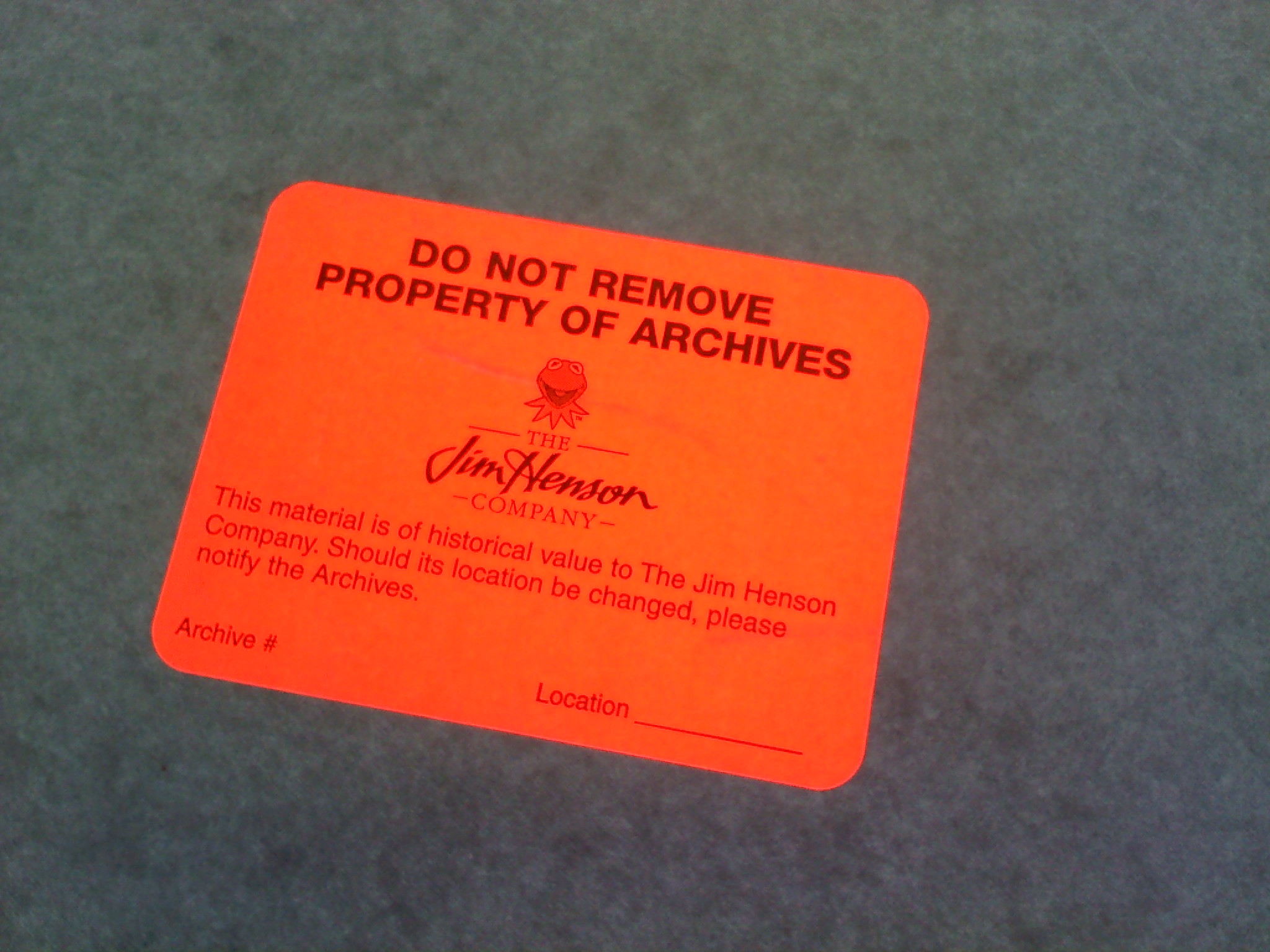
As usual, crack archivist Karen Falk (and her assistant, Madalyn) are taking good care of me, bringing me armloads of materials stored neatly in dark green boxes. Today, I spent the entire day sorting through newspaper clippings, press releases, and interviews. And how cool is it when the boxes that get plunked down on your desk have this sticker on top of them?

I’ll be here the rest of the week, continuing to do research—even though it’s so much fun it hardly seems fair to call it “research.”

Noah Webster (NO-uh WEB-stur): (1) See “obsessive compulsive;” (2) See 1.

Joshua Kendall has written a fine new biography of Noah Webster, that obsessive compulsive hunter and gatherer of information and compiler of obscure information. I’ve got lots more to say about it, but if you wanna know more, don’t look here; instead, check out my review at the Washington Independent Review of Books.

And while you’re at it, consider subscribing to the Washington Review.  If you miss reading regular reviews of books in your local newspaper, the Washington Review can help fill the void.  Go get it.

Car Trouble

My inability to fix cars is near legendary in our household. Oh, I can make it look like I know what I’m doing, propping open the hood and staring into the engine block with a concerned look on my face. But I might as well be staring into a dumpster for all the good I can do.

Not my dad.  My dad can listen to a car cranking, his head tilted slightly to the side, and determine, for the most part, exactly what’s wrong without ever opening the hood. It’s partly generational, I think — his generation spawned the sort of fellow who loved taking an engine apart on a Saturday just for the fun of cleaning it and putting it back together on a Sunday — though it also has something to do with the way cars today are made.  Most times, you can’t tell what’s wrong with a car unless you take it to a mechanic — who then plugs it into a special computer so the car can tell HIM what’s wrong. It’s a matter of having the right machinery, I suppose.

And then there are the days when it’s clear I shouldn’t be allowed near a car at all.

Recently, my car—a ten-year-old Saturn with 150,000 miles on it that I plan on driving until it implodes—failed its Maryland emissions test. I wasn’t too surprised—it had started rough the morning I took it in for its test, and it ran rough all day.  The next morning, it wouldn’t start at all.

For the next week or so, I grumbled about calling a tow truck to drag the car to the shop, and every once in a while would go out and sit in the driver’s seat to crank the engine, hoping that this time — this time! — it would turn over.  It didn’t.

My dad stood by patiently during one of these cranking sessions, listening with his head tilted slightly to the side.  “That sounds like a battery problem,” he said. “Why don’t you pop the hood so I can take a look?”

I reached to the floor and pulled the lever, and there was that muffled PLOOMF! sound the hood makes when it pops — only when I came around to the front of the car, I couldn’t get the damn hood to pull open. “Add THAT to the list, now,” I groaned.  “I’ll call a tow truck tomorrow.” My dad sipped his coffee for a moment. “I’ll see what I can do,” he said.

Later that afternoon, I ran errands for several hours. When I returned home, my dad had the hood of the car propped open, and was charging the battery with a portable charger.

“What is . . . I mean, how did you get the hood to open?” I asked. “I pulled the lever and couldn’t get it to work!”

“You were popping open the trunk,” my dad said.

I shouldn’t be allowed near cars at all.

Pull the String!

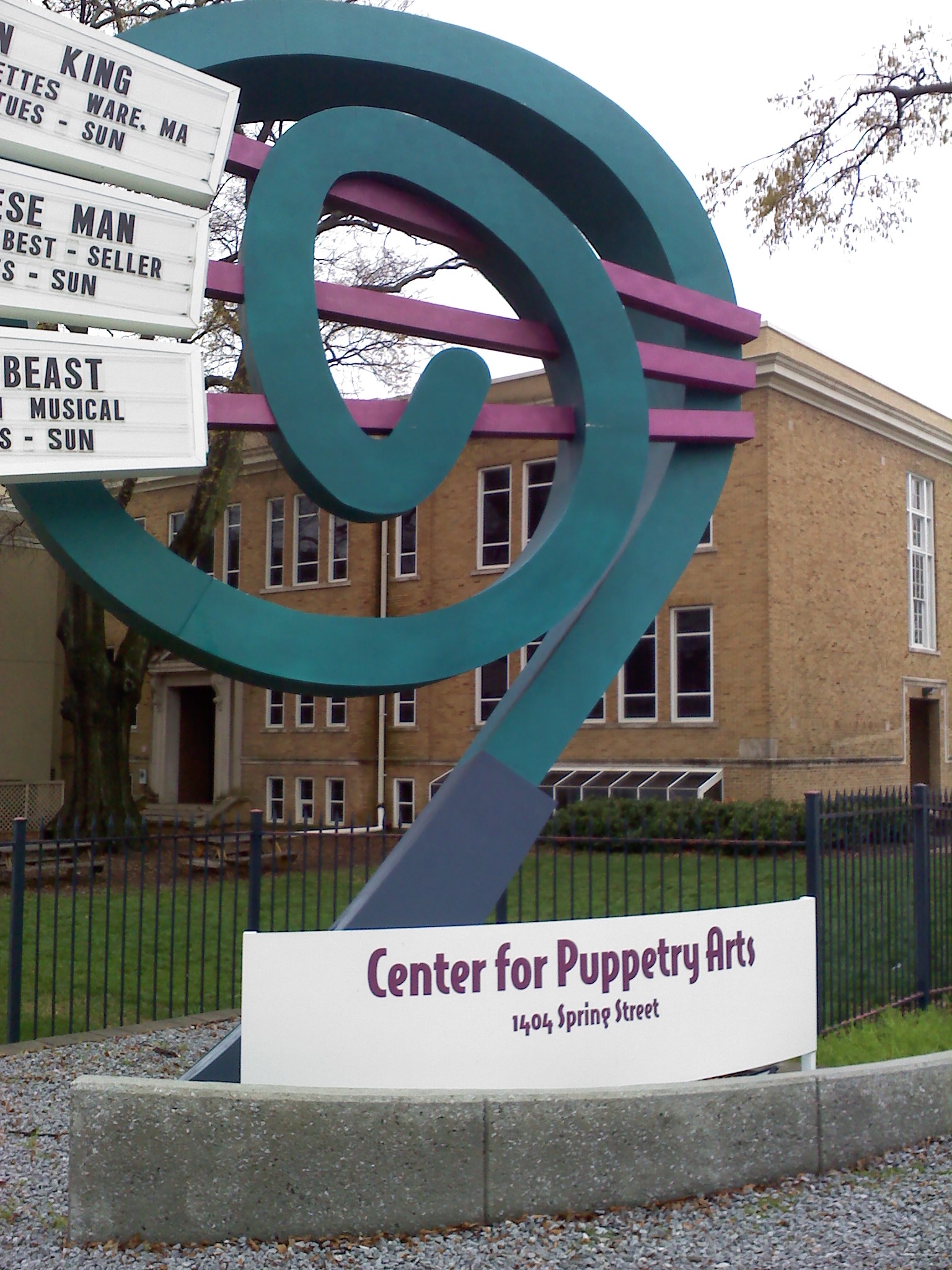
I’m back from Atlanta, where I spent two days talking with lots of Interesting and Wonderful People — including Vince Anthony and his crack staff at the Center for Puppetry Arts, where I had an opportunity to tour the museum (including its collection of Henson-related materials), learn a bit more about the history of the art form, and scour their video archives.  I also had a chance to watch a performance of “The Dragon King” — performed by the Tanglewood Marionettes of Ware, Massachusetts — right along with 200 enthusiastic elementary school students who squealed with delight in all the right places. Here’s a look:

For more information on the Center for Puppetry Arts, click here.

If It’s Tuesday, This Must Be…Uh…

When I last saw you, I had just returned from Hollywood.  Since that time, I’ve been to New York, Philadelphia and Pittsburgh — and now it’s off to Atlanta where, among a few other things, I’ll be paying a visit to the Center for Puppetry Arts.  I promise to be back here soon.  With pictures, even.