Neil Gaiman is Kinda Creepy (But In A Good Way)

Several trailers for a number of films I’m looking forward to. First up, Neil Gaiman discusses koumpounophobia — the fear of buttons. And only Neil could make buttons sound quite so . . . creepy.

Next up, it’s a Japanese trailer for Watchmen, with footage that hasn’t made its way into the American trailer yet:

And finally, in a brilliant bit of viral marketing, here’s a bit of archival footage — courtesy of the New Frontiersman — commemorating the tenth anniversary of the arrival of Dr. Manhattan:

Man, these movies can’t open soon enough.

Reviews in Brief: The Beatles Off The Record (Keith Badman)

beatlesotrKeith Badman’s book is a terrific primary source — but it’s definitely not for those who are unfamiliar with the Beatles and their story. This isn’t a biography per se; it’s transcriptions of interviews with the boys and those around them, snippets of news releases and news stories, and transcribed appearances on television or radio shows, all presented in roughly chronological order. Badman provides (rightly) only a minimal guiding track, stepping in only to gloss a name or straighten out a disparity in dates. What he won’t do is try to straighten out or explain events or stories, because — with the advantage of hindsight — watching the key players try to explain everything themselves is part of what makes this so fascinating.

Even if you’re a hardcore Beatles fan, you’ll probably still find something in Badman’s book that’s new to you. For one thing, you’ll get a better feel for the kind of mind-numbing, eye-glazing interviews the Boys had to sit through, especially early in their career. We’ve all seen the interviews compressed to their soundbites for documentaries, but Badham lets us see what gets edited out in the interest of time — mainly one stupid question after another (“Do you get dandruff with all that hair?”) which the Beatles, for the most part, answer gamely until around 1966, when John Lennon finally unloads on a reporter for asking “What do you want to do when you grow up?” (“Why are you being so horrid?” one reporter sulkily asks Lennon afterwards.)

But it’s not just the media that bumbles through interviews; sometimes the Beatles do, too. I was surprised by how non-responsive or rambling their answers could sometimes be — particularly from Paul McCartney, who could obviously make his charm go a long way, but when you read his remarks on the page without the corresponding images, they don’t always make a lot of sense. You can also see the Boys reverting to “talking points” for many questions, answering questions the same way, even when cornered individually.

Badman also reproduces several documents I’d never seen before: the original lyrics for “Yesterday” (as “Scrambled Eggs”), filed when Paul was simply trying to get the song down on paper with placeholder words; the various press releases from Apple as the wheels were coming off (and when is someone going to write a history of Apple?); a snippet from a 1969 newspaper floating John Lennon as the lead role in the upcoming Jesus Christ, Superstar.

Finally, reading interviews and press releases from That Moment In Time — when they had no way of knowing what was coming — the end of the Beatles really isn’t all that obvious. All four of them continue to speak relatively well of each other in interviews (except for George when speaking of Paul) and indicate that they are still interested in working together if the right project comes along. It’s no wonder fans were so shocked when McCartney finally announced he was leaving the group (months after Lennon had already privately left) — there was little indication of disarray or disagreement in the press, not even from the Beatles themselves.

There are places in the book where some interviews or television appearances have obviously been misheard or transcribed incorrectly (at one point, someone describes a crowd of people at an airport as looking like “a sea of hands” from above, when it was probably “sea of ants”) but such errors are easy to overlook in this goldmine of a Beatles book. Highly recommended — but, again, not for those who are unfamiliar with the Beatles story going into it.

Blah, Blah, Blagojevich

Blah, blah, blah, blah....

Go to jail. Go directly to jail. Do NOT pass GO. Do NOT collect $200.

I’ve gotta admit it: I love this story.  I’m fascinated by political trainwrecks and imploding politicians.  It appeals to my lesser demons and I’m embarrassed by it, but I can’t help it, so there it is.  

With its combination of hubris, bad hair, megalomania, the unbelievable “I’m-the-victim” mentality, and the Robin Hood/means-justify-the-ends defense . . . well, it’s truth transcending fiction.  Here’s Governor Blago yesterday, in his own defense before the Illinois State Senate:

“When you go out and try to find a way with legal advice to save 35,000 poor people and keep their health care, you’ve done it through legal means and you’ve done a moral thing. When you’re trying to help senior citizens afford their medicines, instead of just giving them a bunch of political baloney in speeches and say you care but then you don’t do anything about it but you found a way that you can actually do something and help them be able to have a better quality of life, not ration their medicine, maybe extend their lives, the means are legal because, if they’re not, then the governor of Wisconsin, the governor of Kansas and Ted Kennedy and Rahm Emanuel and John McCain and others ought to be co-conspirators with me. But how can you impeach me for legal means with moral ends? Those are a lot of the things that I’ve done as governor. . . .

“Me, in spite of what a lot of my critics have said, it wasn’t about promoting me for higher office. I didn’t go to all those Washington, D.C. functions. I didn’t try to sell myself to the national media. I didn’t go to governors conferences. I’ve been criticized for not doing that. I just stayed right here in Illinois to try to do the best I can to get real results for people and to push and prod, maybe too hard sometimes, but to get real results for people.”

You couldn’t make up gold like that and make it sound believable.  And yet, there it is.  Bravo, Blago.  And goodbye. 

Ice Cold

The winter storm that blew through the region over the last  two days wasn’t really a terrible one — we got very little snow, and the whole thing was over and gone in about 30 hours — but it still left a mess behind.  While the major roadways were cleared quickly, side roads and driveways were another matter. 

We have a long sloping asphalt driveway, which was frozen into a solid, shimmering sheet of ice.  I managed to scrape out a skinny, shovel-wide path the length of the driveway to the street — wide enough for us to at least get one wheel into — only to discover that when the Maryland State Highway Department plowed the State road in front of our house, they left a pile of ice and slush at the base of our driveway, which had then frozen into a rock-hard iceberg, making the driveway impassable. 

It wasn’t much better this morning.  Our Jeep managed to navigate the slick pile at the end of the driveway, but I wasn’t so sure that our other car, even with its front-wheel drive, would have the same luck.  So I spent much of the morning scraping, salting, and bashing at the ice with a hammer.  Which actually worked.  And I even managed to successfully locate the car under the ice sculpture that was sitting in our driveway, hacking away at the ice, which tumbled off in inch-thick slabs.

The kids are back in school today, after two days off.  Given the ice that we, and other rural residents, were fighting, it was probably the right call.  However, I see our newest area resident thinks we’re a bunch of wimps

“My children’s school was canceled today, because of what? Some ice,” said President Obama. “When it comes to the weather, folks in Washington don’t seem to be able to handle things.”

Ouch.

While we often make fun of our area’s inclination to close school at the drop of a hat (we often joke that they close school on days of the week ending in Y), we . . . well, y’know, it’s our school district.  We’ve been here long enough to learn its quirks and criticize it.   We kid because we love.

It’s like the moment in The Music Man when the Iowans inform out-of-towner Harold Hill on the correct pronounciation of Iowa, even as they mispronounce it themselves.  “We [mispronounce it] now and then,” one Iowan says, “but we don’t like anyone else to.”

Exactly. Welcome to DC, Mr. President — and you can make fun next year!

Bitter Cold, Sweet Debut

While Mother Nature was an enormous tease all day yesterday — and the weatherpeople didn’t help things by wringing their hands and declaring that the big one is on the way! only to find that it wasn’t — the snow is finally falling here in Maryland.  Small, drizzly flakes falling as fast as rain, and coating everything with a powdery white blanket.  School is cancelled, as are most evening events.  And it’s cold.

However, there is someone who is definitely not cold today:  blog pal Jamie Ford, whose debut novel Hotel on the Corner of Bitter and Sweet arrives in bookstores today.  And the great reviews are already pouring in.  Here’s Garth Stein, for example, author of The Art of Racing in the Rain:

“Jamie Ford has written a tender and satisfying novel that is tucked into a part of Seattle history we would rather not face. Set in a time and a place lost forever, Hotel on the Corner of Bitter and Sweet gives us a glimpse of the damage that is caused by war–not the sweeping damage of the battlefield, but the cold, cruel damage to the hearts and humanity of individual people. Especially relevant in today’s world, this is a beautifully written book that will make you think. But, more importantly, it will make you feel.” 

And then there’s the Library Journal, which says:

“Ford expertly nails the sweet innocence of first love, the cruelty of racism, the blindness of patriotism, the astonishing unknowns between parents and their children, and the sadness and satisfaction at the end of a life well lived. The result is a vivid picture of a confusing and critical time in American history. Recommended for all fiction collections.” 

Jamie’s homepage is here, and there’s a really terrific interview with him here. And, of course, you can order his book right here.  And congratulations, Jamie!

You’re Not From Around Here, Are You?

In the course of a recent conversation with a lifelong Marylander — which I am not — I asked if she could provide me with directions that would help me avoid a particularly busy intersection on my way home.

“Which way do you usually take to go home?” she asked.

We live in a mostly rural part of the state, so much of our coming-and-going is via small, two-lane Maryland State Highways with official names like MD 355 and MD 27.    Locally, we sometimes call them “Frederick Road” or “Ridge Road,” but on a map, they’re MD 355 and MD 27.

“Well,” I said, almost unconsciously drawing a map in the air with my hands like I always do, “I take the 355 to the 27, up past the 124….”

She barely stifled a laugh.  “You’re not from around here, are you?”

“Come again?” I said.

“What’s with ‘the’?” she said. “THE 355.  THE 27…”

And you know, that’s actually not the first time that’s been pointed out to me.  I grew up in New Mexico, where the long distances between towns make highways a normal mode of transportation, and we tend to refer to highways as THE 25, or the 40, or the 247.   Ask us how to get from Albuquerque to Roswell, and we’ll tell you to take the 40 east to the 41 south, follow it down to the 42 at Willard — which becomes the 247 at Corona — then take the 285 south into Roswell.

Not Marylanders.  They’d tell you to take 40 east to 41 south, and so on, completely omitting the article “the.”  Is it done in the name of efficiency?  Probably not.  It’s just the way it’s done — and I had hardly noticed until it was pointed out to me.

And that got me to thinking about other local or regional language choices — they’re not even necessarily colloquialisms or colorful turns of phrase distinct to an area — no “you ‘uns” or aphorisms like “white on rice.”  They’re just everyday, informal word choices.

Here’s another one:  at the grocery store, how would you ask for carbonated beverages, which might be sold under names like Coca-Cola or Pepsi or 7-Up?

I call it soda.  But move a bit further east over on the eastern shore of Maryland, and signs advertise it as “soda pop.”  My cousins in Kansas, meanwhile, just call it “pop,” while some of my friends from the south call it “coke” as a generic.

What do you call it?  And what other quirky word choices do you hear made in your particular area?

The Poe Museum

As I hoped — and as I alluded to in Monday’s piece on Poe’s 200th birthday — I managed to make it to the Poe Museum during my visit to Richmond.

It’s a cozy, though curious, place.  Given Richmond’s somewhat unstable history, there are few buildings standing that Poe lived in, worked in, or visited in his lifetime, so the museum makes due by setting up shop in an old stone house that dates from Poe’s era.  Still, it’s a fine place to kick off your tour, which takes you through several old buildings and a garden with a Poe shrine.

The museum boasts “one of the largest collections of Poe memorabilia in the world, much of it now currently on display” — but it’s a somewhat odd, and sparse, collection.  You’ll see, for example, Poe’s walking stick — left  behind in a friend’s home his last night in Richmond — his childhood bed, his boot hooks, and a lock of hair clipped from his head shortly after his death in 1849.  There are also several first editions on display, as well as facsimilies of handwritten manuscript pages.

There’s also a really interesting room-sized diorama of the City of Richmond during Poe’s time, giving you a good grip on where Poe lived and worked.  Sadly, most of the buildings represented on the model have been demolished, including Moldavia, where Poe lived with his foster father John Allan, and Swan Tavern, where Poe boarded during his adult years.

Fortunately, you’ve still got a chance to touch a bit of Poe’s Richmond.  Out on the garden sits a Poe Shrine, built from bricks and granite taken from the offices of the Southern Literary Messenger.  Here it is, squatting on the north end of the “Enchanted Garden,” which was, for the most part, dead with winter when I visited it:

The Poe Shrine.

The Poe Shrine.

Nestled inside the shrine is a bust of Poe, with droopy eyes and an almost wry smile on his face:

poebust.jpg

I wrapped up my visit gazing at a small room full of various daguerreotypes of Poe, some of which were based on actual photographs, others based on idealized drawings of the man by artists who had never seen him.  The new Poe postage stamp — which had been issued only days before my visit — was also proudly on display, and stuck on First Day of Issue envelopes with Richmond cancellations.

On my way out, on the recommendation of a Poe scholar, I purchased Kenneth Silverman’s Poe biography and browsed through shelves of Poe keychains, mouse pads, and T-shirts.  And it took everything I had to not buy the way-cool Edgar Allan Poe action figure.  Pull his string and he says “Reynolds!” and collapses!*

* Not really.

Wordsmithing

Made it safely back from Richmond late Monday night — we took back country roads to avoid the I-95 and any potential bottlenecks of DC-bound traffic, but the roundabout route meant it took us a bit longer to reach home.  So the dog had to spend an extra night in the doggy hotel, which I’m sure she didn’t mind a bit, actually.

We decided to avoid the crowds and the cold and stay home and watch the inauguration on television.  I left the house only briefly, at 7:30 a.m., to go pick up the aforementioned dog at the kennel, and while the roads were dead, the electronic signboards over the I-270 were flashing notices that the Metro was already full and parking was gone. 

As it turns out, it didn’t get as messy in the District as we worried it might.  It was perhaps more packed than it has ever been, but crowds were orderly and — thank god — no one was hurt or died from exposure, as local authorities were fearing.  Good show, everyone.

I’ll confess to getting choked up, as I always do, while watching the smooth transition of executive authority — the true and thrilling miracle of a republican government.  Two men — one president, one not — enter the Capitol together and emerge forty minutes later with the other man as president, while the former president returns to life as a private citizen.  And you can thank George Washington for that particular precedent.

As for Obama’s speech . . . I’ve heard some grumbling that it didn’t rise to a level of soaring rhetoric some were expecting — that there were no “Ask not what your country can do for you…” moments.  I agree that it wasn’t full of the Sound Bites many might have been waiting for; but Tuesday wasn’t really the day for that sort of speech.  This was his Working Speech — one of these You And I Need To Talk kind of speeches.  It was more frank and sophisticated than it was beautiful — more T.S. Eliot than Robert Frost.

But it worked.  And there were still moments that I think will come crawling out and etch themselves in granite in coming years. “We reject as false the choice between our safety and our ideals,” is a declaration worthy of Roosevelt or Reagan or Lincoln. 

My favorite line, however, is one that got a bit lost in the wash, but I liked for its punchy language and defiant optimism:  “…because we have tasted the bitter swill of civil war and segregation, and emerged from that dark chapter stronger and more united, we cannot help but believe that the old hatreds shall someday pass.”

Any time you can work the words “bitter swill” into a presidential speech, you’ve got yourself a winner.

Celebrating a Dark Genius

poeJanuary 19, 2009, marks the 200th anniversary of the birth of Edgar Allan Poe, one of America’s most celebrated authors, poets, essayists, and editors.  I’m lucky enough to be in Richmond, Virginia, today — which, along with Baltimore, serves as Poe Central — and while I’m here for my daughter’s volleyball tournament, I’m hoping our schedule will allow a bit of time for us to catch some of the Poe celebration and a trip to the Poe Museum.  (And if you happen to be in the area and are looking for things to do, the State of Virginia has a special website commemorating all things Poe.  Or, at least, All Things Poe in Virginia.)

While I’m not what you’d call a Poe Scholar, I’m a huge Poe Fan.   His short story “The Black Cat” was the first Poe story I ever read — I think I was 12 — and it scared the daylights out of me.  With its unstable narrator — who gouges out the cat’s eye with a pen-knife, then later hangs it from a tree — images of a hanged cat etched into the plaster in the remains of the narrator’s burnt house, and the narrator suddenly burying an axe in his wife’s skull,  there’s enough going on to keep you huddled under the covers for weeks.  But then add to that Poe’s  punchline, the last line of the story — “I had walled the monster up within the tomb!” — and . . . well, it’s a moment in American literature that leaves you feeling deliciously cold, as if you’ve just swallowed an entire Slurpee in one gulp.  The brain freeze is totally worth it.

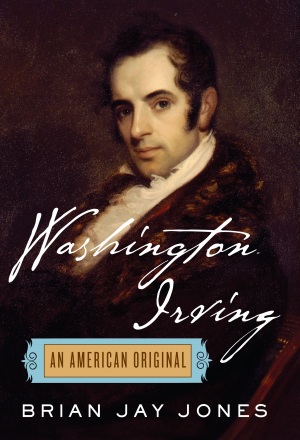
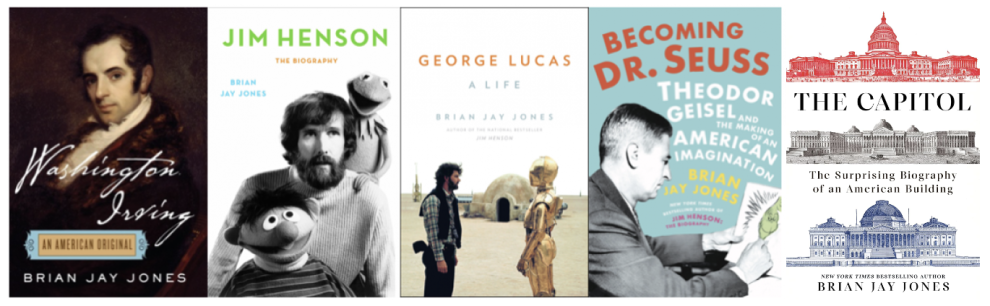
One of the great thrills of Washington Irving was writing those moments when the ambitious and somewhat crafty Edgar Allan Poe entered Irving’s story.  Sure it’s non-fiction — but just as fiction writers love to play with great characters, so, too, do we Nonfictionalists.  And really, you’d be hard pressed to find a more compelling real-life character to write than Poe.

Irving had actually met Poe in London in 1819, when the ten-year-old Poe was travelling in Europe with his foster father, John Allan, and Irving — basking in the early glow of the success of The Sketch Book but hungry for the company of fellow Americans — dined with Allan and his ward at the York Chop House. 

Poe remained an admirer of Irving’s writings — at least for a while — and as a writer for the Southern Literary Messenger, inked one of the many glowing reviews of Irving’s 1835 work, The Crayon Miscellany.  As an up-and-coming new writer, Poe was also shrewd enough to recognize that Irving’s endorsement of his work would give him credibility with editors and reviewers, many of whom were baffled by Poe’s markedly dark voice and tone.

In October 1839, Poe — behind flattering cover letters — sent Irving copies of two of his latest stories, “The Fall of the House of Usher” and “William Wilson,” hoping for a kind word — a usable “cover blurb,” to put it in today’s terms.  Though the tone and content of both stories wasn’t really Irving’s cup of tea, he nonetheless read both tales, and wrote Poe with his comments.

Of the two stories, Irving preferred “William Wilson.” “It is managed in a highly picturesque Style and the Singular and Mysterious interest is well sustained throughout,” he told Poe. “Usher,” however, he thought was a bit of a mess.  It might be improved, he told Poe, “by relieving the style from some of the epithets.”

Not exactly a ringing endorsement, but it was enough for the shrewd Poe. “I am sure you will be pleased to hear that Washington Irving has addressed me 2 letters, abounding in high passages of compliment in regard to my Tales—passages which he desires me to make public—if I think benefit may be derived,” Poe wrote to one colleague. “Irving’s name,” he continued, in tones suitable for a Marvel Comics Super Villain, “will afford me a complete triumph over those little critics who would endeavor to put me down by raising hue and cry of exaggeration in style, of Germanism & such twaddle.”

Clearly Poe was not above publicly exploiting Irving’s reputation to further his own career.  Privately, though, Poe considered Irving “overrated” and argued that much of his reputation was based solely on the fact that Irving was the first American writer to earn international fame and praise.  “A nice distinction might be drawn,” Poe wrote, “between [Irving’s] just and surreptitious and adventitious reputation—between what is due to the pioneer solely, and what to the writer.”

Take a moment today to celebrate the life of America’s first, and still favorite, dark and crafty genius.  Despite everything, Washington Irving wouldn’t mind a bit.
Uncommon Culture

So, Ricardo Montalban died. And — likely to his dismay – despite a huge body of work, his obituaries all seem to remember him for three things: (1) the vaguely dangerous Mr. Roarke from Fantasy Island; (2) the Chrysler Cordoba commercials, where he arched an eyebrow over “fine Corinthian leather;” and (3) Star Trek II: The Wrath of KHAAAAAAANNNN!!!

And that got me thinking: if you’re a Gen Xer over the age of, say, 33, you probably knew all three of those references. Maybe you couldn’t remember Montalban’s name, or anything else he did, but if I told you he was Mr. Roarke on Fantasy Island, you’d say, “Oh, THAT guy?” Lame as Fantasy Island was – and believe me, it was lame – it was a show we all watched, mainly because there wasn’t much else on to watch.  We had only three networks to choose from — so despite our varying tastes in entertainment, chances are good we were still all watching Fantasy Island, Diff’rent Strokes, and The Incredible Hulk. Our entertainment options – our sources for popular culture – were limited.  But because our options were so limited, we have a common frame of reference, a common culture.

Today we’ve got cable television with a gajillion channels, many catering to different tastes and different genres.  There are channels that show only science fiction, others that show only cartoons.  There are hundreds of networks out there vying for your attention, all developing their own sitcoms, police dramas, and family shows.   

Don’t get me wrong. As a pop culture junkie, I love having channels that cater to very specific interests (where’s the Comic Book Channel when you really need it, though?).  My own daughter can pick and choose what channels she wants to watch, based largely on the kinds of shows she likes.  So can her friends.  So, while she’s watching Disney, another friend is watching Cartoon Network, while another is watching SciFi, and so on. Variety is what makes things interesting, and choice is something we take for granted.

But – at the risk of sounding like a old fogey — it also makes me wonder:  given the sheer volume of choices kids have, will today’s kids grow up to have a common frame of reference?  Will they have a truly common culture?  If not, is that a good or a bad thing?  I really don’t know.

Yes, I know I’m talking about television – and some might question whether not having a common frame of reference involving television is really the end of the world.  It’s not.  But be honest:  if you’ve ever started a discussion about [INSERT YOUR FAVORITE DUMB 1970s-1980s TV SHOW HERE] and someone says, “I never watched that,” it’s a good bet your first reaction was along the lines of, “I can’t BELIEVE you never watched that!”

We like having a common popular culture, even if, at times, it embarrasses us.

“Smiles, everyone . . . smiles!”