Authors! Authors!

When it comes to games in our household, we’re decidedly analog. We like dice games like Yahtzee, word games like Quiddler, board games like Sorry!, and we love card games. One of our favorites — especially when we’ve got only a short amount of time — has always been a game called Authors.

The object of Authors is a simple one: using Go Fish-type rules — where you ask other players for specific cards — you want to collect all four books by each of thirteen different authors. Each Ace, for example, represents Mark Twain, and each suit names a different book — such as the Ace of Spades shown below at the far right, which features Tom Sawyer:


When it’s your turn, simply ask another player if he (or she) has (for example) Mark Twain’s The Mysterious Stranger and work to complete your set of four. If you come up empty, go to the draw pile and see if you luck into drawing it. If not, your turn’s over. Simple. It’s basically Go Fish for book lovers.

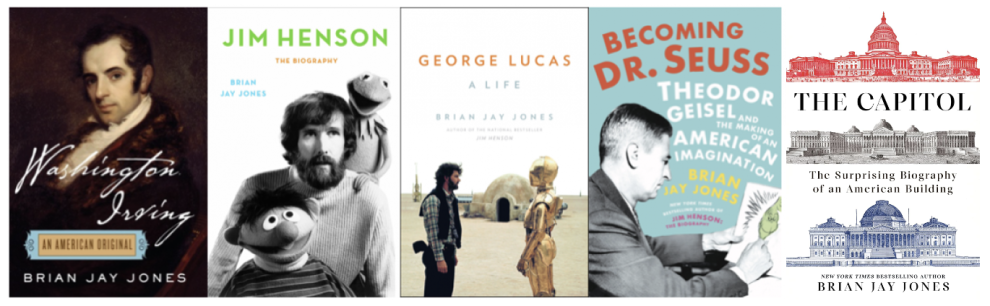
I played and loved this game as a kid — it’s actually been around since 1850 — and it made a permanent impression on me. For one thing, beginning at grade two, I always remembered that Sir Walter Scott (whose face appears on each ten) was the author of Ivanhoe, and that Dickens (number two) wrote The Pickwick Papers. (Oddly, I did not remember that Washington Irving was one of the featured authors, scowling with heartburn from the face of each seven.) Now my own daughter has William Makepeace Thackeray’s bookish face burned into her memory (along with his book Pendennis, which seems to be the card she’s always missing), while my wife, who seems always to be stuck with James Fenimore Cooper, now refuses on principle to read The Last of the Mohicans.

If you’re a parent who’s looking for a fun, easy-to-learn — and, yes, even (*gasp!*) educational — game to play with your child, give Authors a try. Not only will you have fun, but you might even instill in your child a love of literature, and may inspire your young one — or yourself — to seek out some of the books featured on the cards. Our daughter is well beyond playing Go Fish-type games, yet this is still one we return to again and again, discussing the books and writers while we play, and sometimes doing funny voices for the authors pictured on the cards (I like to do a drugged-out Edgar Allan Poe, while Madi does an overly-excited Shakespeare.)

You can order Authors here. It’s the best six bucks you’ll ever spend.

Who The Hill Is Looking Out For…

From the Associated Press wire, as of 1:30 today:

House starts voting on $700B bailout bill

(AP) — The House has started a roll call vote on historic legislation providing $700 billion in government money to bring stability to reeling financial markets.

House Speaker Nancy Pelosi called it a vote for “Mr. and Mrs. Jones on Main Street.”

My wife and I talked it over, and we’ve decided to accept their offer.

"A Time of Unexampled Prosperity"

From “The More Things Change…” Department, as we watch the financial drama unfurl on Wall Street and in Washington, DC, I thought I’d share with you a remarkably prescient essay Washington Irving published in 1855, as part of the collection of stories in Wolfert’s Roost.

In this particular essay, “A Time of Unexampled Prosperity,” Irving alludes to the Panic of 1837, a financial crash that was the result of unchecked speculation, and plunged the American economy into a rumbling pseudo-depression that lasted until 1843. Within two months, failures in New York alone totalled nearly $100,000,000 — the equivalent of about $2 billion today.

Sound familiar? Here’s Washington Irving’s essay, “A Time of Unexampled Prosperity,” in its entirety (it’ll take you no more than five minutes to read, and trust me, it’s worth every second):

In the course of a voyage from England, I once fell in with a convoy of merchant ships bound for the West Indies. The weather was uncommonly bland; and the ships vied with each other in spreading sail to catch a light, favoring breeze, until their hulls were almost hidden beneath a cloud of canvas. The breeze went down with the sun, and his last yellow rays shone upon a thousand sails, idly flapping against the masts.

I exulted in the beauty of the scene, and augured a prosperous voyage; but the veteran master of the ship shook his head, and pronounced this halcyon calm a “weather-breeder.” And so it proved. A storm burst forth in the night; the sea roared and raged; and when the day broke, I beheld the late gallant convoy scattered in every direction; some dismasted, others scudding under bare poles, and many firing signals of distress.

I have since been occasionally reminded of this scene, by those calm, sunny seasons in the commercial world, which are known by the name of “times of unexampled prosperity.” They are the sure weather-breeders of traffic. Every now and then the world is visited by one of these delusive seasons, when “the credit system,” as it is called, expands to full luxuriance, everybody trusts everybody; a bad debt is a thing unheard of; the broad way to certain and sudden wealth lies plain and open; and men are tempted to dash forward boldly, from the facility of borrowing.

Promissory notes, interchanged between scheming individuals, are liberally discounted at the banks, which become so many mints to coin words into cash; and as the supply of words is inexhaustible, it may readily be supposed what a vast amount of promissory capital is soon in circulation. Every one now talks in thousands; nothing is heard but gigantic operations in trade; great purchases and sales of real property, and immense sums made at every transfer. All, to be sure, as yet exists in promise; but the believer in promises calculates the aggregate as solid capital, and falls back in amazement at the amount of public wealth, the “unexampled state of public prosperity.”

Now is the time for speculative and dreaming or designing men. They relate their dreams and projects to the ignorant and credulous, dazzle them with golden visions, and set them madding after shadows. The example of one stimulates another; speculation rises on speculation; bubble rises on bubble; every one helps with his breath to swell the windy superstructure, and admires and wonders at the magnitude of the inflation he has contributed to produce.

Speculation is the romance of trade, and casts contempt upon all its sober realities. It renders the stock-jobber a magician, and the exchange a region of enchantment. It elevates the merchant into a kind of knight-errant, or rather a commercial Quixote. The slow but sure gains of snug percentage become despicable in his eyes; no “operation” is thought worthy of attention that does not double or treble the investment. No business is worth following that does not promise an immediate fortune. As he sits musing over his ledger, with pen behind his ear, he is like La Mancha’s hero in his study, dreaming over his books of chivalry. His dusty counting-house fades before his eyes, or changes into a Spanish mine; he gropes after diamonds, or dives after pearls. The subterranean garden of Aladdin is nothing to the realms of wealth that break upon his imagination.

Could this delusion always last, the life of a merchant would indeed be a golden dream; but it is as short as it is brilliant. Let but a doubt enter, and the “season of unexampled prosperity” is at end. The coinage of words is suddenly curtailed; the promissory capital begins to vanish into smoke; a panic succeeds, and the whole superstructure, built upon credit and reared by speculation, crumbles to the ground, leaving scarce a wreck behind:

“It is such stuff as dreams are made of.”

When a man of business, therefore, hears on every side rumors of fortunes suddenly acquired; when he finds banks liberal, and brokers busy; when he sees adventurers flush of paper capital, and full of scheme and enterprise; when he perceives a greater disposition to buy than to sell; when trade overflows its accustomed channels and deluges the country; when he hears of new regions of commercial adventure; of distant marts and distant mines, swallowing merchandise and disgorging gold; when he finds joint-stock companies of all kinds forming; railroads, canals, and locomotive engines, springing up on every side; when idlers suddenly become men of business, and dash into the game of commerce as they would into the hazards of the faro table; when he beholds the streets glittering with new equipages, palaces conjured up by the magic of speculation; tradesmen flushed with sudden success, and vying with each other in ostentatious expense; in a word, when he hears the whole community joining in the theme of “unexampled prosperity,” let him look upon the whole as a “weather-breeder,” and prepare for the impending storm.

Sounds like something right out of the op-ed pages of today’s New York Times, doesn’t it? Trust me, when Irving’s good, he’s very good. Click here to read Wolfert’s Roost in its entirety.

"Who Reads An American Book?"

I point you with amusement toward this interesting bit of literary playgrounding, courtesy of the Associated Press:

Nobel literature head: US too insular to compete

STOCKHOLM, Sweden—Bad news for American writers hoping for a Nobel Prize next week: the top member of the award jury believes the United States is too insular and ignorant to compete with Europe when it comes to great writing.

As the Swedish Academy enters final deliberations for this year’s award, permanent secretary Horace Engdahl said it’s no coincidence that most winners are European.

“Of course there is powerful literature in all big cultures, but you can’t get away from the fact that Europe still is the center of the literary world … not the United States,” he told The Associated Press in an exclusive interview Tuesday.

Speaking generally about American literature, however, he said U.S. writers are “too sensitive to trends in their own mass culture,” dragging down the quality of their work.

“The U.S. is too isolated, too insular. They don’t translate enough and don’t really participate in the big dialogue of literature,” Engdahl said. “That ignorance is restraining.”

(Click here for the article in its entirety.)

Apart from the “I know you are, but what am I?” tone of the remarks, I got a kick out of this because it sounds remarkably similar to the condescending tones Europeans used when tut-tutting American writers in the 19th century.

At that time, of course, Americans had something to prove. Despite defeating the most powerful army in the world during the American Revolution — and even as a teeth-gnashing Thomas Jefferson provided foreign skeptics with skeletons to prove that American mammals were as large, or larger, than their counterparts on the other side of the Atlantic — Europeans were convinced that Americans, for the most part, had merely gotten lucky. As far as Europeans were concerned, Americans were mentally, physically, and culturally deficient.

While Horace Engdahl might sniff that American writers are “insular” or “too sensitive to trends,” his complaints are strictly amateur hour when compared to those of 19th century critic Sidney Smith, who blasted all things American in the January 1820 issue of the Edinburgh Review:

“The Americans are a brave, industrious, and acute people; but they have hitherto given no indications of genius, and made no approaches to the heroic, either in their morality or character. They are but a recent offset indeed from England; and should make it their chief boast, for many generations to come, that they are sprung from the same race with Bacon and Shakespeare and Newton. Considering their numbers, indeed, and the favorable circumstances in which they have been placed, they have yet done marvelously little to assert the honor of such a descent, or to show that their English blood has been exalted or refined by their republican training and institutions…

“…they have done absolutely nothing for the Sciences, for the Arts, for Literature, or even for the statesman-like studies of Politics or Political Economy…

“In the four quarters of the globe, who reads an American book? or goes to an American play? or looks at an American picture or statue? . . .

“When these questions are fairly and favorably answered, their laudatory epithets may be allowed: But, till that can be done, we would seriously advise them to keep clear of superlatives.”

Suffice it to say, Americans were not amused–and it was in this rather poisonous atmosphere that an upstart American writer named Washington Irving dared to publish The Sketch Book of Geoffrey Crayon in London in the spring of 1820.

The Sketch Book had been well-received on its publication in the United States in 1819 — rightly so, as it’s the book that contains “Rip van Winkle” and “The Legend of Sleepy Hollow” — and now, in an effort to protect his copyright from European piracy, Irving nervously issued a version of his book in the English market, under the imprint of London’s most distinguished publisher, John Murray.

The Sketch Book not only sold spectacularly well — it can, in fact, rightly be called America’s first international bestseller — but it won over even refined British readers, who grudgingly conceded that this American upstart could write. “Everywhere I find in it the marks of a mind of the utmost elegance and refinement,” wrote a surprised William Godwin, “a thing as you know that I was not exactly prepared to look for in an American.”

So, there you go, Horace Engdahl. European disdain for American writers is as old as American publishing itself. American writers have heard it all before, and they’ve generally proven the critics wrong. I’m confident that American writers will continue to rise above such condescension and defy such expectations — for their ability to do so is also as old as American publishing itself.

Thanks to Brian D for bringing the AP article to my attention!

Group Hug

Last night I attended the first post-summer break meeting of the Washington Biography Group, “an informal gathering of people who write memoirs or biography,” as our semi-sort of official bylaws read, “attended by professional writers as well as people writing personal or family memoirs (and a few who are working up the courage to do so).” I was initiated into the group more than a year ago by Linda Lear (of Beatrix Potter: A Life in Nature fame) and it’s more of a support group than an instructional one (though that happens, too), as more than 50 writers, readers, and enthusiasts sit and share stories. It’s always a useful and pleasant way to pass two hours.

Since this was our first meeting since late Spring (we take summers off), we spent the evening updating the group on how we spent our summers, and it’s always interesting to hear the wide variety of projects people are working on. Works in progress include books on 19th century naval heroes, Marty Robbins, Mary Wickes, Russian czars, concentration camp survivors, and institutionalized family members. And that’s just for starters.

Other highlights included:

* Linda Lear sharing her frustration on the difficulty of changing publishers to reissue her Rachel Carson biography (and re-clearing alllll your rights);

* Diane Diekman (Live Fast, Love Hard: The Faron Young Story) gushing with excitement about meeting Mel Tillis during her research — and learning he was a fan of her work;

* Marc Pachter enthusing on the tones of forgiveness in John Lahr’s Notes On A Cowardly Lion: and

* My colleague at Arcade, Dr. Stephen Weissman, discussing his forthcoming book on Charlie Chaplin, which I can’t wait to get my hands on.

All in all, a terrific meeting. And I think I should add: you don’t need to be a writer to attend the meetings. If you’re a reader who’s passionate about biography, history, or non-fiction, you’ll fit right in. Our next meeting is October 27, at the Washington International School in Washington, DC.

The Washington Biography Group home page is here. Linda Lear’s home page is here, Diane Diekman’s is here, and Stephen Weissman’s Chaplin book is right here.

Collecting Collections, Continued

While we’re on the subject of comics collections, a reader e-mailed to ask me if I prefer reading stories in their collected format, as opposed to their original, off-the-rack comic form.

I’ve got an answer, but let me declare some caveats first.

I like being able to pick up trade paperback collections of complete stories — particularly of titles I’ve never read — not only because it’s easier than tracking down the back issues needed to compile, say, issues 45 to 54 of Super Grim and Morose Guy, but it’s also cheaper. I like the ease of having everything in one compact, bound book, and being able to tuck it into a briefcase, where I can read it on the Metro or an airplane and lie about it being mine.

As for titles I already read and collect — like Sandman — I like being able to read and re-read the stories, or even loan the collection to others, safe in the knowledge that my original issues remain in Overstreet Price Guide Near Mint condition. Not because I want to sell them, but because . . . well, I just like them in nice condition.

But when it comes right down to it, I’m a purist. As much as I like glossy trade paperback or hardback collections, I still prefer comics in their clumsily beautiful, easily damaged, and thus completely perfect comic book format.

I think part of it lies in the fact that, to me, comics are historical documents (they are, after all, technically periodicals). There’s a strangely satisfying tactile pleasure in holding an issue in your hands, looking at the glossy cover (and the price! While I never lived in the golden age when comics were a dime, I do remember when they were forty cents!), and smelling the pulp paper and ink. Each issue is a snapshot of the moment in time when it was published — something lost in the translation over to a more timeless trade paperback.

While advertisements are usually annoying, they do provide an almost twisted historical sense to the reading experience, blaring in all their retro glory about Ataris and Super Nintendos, Dingo boots and fruit-flavored drinks, and Saturday morning cartoons. And on the creative side of things, I like seeing how the writers — who knew in advance where the full-page ads would be placed — sometimes work the page break into the rhythm of the story, providing a beat just before a major epiphany or plot advancement.

A trade paperback is also missing an important part of the personality of the original comic: the letters columns. Sandman, for example, was home to one of the most annoyingly pretentious lettercols in comics history; yet it’s still fascinating — especially with hindsight — to watch readers debate who the prodigal member of the Endless might be, submit bizarre haikus about cats, and speculate on who might die in the closing pages of the final story arc. Lettercols provide readers with a sense of community that’s missing from the trade paperback collection — and while their absence from the trade paperback is understandable, it’s still regrettable.

And finally, there was always something exciting in reaching that final page and landing on a cliffhanger that would carry you into the next issue. I remember reading each issue of Alan Moore’s Watchmen as they were published in the late 1980s, poring over every panel, reading and re-reading every issue until the next one arrived — and each one was usually late, so it took about 16 months for all 12 issues to be published.

But that anticipation was part of what made the reading experience so memorable. When I reached the end of issue 7 — where Dan Drieberg says “I think we should spring Rorschach.” — I couldn’t just turn the page and read the next chapter; I had to wait weeks. That’s an experience I can’t have with the trade paperback.

That said, I’ll still continue to read trade paperbacks and other collections. But I still can’t help feeling I’m missing something.

Collecting Collections

I just finished reading the first gorgeous volume of Neil Gaiman’s Absolute Sandman, and got to thinking about my collector’s mentality. I bought every issue of Sandman right off the comics rack in the 1980s and 1990s. I also purchased each of the paperback reprints as they appeared (including the boxed set of the first three) and I’ve been buying the Absolute editions as soon as they’ve been published. That means I’ve got three versions of the same story, in three different formats.

Why? What compels me, and others, to keep shelling out for new versions of stories we already own?

Here was my mentality, at least, going into it (and this is my version of events, mind you — my wife may differ): when the paperbacks came out, I purchased them to have them on hand for those times when I wanted to re-read the stories, but didn’t want to put the wear-and-tear on the original comics because, y’know, you don’t want to ruin your comics from frequent re-reading.

And stuff.

*wrings hands*

Anyway, that’s all very well, then, so why purchase the Absolute editions? Well, because each volume has all sorts of New and Improved Great Stuff in it, like Gaiman’s original pitch to DC Comics (see? Even Neil Gaiman had to pitch an editor!), and copies of some of his scripts and rough pencils from great stories like “A Midsummer Night’s Dream.” Plus, the books themselves are just plain nice, with black leather covers, cloth bookmarks, and shiny slipcases. It’s the sort of book that a bibliophile just has to touch, turn over, weigh in the hands, and, yes, read. You can’t help it.

I know. That’s exactly the mentality that the Powers That Be at DC are hoping for. “We’ll dangle just enough new stuff in front of you,” they cackle as they count their shekels, “that you’ll keep right on buying different editions of the same thing!” You laugh, but be honest: how many times have you bought a favorite DVD multiple times, just because the studio released the first version in 2002, then a remastered letterboxed version in 2004, and finally a special 2-disc “Anniversary Edition!” in 2007?

Still, I’ve made some progress lately in shaking my Collector Mentality. For the first time ever, I gave away the original paperback reprints, shipping them off to my brother in Montana.

Er, except for the boxed set of the first three. Because you can’t go completely cold turkey, you know.

Jolly Old St. Nicholas

I got a typically pleasant note from my editor the other day informing me that Washington Irving got a nice mention in The Weathercock, the newsletter from the 175-year-old St. Nicholas Society of New York.

The piece is more of a summary of Irving’s life than an actual review, though the reviewer notes warmly that in Irving, “one sees distinctly the lineaments of the quintessential and archetypal Saint Nicholas Society member.” Given that the Society wanted to burn me in effigy for neglecting to give them a specific shout out in WI,* it’s a nice little piece. I’ll take it.

The St. Nicholas Society of New York’s home page is right here. And my thanks to them for the very kind mention.

* I’m kidding. But only a little.

Getting Better All The Time…

I know it seems I say this EVERY week . . . but I’ve been assured that the geothermal system will go live today. No, really. The wells are complete — and have been connected to the house — and the majority of the work has been completed inside. But now the two have to be linked together — and that’s what’s going on today. By the time I get home this afternoon, I should be walking into a house that’s finally temperature-regulated.

More than anything, it’ll be nice to finally start to reclaim the house, which has been a disaster area for the last six weeks. I’ve started to work on the backyard, which was a sludgy gray mess, and now — as you can see from the pic below — looks like the surface of Mars:


In this little corner of Maryland, our soil is crammed with layers of shale, which get chewed up any time you push a shovel in the ground, and break off in enormous chunks. You can pick up the big stuff, but no matter how much you scoop up, you’ll keep finding big pieces of it for weeks, as if it were burrowing to the surface on its own. Which it probably is.

As for the inside, everything we removed from the basement and crawlspace is still crammed in the spare bedroom, my old office, the front parlor, and dining room. The rest of the house is covered in dust from all the cutting and drilling.

But there’s progress. Here’s the space in the basement, for example, that I cleared out — and painted white — all ready to receive the heating/cooling unit:


And here it is as of today, with the unit squatting in place and the ductwork fitted almost perfectly into the space:


And then, of course, there’s still this darn thing sitting in the boiler room, ready to be taken apart and taken out:

Typical of my luck, we discovered the doggone thing was not actually empty, even though our furnace stopped burning any fuel from it late last Spring. Apparently there’s a clog in the pipe that funnels fuel from the tank to the boiler. So we’ve got to figure out a way to pipe the remaining fuel — about 70 to 100 gallons, we think — from our tank over to our neighbor’s tank, about eighty feet away. We can’t move it out until then, or it’s considered a hazard.

More later. Here’s hoping we’re up and running this afternoon!

I Remember.

So many images from that day seven years ago are burned into our collective American consciousness: the plane hitting the second tower. Bodies tumbling through the air like ragdolls. Blackened firemen shouting over the din. Bankers, brokers, deli owners and commuters, fleeing downtown Manhattan.

Let me tell you what was going on in Washington, DC, that morning.

In September 2001, I was working for a small non-profit in downtown DC, in an office building in the Dupont Circle neighborhood, less than a mile from the White House. That morning, I took the Metro to the Farragut West station and walked the five or so blocks to my office, arriving around 7:30 a.m. As I always did – and still do – I turned the television in my office on to the morning news.

It was a slow news day – the biggest news in DC was Michael Jordan’s move to the Washington Wizards – and the talking heads so chattered on about nothing that morning that eventually – at about 8:40 or so – I changed the channel to C-SPAN.

Because I’d changed the channel, I completely missed CNN’s first report – at 8:49 a.m. — on Flight 11 hitting the north tower of the World Trade Center. I still had C-SPAN on when Flight 175 hit the south tower at 9:03 a.m., and remained unaware that something monumental was going on until I received an e-mail from a colleague in another organization, urging us to turn our televisions to CNN regarding a “probable terrorist attack.” I turned my television over to CNN, and four coworkers and I stood in my office, watching – just as you did – as the drama unfolded in New York City.

And then, at 9:37 a.m., Flight 77 crashed into the Pentagon.

Our first notice that something had happened was a crawl on CNN, reporting that a helicopter had crashed on takeoff at the Pentagon — a report that was almost immediately modified to report a “huge fire.” I turned to look out my window – a south-facing view mostly of the building across the street, but in one of those holy shit moments I’ll never forget, I could see the sky was already filled with black and orange smoke from the Pentagon fire, about four miles south of my office.

There were a number of confused phone calls from family, friends, and colleagues outside of the area who had learned of the attacks and were calling to see if we were okay, and urging us to get out of the city. That was easier said than done – I had taken the Metro in to work, but with a possible terrorist attack underway in the nation’s capital, I was nervous about getting on an underground train, remembering with a shudder the sarin attacks in a Japanese subway.

The complete lack of information, while understandable, made me angry. One report claimed a car bomb had gone off at the State Department. (Given that we were only a few blocks away and had heard nothing, that seemed doubtful.) Another said the National Mall was on fire (an error based on the huge amount of smoke coming from the Pentagon). Reports were coming in that the Capitol was being evacuated (true), that a plane had been spotted flying in over the White House and was being shot down (untrue), and that martial law had been declared in the District (patently false).

With the city on the verge of shutting down – and with no information coming in that we felt we could rely on – we had no idea what to do. Finally, the five of us decided we would all climb into one car, head southwest across the Potomac River into the Fairfax region of Northern Virginia, and then wing it. At the very least – or so our logic went – we would be out of the city.

It was a beautiful day in Washington that morning – clear, crisp, and slightly warm — but as we pulled out of the garage in our building, it was almost eerily quiet. Cars moved slowly and deferentially down 19th Street toward the National Mall, where every driver in western DC obviously planned on taking the Eisenhower Bridge across the Potomac into Rosslyn, Virginia. All incoming traffic had been stopped, so all lanes were open leaving the city.

We crawled along — again quietly and respectfully, as if we all appreciated that we were all doing the same thing, for the same reason. With the weather so warm, nearly every car had its windows open, and the radios were blaring as we all tried to get some sort of news. In our car, we listened to Howard Stern (and say what you will, he reported courageously and magnificently that day, trying hard to filter out unverified information, and taking calls from New Yorkers providing harrowing, sometimes hysterical, eyewitness accounts) and rotated down the dial toward local coverage.

We were sitting on Constitution Avenue, stuck in traffic as we moved toward the bridge. Every car had its radio playing, and as we all waited to take our turns moving onto the bridge, people leaving town on foot would stop and lean in through the windows of stopped cars to listen to the radio. When the cars moved ahead, pedestrians would resume walking, until traffic stopped again, at which point the walkers would all poke their heads in through the window of another car, leaning on the doorframe like we were all old friends sharing news and gossip. Which, that day, we were.

As we moved onto the Eisenhower Bridge — with pedestrians continuing to stick their heads in rolled-down windows — a minivan, already crammed full of people, pulled across three lanes of stopped traffic, threw open its doors, and waved inside a young mother pushing a stroller.

That’s a moment I’ll never forget.

Humanity, I love you.

Seven years later, sometimes in spite of it all, I still do.

Remember.