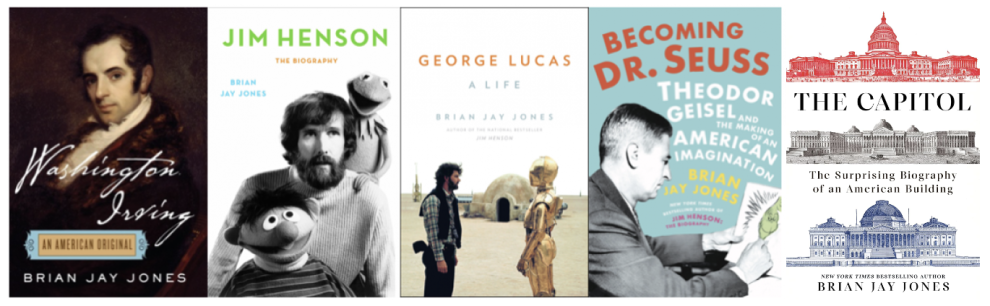
“Hi Brian, I hope you’re doing well,” chirps the e-mail.
“I came across The Capitol: The Surprising Biography of an American Building and was immediately drawn to the idea of telling American history through one of its most recognizable buildings. Rather than treating the Capitol simply as architecture, the book opens the door to centuries of political conflict, cultural change, ambition, and human stories surrounding its creation and evolution.”
What writer wouldn’t love an e-mail like that?
It goes on in a similar manner, continuing in glowing, effusive, flattering terms, telling me how great my book is and how talented I am, then finally tilts into its sales pitch. In this case it’s a “professional book marketer, who works with a dedicated team to help authors increase visibility and connect books with the right readers.”
What she says sounds promising—she wants to get my book in front of readers and book clubs, “history communities,” and asks if she can send over a proposal. Say YES, and she’ll send along a lengthy e-mail with a highly detailed plan to promote your book, with several different tiers of services, running anywhere from $400 to $4,500, sometimes more, sometimes less.
And that right there, dear friends, is the scam.
Sure, any writer would love to get their book in front of readers–and promoting is hard, even to those of us who have been doing this a long time. It would be great to have your own personal publicist looking out for your book.
Except none of its real. Pay them the money they’re asking for, and they’ll disappear like a phantom, without the courtesy of even leaving a dramatic puff of smoke behind. (There’s a minor caveat here: sometimes they’ll take your money and actually write a terrible press release that they’ll then dump to a website filled with even more sloppily written, random articles, providing you with zero promotion, and certainly a long way from those “guarantees” of great visibility that they’ve promised.)
It’s all part of the latest series of scams that authors continue to receive daily, filling our inboxes with a slurry of flattery and vapor trail promises. They’re all written with the same AI-generated Mad Libs—the first paragraph will generally start with, “I was immediately drawn to…“ and the second with “What really stood out was…” and then they’ll let AI do the rest, sending it crawling out onto the web to fish for blurbs and summaries of your book that results in a description that’s at once kinda weirdly specific yet still mostly generic. But maybe it does sound like the sender has read your book.
They haven’t. This is all AI-generated smoke and mirrors.
When they’re not selling marketing services, the other big scam is the book club host/podcast owner who promises to bring you and your work to the attention of thousands—and sometimes hundreds of thousands—of interested readers, and what author wouldn’t love that? Write back to tell them that sounds great, and they’ll eventually get to the ask: there’s a “processing fee” of some sort for you to participate.
Nope. That’s not how this works. And should you pay the requested fee, they’ll take your money and vanish.
Here’s another one: you receive an e-mail from an editor at one of the biggest publishers around, telling you they love what you do and want to work with you. You check the name, and sure enough it really is the name of an editor at Big Publishing House—except (1) this is not the way anything works and (2) the email comes from a gmail account, not an e-mail affiliated with the publishing house, and (3) this is not the way anything works.
What’s the scam here? After luring you in with flattery and promises of helping you write and promote the next great best seller, they’ll start asking for money for editorial services, promotion, printing fees, etc.
Again: this is not the way anything works. And it’s gotten so bad that some of the major publishers—including mine—are posting warnings on their websites about it.
Oh, and sometimes, you might just get an e-mail from a Very Famous Author, who says they love your work and just want to start a conversation that might lead to working together on a project. It all sounds very flattering—but trust me, a genuine bestselling urban fantasy author is not writing to me out of the blue to talk about a collaboration, and they’re probably not writing to you, either. (And if you get a similar e-mail that claims to be from me, send me a note to let me know.)
Authors who have been in the game for a while are generally pretty good about sniffing out these scams, though some of these offers are worded craftily enough that it can take some back-and-forthing before learning what these fraudsters are really up to. (I thought perhaps there were no actual real people behind these messages, but I’ve responded to enough of these scammers, calling out their bullshit, to get some really salty responses back.)
What makes me angriest about these scammers is that they’re preying on the hopes and dreams of writers—usually those just starting to find their way—who want their book to be read by as many people as possible and would do almost anything to make that happen. These people know that, which makes what they’re doing especially cruel.
So please, my dear fellow writers, keep in mind that if it sounds too good to be true, it probably is. And if you still have questions about a proposed service, guest appearance, or collaboration—no matter what it might be–please talk to your fellow writers or check out the Scam Alert at the Authors Guild before giving anyone your money. We’re all doing our best to look out for each other.


