Tag Archives: Washington Irving

Washington Irving Meets The 217

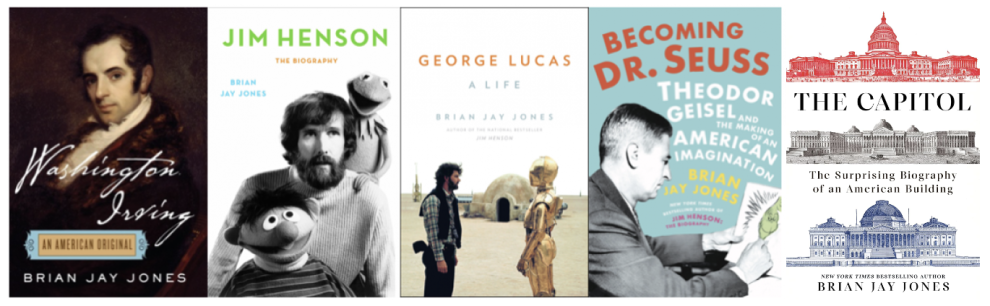
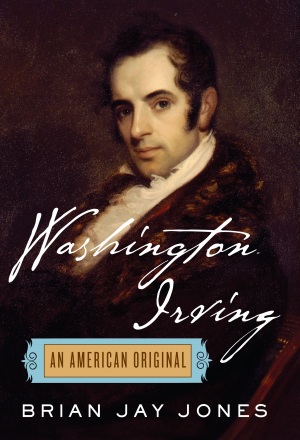
This week’s installment of The 217 — the magazine from the University of Illinois Urbana-Champaign — does a nice job looking at the two Irving bios that are currently on bookshelves, namely mine and . . . er, another. In the end, reviewer Jeff Nelson gives Washington Irving: An American Original a slight edge.

You can see the review right here.

Thanks for the kind words, Jeff.

Me and WI in the NYT

I’m in the New York Times this weekend . . . kind of.

In this weekend’s installment of his “On Language” column, William Safire discusses the etymology of the term “the almighty dollar,” which Irving coined in his 1836 short story “The Creole Village.” (Yup — apart from giving New Yorker’s the words “Gotham” and “Knicks,” he also gave economists and op-ed writers “the almighty dollar.”)

I point you to this article not only because it’s Irving, but because I was Safire’s source when it came to ensuring he got everything involving Irving correct, pointing him toward the original magazine article in “The Magnolia,” and providing him with a copy of the original story. I’m not mentioned in the article, but that’s still pretty neat, huh?

Anyway, you can read Safire’s column here. But if you’re a fan of writing and language, I’ll bet you’re reading Safire’s column already.

JD Talks About WI

…and I’m back from the long weekend to find that uber-blogger and friend of this blog Josephine Damian has a thoughtful — and very nice — review of Washington Irving over on her blog, Josephine Damian. The direct link to her review is here.

I love knowing what readers think, and I especially like knowing what they’re still thinking about once they’ve snapped the book closed for the last time and put it away. And Josephine says something very astute — and interesting — in her review:

By painting such an intimate portrait of the vicissitudes and triumphs, the chronic doubts and sudden successes of Washington Irving’s process and progress as a writer, Mr. Jones allows the modern day writer to draw their own personal analogy to his or her self, and they are all the more engaged as readers because they see their own course, experience and struggles reflected in Irving’s.

Thank you, and well played. When I sat down for the first time with Kate Johnson, Curator of Historic Hudson Valley, she said almost the exact same thing: “Everyone seems to see themselves in Mr. Irving.” And I would agree; I saw a lot of myself, both good and bad, in Washington Irving, and I think (and hope) other readers will, too.

Thanks for your thoughtful review and kind words, Josephine. I appreciate it.

Washington Irving in Foreign Affairs

Continuing to make my point that Washington Irving led one of the most unique 19th century lives — even beyond his role as America’s first Man of Letters — Foreign Affairs magazine (published by the way-intimidating Council on Foreign Relations) recognized Irving’s achievements as a diplomat and politician, and gave Washington Irving a good review in its May/June 2008 issue. They called it “a pleasure to read,” and said it “belongs in the library of any serious student of the United States’ engagement with the world.” Very nice.

You can see the whole thing here.

NYC Trip Report, Part 3 (Collect them all!)

I awoke on Saturday morning at 9:45 a.m. or so. I was due to meet Casey (my editor) and Jonathan (my agent) for brunch at Cafe d’Alsace at 11:45, so I had plenty of time to shower, dress, pack and check out of the hotel before heading out to hail a cab. Given that it was Saturday morning instead of the Friday rush hour, I assumed I would have no trouble finding a cab.

I was wrong.

I came out the revolving door of the Omni, dragging my suitcase behind me, and saw that the entire length of 52nd street was lined with barricades, separating the sidewalk from the street. Pedestrians could move along the sidewalk, and traffic — what little there was of it — could move along the street, but no one could cross. I backtracked toward Fifth Avenue and ran into the same thing: the entire street was effectively blocked off.

I had completely forgotten the Pope was coming. New York City — or at least a good portion of it — was shut down.

I called Casey’s cellphone and left her a grumbly message, telling her the situation and letting her know I would do my best to get to the restaurant on time. Then I headed back down 52nd and crossed over to Park Avenue, planning to start a hike up the island toward 88th. Here I found things were moving just fine — apparently the police barricade didn’t extend this far. The roads and sidewalks were open, and cabbies were freely plying their trade up and down the streets. I hailed one easily, and stepped out of the cab only 10 minutes later on the corner of 88th Street and 2nd Avenue (did you see that? I just gave you an intersection rather than a street address. Drinks all around!)

Jonathan was standing outside waiting for me. While he may have been jetlagged — he had just come back from the London Book Fair the night before — he looked super cool and relaxed, with his sunglasses and a suit that struck just the right balance between business and casual (it was a “casual business” look, rather than the more stilted “business casual”…) We shook hands warmly — I hadn’t seen him in person in more than two years, either — and headed inside to grab a table while we waited for Casey, who came gliding in a few moments later.

We had a terrific conversation over omelettes, salmon benedict, and strawberry Belgian waffles (“But hold the strawberries,” Casey specified) and believe it or not, I actually did more listening than talking. No, really. It was fascinating to hear Casey explain how a project gets pitched in editorial meetings, to learn just how many queries Jonathan works his way through in a week, and to hear their mutually strong opinions on New Yorker magazine (the consensus: every New Yorker reads the magazine, and nearly every one of them yells back at it. Sort of like we in DC do to The McLaughlin Group).

It was only a little after 1:00 when we finished, so we decided to walk the twelve blocks over to the New York Society Library, where I was scheduled to speak at 2:15. The weather was beautiful, the Pope Barriers had been removed, and New Yorkers were bustling up and down the streets to find somewhere to enjoy their first real weekend of Spring sunshine. In no time, we were under the blue and white awning in front of the New York Society Library — a dignified but otherwise unassuming white brick building just east of Central Park. Head Librarian Mark Bartlett greeted us warmly and escorted us up to the newly-renovated Member’s Room where I’d be speaking.

Mark generously offered to store my suitcase and briefcase in his office, so I followed him up an elevator to one of the upper floors where we stowed my bags. But then, instead of taking me back to the elevator, Mark opened one of the low doors to the stacks and asked me to follow him.

Well, sure. I’m a sucker for stacks. When I was a Senate staffer, one of the real perks of my U.S. Senate badge was that (at that time, at least) I could get into the stacks of the Library of Congress — a dark, cool, bibliophile’s paradise. And now Mark was leading me back among the Society Library’s collection of old books. There was that great Old Book smell that I wish they could somehow bottle so I could spray it in my own house. Heck, I’d even wear it as cologne.

“I thought you might want to see this,” Mark said, steering me toward an enormous old leather-bound ledger lying open on a low table. “We just found it this morning.”

At the top of the ledger’s right-hand page, written in perfect cursive script, was the name WASHINGTON IRVING. Just below it, in pencil, was the date 1836. Running in neat rows down the page were the titles of books Irving had checked out, along with the dates he had checked them out and returned them. This was, in effect, Washington Irving’s library card.

I swallowed hard. “Can I touch it?” I asked, and Mark nodded, smiling.

I’ve thumbed through Irving’s own letters, held an 1819 original of The Sketch Book in my hands, and, thanks to friends at Historic Hudson Valley, even walked through his private rooms. Compared with those, the document before me was nothing special — it was merely Irving doing one of those mundane, day-to-day activities we all do: going to the library and checking out a book. Yet, for that very reason, it was one of those remarkable moments where your subject comes suddenly to life.

I took a deep breath, inhaling that wonderful leathery old smell. Then I rested my hand gently on the 170-year-old page.

To be concluded.

Happy Birthday, Washington Irving!

April 3, 2008, marks Washington Irving’s 225th birthday — let’s call it a Nearlysemiquincentennial. I sent off birthday wishes to the folks at Historic Hudson Valley earlier today, and wanted to be sure I did the same here at home base.

If you only know Washington Irving through his short stories “The Legend of Sleepy Hollow” or “Rip Van Winkle” . . . well, then, you’re missing out on quite a bit. Irving’s repertoire was expansive, and ran from the serious — he wrote biographies of George Washington, Christopher Columbus, and Muhammad — to the downright bawdy. If you’ve never read Irving’s A History of New York — especially in its original 1809 wild-haired glory — what are you waiting for? It’s available from the Library of America, and you’ll find it more than worth the effort. While Rip and Ichabod might be better known, you’ll find William “The Testy” Kieft much funnier. The Sketch Book may have made him famous, but it’s A History of New York that first got him noticed and remains, I would argue, some of his finest, and funniest, writing.

So, pick up History of New York — or for that matter, anything by Irving — then read it. By doing so, you’ll be celebrating the life of America’s first genuine bestseller, celebrity, and all around good guy. Happy Birthday, WI.

In Which I Meet Washington Irving (For Real!)

I had a most extraordinary experience up in Newport this week — so extraordinary that I’m not even certain I can convey it here in this blog. With your indulgence, though, I’ll see if I can at least give you a feel for what the past few days have been like. I’m not even going to begin to do it justice, so for everything you read, please ratchet it up by a factor of ten for the appropriate amount of awesomeness.

On Wednesday morning, I traveled with Sainted Wife Barb up to Newport, Rhode Island, to make an appearance at the Redwood Library & Athenaeum. If you’re a bibliophile, you should make a pilgrimage to the Redwood at least once in your life, if not once a year, for it’s not only the oldest lending library in the United States, but also the one that’s been in continuous use the longest. It was established in 1747, and it’s a thing of beauty. The pic over there doesn’t even begin to convey how beautiful it is.

The oldest part of the library, the Harrison Room, is still crammed with books from the original collection–all there on the shelves for you to look at, marvel over, and think about what your well-read 18th century American wanted to see in his or her library: Encyclopedias. Jonathan Swift. Homer. Poetry. Every book a gem, and every one still in gorgeous shape. And what hangs above the shelves isn’t too shabby, either: original portraits — originals! — of notable Rhode Islanders by painters like Gilbert Stuart.

Well. Making an appearance in a room like that is an honor and a thrill, not to mention sphincter-clenching; it’s The Perfect Room, and you try your best to be worthy of it — and you’ve got almost 300 years of history staring down at you from the walls, reminding you not to embarrass them.

But there was another element in the mix at the Redwood that made this talk so important to me: members of Washington Irving’s family would be in attendance. In fact, I was in Newport at their invitation — an enormous honor, so I wanted to ensure I gave a talk that would give them, and all in attendance, a feel for just how remarkable their ancestor was and, I insist, still is. Barb had encouraged me — quite rightly — not to use any of the talks I had given in the past, and insisted I write a brand new set of remarks. So I had in hand what I called my E! True Hollywood Story speech. I knew it was going to run somewhat on the long side, but I hoped it would be informative enough, and funny enough, to keep everyone interested.

I had a crowd of nearly 100 jammed into the already intimate Harrison Room, and received a very nice introduction from, first, Cheryl Helms, the Library Director, and then from one of the editors of The Providence Journal (whose name, I am embarrassed to say, escapes me at the moment. I’ll edit this piece to insert it when I track it down.) I walked from the back of the room, through the crowd, to the podium, took a deep breath, and off I went.

…and it went even better than I had hoped. Because I had only finished my remarks the night before, I hadn’t had time for what I call a Deep Drill (where I read everything through in real time and “listen” to it) to determine whether it worked. I come from a speechwriting background, so I tend to script out everything — even what may sound like a casual aside — but my Deep Drill helps me determine where there may be dead air, where a joke has landed flat, or whether something has gone on too long — and right now, live on stage, I was Deep Drilling as I went along, getting a feel for the crowd as I talked, and deciding how to hit the beats as I approached them. And to my delight, it all went just fine. Laughs came in the right places, heads nodded or shook where I expected, the questions were interesting, and when I was finished, I got a really long, genuinely warm round of applause (as someone told me later, “We’re not a clapping crowd. We only clap when we mean it.”)

I signed and chatted for another thirty minutes or so, then after the crowd had gone, Barb and I got in our obscure rental car (an HHR? What the hell is that?) and followed Jan Gordon — head of Marketing for the library, who had also taken very good care of us — down Bellevue Avenue and over to the home of our host for the evening, the gentleman who had first approached the Redwood about inviting me to speak: Washington Irving.

Yes, for real.

In this case, it was Washington Irving III — or Rip, as everyone calls him — and he’s in a direct line of descent from Irving’s older brother, Ebenezer (since Washington Irving himself never had children, my first question to Rip upon meeting him — probably rather brusque, but I couldn’t help it — was “Which one do you come from?”) And what a charming gentleman, with an equally charming son (also Washington, though he goes by Knick, as in ‘Diedrich Knickerbocker.’ Cool, huh?).

Rip and Knick had very graciously put together what they called a “small” dinner party of about 3o guests, at his beautiful house, which he had carefully designed to reflect the contours and overall mood of Sunnyside, Irving’s home in New York. The food, conversation, and overall hospitality were all wonderful, the company exquisite.

And with their easy patter, gracious manners, and way of making everyone feel like the most important person at their house, it was obvious that Rip and Knick had the blood of Washington Irving coursing through their veins. If they’re any hint of what Irving was like in his day, it’s no wonder doors flew open for him to parlors around the world.

And staring down from his place of prominence over the fireplace, of course, was ‘Uncle Washie,’ in a beautiful Jarvis portrait that I had never seen before (“it was just cleaned,” Knick told me with a somewhat embarrassed laugh).

It was a true honor — it’s really the only word that carries the right amount of weight — to stand there in that house, under that portrait, and have the Irving family (I also met Rip’s brother Pierre, and his really acidly-funny wife, Kathy) tell me that my book had done their family proud. It was all at once humbling and enormously flattering, and it’s a moment of my life I’ll never forget.

And I think Washington Irving — who valued family perhaps more than anything else — would also have been enormously pleased to see just how much his own family is doing him proud. His name, reputation, and legacy are in good hands.