
Over the past week, I’ve been on the road doing research on Dr. Seuss, a road trip that took me from Fredericksburg up to Hanover, New Hampshire — where young Theodor (Ted) Geisel attended Dartmouth from 1921 to 1925 — then down the Connecticut River to Springfield, Massachusetts, where the future Dr. Seuss was born and raised. And yeah, there’s even a real Mulberry Street here, though contrary to rumor, Ted didn’t live on it.
My first stop, then, was Dartmouth, where I hoped to have a peek at the papers of Ted Geisel (Dartmouth class of ’25) held at the Rauner Library, housed in the Webster Building, right on the edge of the historic Dartmouth Green. For two-and-a-half days, I worked with a very helpful (and patient) group of librarians and archivists, who brought me one rolling cart after another loaded up with archival boxes.
 Some were full of press clippings — and believe me, Dr. Seuss generated a LOT of press in his lifetime — while others contained correspondence or photos or even his high school and college transcripts. Another contained a much worked-over mock-up of The 500 Hats of Bartholomew Cubbins, with Ted’s careful notes about color use, margin heights, even changes to the copyright page. There were back issues of Judge magazine, where Ted submitted cartoons back in the late 1920s, pages of art drawn for Dartmouth fundraisers, and a large envelope — think four feet long by two feet wide — containing advertising work and a large black and white drawing of a Seussian Noah’s Ark on white cardboard.

And of course, I always love to go through correspondence — and the Dartmouth collection didn’t disappoint, with folders full of letters Ted wrote to college friends reporting on trips in Europe, commenting on his mother-in-law, or pitching projects to editors at various magazines. Letters are one of my favorite parts of research, as it’s just you and your subject together, listening as they speak candidly in their own voices, make inside jokes or — in those really wonderful moments — nervously reference projects they’re pitching, wondering if anything will come of them.

And to think that I saw Mulberry Street.
After wrapping up my time in Hanover, I drove 90 minutes south to Springfield, where Ted was born in 1904. Springfield is rightly very proud of its most famous son (and that’s saying something, as the town actually has quite a few famous sons and daughters), and it shows: all the signage for the Springfield Museums prominently features Seuss characters, and the complex itself centers on a fun sculpture garden featuring Horton, the Lorax, Thidwick, Sam-I-Am, and — sitting in front, with one foot up on a drawing table — Ted himself, being given a coy hat tip by the Cat in the Hat.


 I spent several days in the Springfield City Library, rolling one wheel of microfiche after another onto the viewer as I read through issues of the The Springfield Republican and The Springfield Union from the early 1900s. While inconvenient compared to modern online archives, there’s still something wonderful about the old-school experience of working with microfiche, from sorting through the huge drawers of film boxes (you can see them in the background in the photo at left) to that satisfying thwack-thwack-thwack sound the film makes as it rapidly spools back onto the feed reel. The only real drawback — and this is purely personal — is that staring at the screen for hours on end as the film goes whizzing by in blur always makes me feel slightly seasick. Agh.
From here, I burrowed into the archives in the basement of the History Museum, going through various Geisel/Seuss histories and family trees. When I was done, I had the happy experience of touring The Amazing World of Dr. Seuss, the latest addition to the city’s cluster of permanent museums.

 I also had the pleasure of talking with museum administrators and staff, who helpfully arranged for me to walk through Ted’s childhood home (shown at right), still standing on Fairfield (not Mulberry) Street, and still looking — at least structurally — much as it did when Ted and his family lived there more than a generation ago.
All in all, it was a terrific trip up to Dr. Seuss territory. His legacy is in good hands in Hanover and Springfield, and I so appreciate everyone letting me be a small part of it.


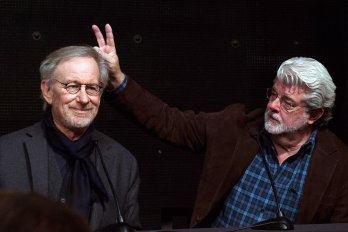 Lucas and Spielberg have one of those wonderful fraternal relationships where, as brothers do, they both admire and compete with each other. Would Spielberg ever make such a joke to Lucas? I don’t think so – that one might be a little raw; you can see it in Lucas’s face when Charlie Rose mistakenly says that Lucas has won an Oscar, and Lucas says with a slight grimace, “No, I’m too popular for that…”
 Do people forget that Lucas was involved with those movies? Maybe for Willow, though I think people now remember it more as a George Lucas film than Ron Howard one! I think the point, anyway, is that Lucas had a great knack for story concept – or, at least, how that story should look at 20,000 feet. In the best instances – Star Wars, Raiders – it then took some really great writers (Willard Huyck, Gloria Katz, Lawrence Kasdan) to pull the final story and script together. The main ideas – the characters, the concepts – behind Willow and at least some of the Indiana Jones movies are really good ones, but the execution can be tricky. With Raiders, I think, it’s done about as well as it has ever been – that’s one where Lucas is content to light fuse and stand back and let Spielberg put Kasdan’s script to work.
 Finally, it’s ultimately a great story about being absolutely true to yourself and committed one thousand percent to your own vision. Lucas constantly invested his own money in his company and in his films, even as his accountants fretted. Lucas was and is absolutely committed to getting the vision of the artist up on the screen in its purest form, and has worked his entire career to give them the tools to do that, whether it’s developing the gold-standard in special effects with ILM, creating groundbreaking digital technology (part of which became Pixar), or encouraging theaters to install earth-rumbling sound systems – like THX – to ensure a movie sounded in the theater the way it did in the editing room. The word ‘no’ isn’t in his vocabulary. If you’re a creative person – or a businessperson! — looking for a bit of inspiration, I think you’ll find that in George Lucas’s story as well.
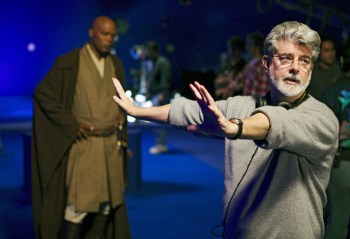 Back in the 1980s, it was definitely too much for him. He stopped directing right after Star Wars, for example, because it actually took a physical toll on his health. He had little patience with actors, and the daily grind of being on-set really kind of annoyed him. He was much better suited to producing, where he could still oversee and control everything without having to actually run the set – though with Empire and Jedi, he still practically parked himself on the shoulders of his hand-picked directors anyway. Lucas can really never not be involved.
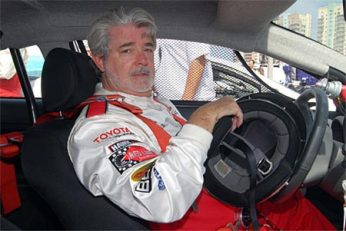 Absolutely. Lucas is fascinated by man’s relationship with machines – it informs his work all the way back to college in films like THX-1138 4EB or 1:42:08, which features race car driver Allen Grant putting a racecar through its paces. His own experiences as a gear head and a cruiser in high school are up there on the screen in full force in American Graffiti. And in Star Wars, his ships tend to move and dive and scream by like cars at a race track. Heck, the podracing scene in Episode I is practically the drag race in American Graffiti! Even a ship like the Millennium Falcon is really just a spaceship hotrod, souped up for speed and with a lot of special modifications that the driver made himself. Even Darth Vader himself is a man struggling with machine – “he’s more machine than man now” Obi-Wan tells Luke.
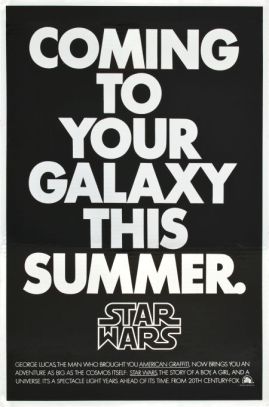 Forty years ago this week — Sunday, May 1, 1977, to be specific — George Lucas screened the premiere of Star Wars at the Northpoint Theater in San Francisco , the very same theater where he’d triumphantly (though not perfectly) debuted American Graffiti in 1973. Lucas was bracing for the worst; previous showings of the film, even as a work-in-progress, had been met with indifference, confusion, and sometimes anger, even from some of his closest friends (“What’s all this Force shit?” Brian DePalma had thundered at Lucas after a private showing in February).
 If you’re near Rockville, Maryland tomorrow evening, come on over to the Johns Hopkins University, Montgomery County Campus, where I’ll be speaking about George Lucas at 7 p.m. as part of the Gaithersburg Book Festival. (Yeah, I’m back in my old neck of the woods — and I also know I’m competing with one of my old employers, since the Montgomery County Council is holding a Town Hall meeting at the same time down in Silver Spring. Choose the event that best suits your particular wants and needs…)


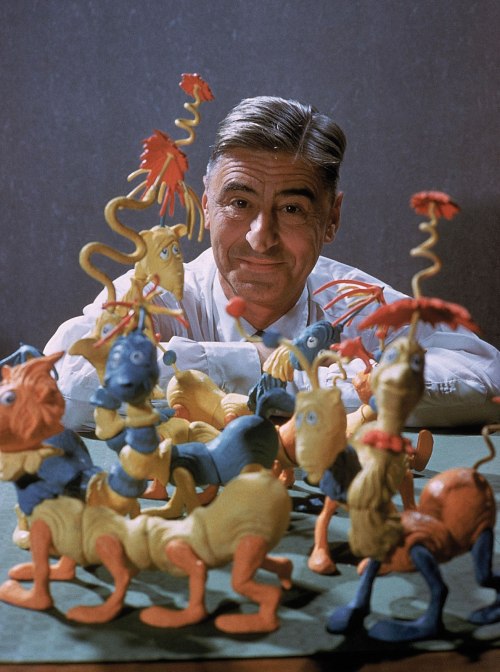 I’m SO thrilled to be working on the life of yet another wonderful, creative, inspiring iconic subject — and I’m just as happy, too, that I’ll be working with the same terrific team at Little, Brown that helped put the George Lucas bio in your hands.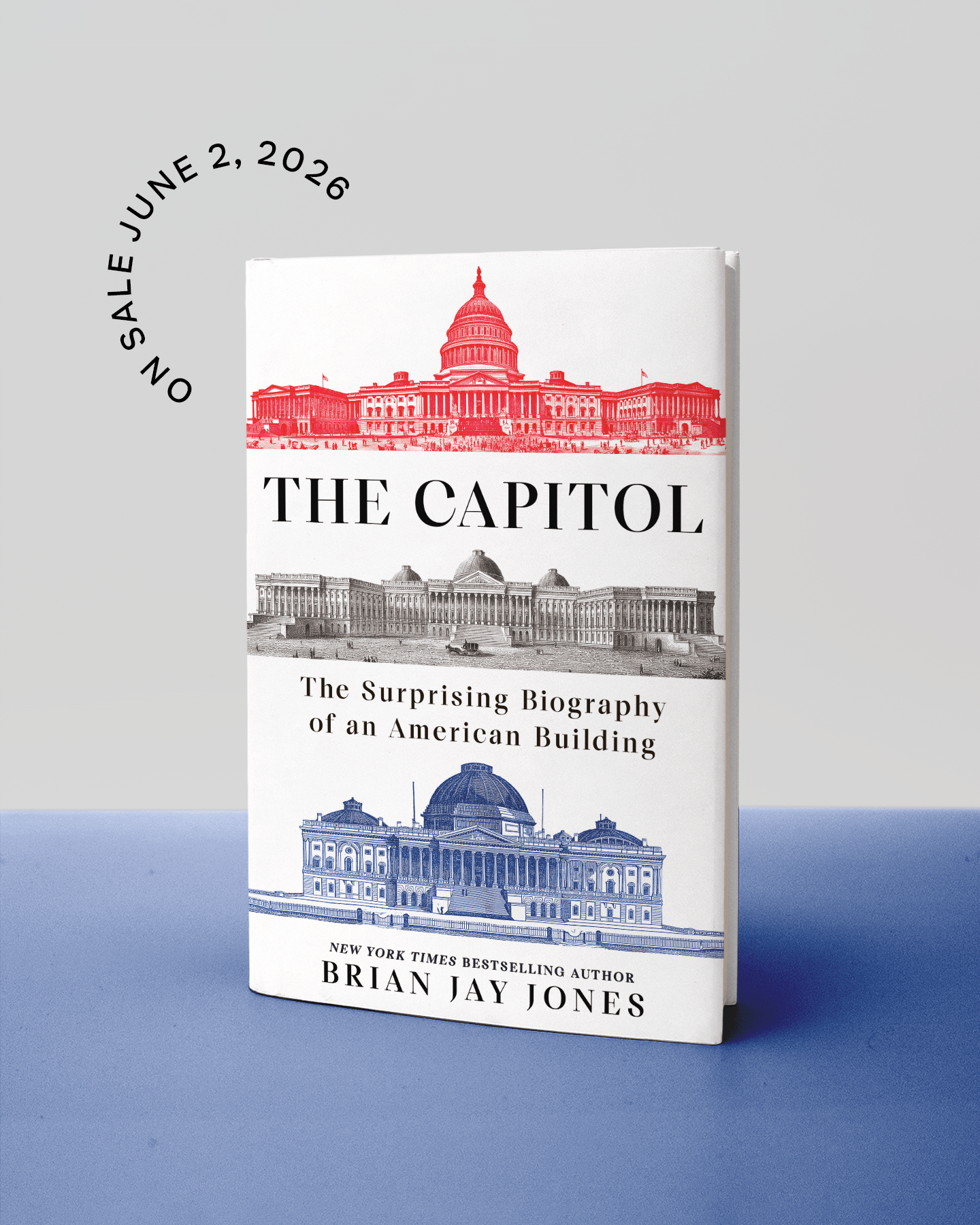


 Brian Jay Jones