…And One More, While I’m At It.

Speaking of new releases, The Tavernier Stones — the debut novel of my pal Stephen Parrish — hit bookstores this past Saturday. Stephen’s a deep-drill researcher with a passion for his subject (he’s got  degrees in both gemology and cartography, which makes him the Indiana Jones of jewelers), and his novel is sort of like Bones meets The Da Vinci Code:

When the well-preserved body of seventeenth-century mapmaker Johannes Cellarius floats to the surface of a bog in northern Germany, a 57-carat ruby clutched in his fist, the grisly discovery attracts the attention of criminals, crooks, and thugs across the globe. It ignites a deadly international treasure hunt to find the fabled Tavernier Stones, a stash that reputedly contains some of the world’s most notorious missing jewels, including the 280-carat Great Mogul Diamond and the 242-carat Great Table Diamond.

Congratulations to Stephen, who worked hard for this one.  You can order it here, or hit his website, where he’ll steer you toward a bookseller near you.

Happy Launch Day, Jonathan Bender!

Congratulations to Lego addict (and fellow member of the Lyons Den) Jonathan Bender, on the release of his way-cool book LEGO: A Love Story. If you’ve been following Jonathan on his blog for the last few years (like I have), you know that he approached Lego as a sort of enthusiastic amateur, and developed the chops to become a master builder.  C’mon, how much fun does this sound? Check it out:

In search of answers and adventure, Jonathan Bender sets out to explore the quirky world of adult fans of LEGO (AFOLs) while becoming a builder himself. As he participates in challenges at fan conventions, searches for the largest private collection in the United States, and visits LEGO headquarters (where he was allowed into the top secret set vault), he finds his LEGO journey twinned with a second creative endeavor—to have a child. His two worlds intertwine as he awaits the outcome: Will he win a build competition or bring a new fan of LEGO into the world? Like every really good love story, this one has surprises—and a happy ending.

LEGO: A Love Story is available here, and you can even read some fun excerpts from it here.  Go get it.  While you do, I’m gonna go dig out all my old Lego space sets from the late 1970s, put them together, then attack them with my Raydeen Shogun warrior.  Just like the old days. My brother will vouch for me.

“I Cannot Tell A Lie: They Were Under My Bed.”

Those of us who have sheepishly returned an overdue library book and paid the seventy cent fine can be a bit less embarrassed now — because thanks to some recent record scrubbing by the New York Society Library, we found out we’re in good company: George Washington has two overdue books.

According to the story in the Guardian:

The library’s ledgers show that Washington took out the books on 5 October 1789, some five months into his presidency at a time when New York was still the capital. They were an essay on international affairs called Law of Nations and the twelfth volume of a 14-volume collection of debates from the English House of Commons.

The ledger simply referred to the borrower as “President” in quill pen, and had no return date.

Sure enough, when the librarians checked their holdings they found all 14 volumes of the Commons debates bar volume 12.

Under the rules of the library, the books should have been handed back by 2 November that same year, and their borrower and presumably his descendants have been liable to fines of a few cents a day ever since.

Doing the math, that adds up to an overdue fee of about $300,000.  My pal Mark Bartlett, the NYSL’s head librarian, approaches this matter delicately and with a diplomacy that would likely have made the first president proud.  “We’re not actively pursuing the overdue fines,” Mark says. “But we would be very happy if we were able to get the books back.”

Conference Call

A few things.

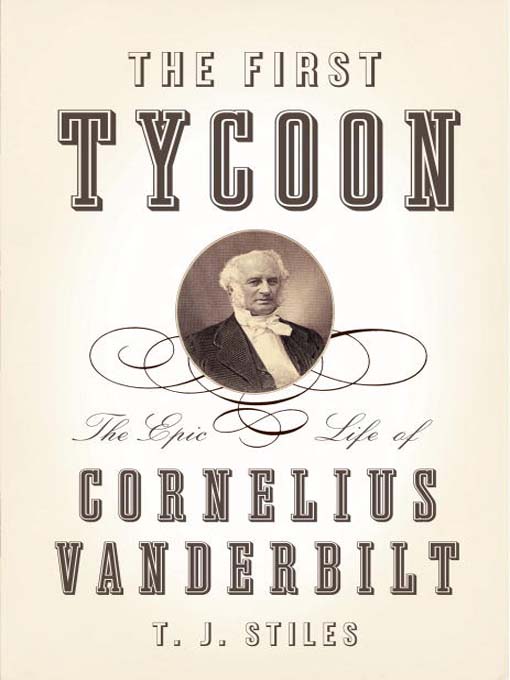
First, here’s a laurel and hearty handshake extended to T.J. Stiles, winner of the 2010 Pulitzer Prize for Biography for The First Tycoon: The Epic Life of Cornelius Vanderbilt. Stiles pulled off a literary hat trick, of sorts, by having his biography awarded both the Pulitzer and the National Book Award for non-fiction.  Plus he’s a Caro fan, which gives him even more points in my book.  Not that he needed them. Anyway, congratulations all around.

Speaking of Pulitzer Prize winners (watch what I do here), we’re less than a month away from the first Compleat Biographer Conference, hosted by the Biographers International Organization (BIO) in Boston on May 15.  It’s your chance to immerse yourself in biography for a day, talking with, listening to and learning from some of the best — including interim BIO President and Pulitzer Prize winner Debby Applegate, the aforementioned T.J. Stiles, Charles J. Shields, Kitty Kelley, James McGrath Morris, and tons more.  It’s a daylong series of workshops and panel discussion on the practical aspects of the craft and art of biography, including a session with agents who represent biographies and non-fiction.  Come on, it’ll be fun.

For more information on the conference, go here.  While you’re at it, stroll over to the home page for The Biographer’s Craft — soon to be the official newsletter of BIO — and put yourself on the mailing list.

At The Gates

Hey, are you wondering why you haven’t heard much on Project Blue Harvest lately?  It’s because after nearly two years of research, conversations, more research, e-mails, more conversations, writing, talking, phone calling, rewriting and revising . . . well, we’re finally ready to go Out on Submission — three of the most exciting words a writer can hear.

Agent J and I haven’t put our horse in the race yet, but we’ve trotted it out to the starting gates.  Early next week, if all goes as planned, the gate drops, the bell rings, and we’re off and running — so stay tuned.  And that’s the last time I’ll use a horseracing metaphor, I promise.

Have a good weekend.

Batteries Not Included

I was in a sporting goods store the other evening, looking at the rows and rows and shelves and shelves of equipment and clothing available for almost any kind of sport or activity, and it got me thinking: I’m not sure if it’s an American thing exactly, but we seem to love our gear and accessories.

When we pick up a new hobby — whether it’s baseball or lacrosse or running  — we love to go out, before we’ve even set foot on a ball field or track, and buy all the gear.  Wanna play golf?  Apart from the clubs, balls and tees that are the required equipment, you can buy golf shoes designed by aerospace engineers, and golf shirts with almost any kind of logo. There are golf bags with jillions of little pockets that can fold up to fit in a briefcase, and golf umbrellas that span large enough to protect Montana from the rain. There are ball markers and ball cleaners and spike tighteners and club scrapers — all of which seem to have bottle openers on them — and countless other little toys and accessories to make life on the links that much easier.  We take all of that stuff, put it on, throw everything in the car, head for the golf course and discover…

…well, we discover that golf can be hard work.  We find out that no matter how fancy the gear is, how great as all the accessories might be, what looks like a fun game still takes a certain amount of skill and work to do well. Even if you never want to join the PGA tour — or even want to become a scratch golfer — it still takes some skill and practice to keep from spraying your ball into the trees and spending all your afternoon in the rough.  Which sucks.  Take it from me.

It can be the same way with writing.  Writing looks fun and relatively easy — after all, the only real equipment you need is a computer with some sort of word processing program or, if you’re old school, a pen and notepad.  And there are plenty of accessories, too — we like desks and laptops and colored pens and stationery and printers and Post-It notes. We picture everything in our work space being just right, precisely conducive to the creative process, so we can get to work.

There’s a great moment in the movie Funny Farm where Chevy Chase — who’s moved from the city to a picturesque farm house so he can write that novel he’s been thinking about — finally sits down at the typewriter in his perfectly ideal and secluded office, types the three-word title at the top of the first page (“THE BIG HIT”) and then . . . sits and stares.

We’ve all been there — that moment when you realize that it doesn’t matter whether you’re on a Mac or a PC, whether you’re using a chewed up pencil or a Mont Blanc pen, or whether you’re at a mahogany desk or the Formica-topped kitchen table.  Regardless of your accessories, you’ve got to get something on that piece of paper.  Writing — like golf or baseball — is suddenly about more than the accessories.  It’s time to create words, to create worlds — and while writers love doing it, it’s still work. As the brilliant William Zinsser says: “I hate writing, but I love having written.”

What tends to happens, then, whether it’s writing or golfing, is we start paring down on our accessories, settling into what’s comfortable — and comforting — to use. Sometimes its a matter of experimentation — maybe the most expensive golf ball doesn’t fly as far for you as a cheaper brand, simply because of the quirks of your particular swing.  Writers do the same thing, discarding gel pens in favor of ball points, using old fashioned, beat up filing cabinets to store story ideas, research notes, and interesting photos, or coming to realize that that great slab of polished oak you’re using for a desk is too intimidating and moving back to the cozier climes of the smaller, coffee-stained IKEA modular.

Or maybe you do find you need a leather golf glove on each hand to keep your swing under control, or you write better with a gold-nibbed fountain pen at a spartan mahogany desk.  Maybe you don’t even need it, maybe you just like it and want it. And that’s okay, too.  Accessories can be a fun part of your work — but it is work, so it’s up to you to determine what you need and what you don’t to get it done. No one else gets to decide that for you.  As I’ve said here before, you just have to go with what works for you.

Now if you’ll excuse me, the new Levenger catalog just arrived.  Surely, there’s something in it I have to have. No, really.
Credit Where Credit’s Due…

Remember several weeks back when I told you of my struggles to find an easy way to transcribe lengthy interviews? (It’s right here if you missed it.  Go ahead. I’ll wait.) At that time, I purchased the Scribe program from MacSpeech, only to find it didn’t work the way I needed. It can’t handle multiple speakers, for example, and has to “learn” the sound of your own voice — at which point you can then speak into the computer and have your words magically appear on screen.  That’s cool and all, but since I don’t write by dictating, that’s not what I wanted or needed.

When I called MacSpeech to let them know of my issue, I was told that since the program was “working as it should,” it was likely I would not be issued a refund — the problem was on my end, not theirs.  I groaned at that, but fair enough — I wrote it off to the Lesson Learned Department.

Well.  To my surprise, several days ago, I noticed that MacSpeech had credited my bank account for the cost of the program.  Yes, they refunded my money — no real hassles, no follow up questions, no fireworks. They didn’t even notify me that they were doing so.

So, since I initially grumbled a bit after my initial contact with MacSpeech, I wanted to follow up and give them a shout out and some credit where credit’s due.  Thanks for understanding my issue, MacSpeech, and for refunding my money. I appreciate it.

And while we’re at it, let me also give a plug to the transcription company I’m using to have my interviews transcribed.  It’s Production Transcripts out in California, and they’ve been nothing short of fantastic.  I got an electronic file within two days, and the transcript was accurate and virtually error-free.  Their costs are based on the length of your recorded interview — they charge by the recorded minute — which allows you to get a fairly good ballpark figure on costs before you send anything. It was a top-notch job, and I’ll be sending more work their way.

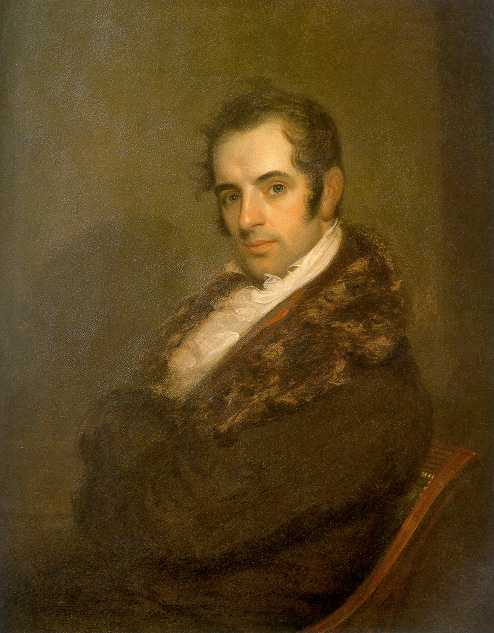
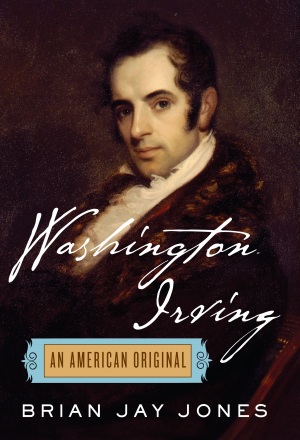
Happy Birthday, Washington Irving!

American Literature’s first international superstar was born on this date in 1783, in a New York City still scorched by the fires of the American Revolution.  By the age of five, he would be declared a dunce.  He would barely complete his formal education, yet by age seventeen, would make his debut in print with nine pseudonymous letters in the New York newspapers.

He would miserably study law while wooing the  daughter of his legal mentor — and at her death, would immerse himself in a mock history of his home town, which would explode into the public on the back of a literary hoax.  In that work, he would also give his home town a new sense of identity, wrapped up in the persona of a crusty Dutch historian named Diedrich Knickerbocker.

At age 35, while living in England, he would create the first American international bestseller and introduce to literature Ichabod Crane and Rip Van Winkle.  Yet, he would remain unsure of his ability to earn a living by his pen and would accept a government post in the British embassy, where he would surprise a U.S. President, and future president, with his political acumen.

And still, the so-called dunce would teach himself several languages, study in the Spanish archives, and publish books on Spanish history, Christopher Columbus, and the prophet Mohammed. Years later, his expertise in all things Spanish would lead to his appointment as ambassador to Spain.

Adored by the public, courted by politicians, and admired by fellow writers, he would spend his later years writing a five-volume biography of George Washington, the president and American icon after whom he had been named. His death would be mourned by a nation, his legacy celebrated by the literary lions of the day. And while his reputation took a pummeling in the early part of the 20th century, his creations have become a part of our American cultural DNA, and his reputation is, deservedly, on the rise.

Celebrate Washington Irving today, on his 227th birthday.

Celebrate to Wake the Dead!

This Saturday, April 3, not only marks the 227th birthday of Washington Irving, but it’s also the date of the 160th anniversary celebration of Irving’s burial place, Sleepy Hollow Cemetery, in Sleepy Hollow, New York.

Things get started at 11:00 a.m., with plenty of birthday cake and refreshments, tours of the cemetery, and — if the rumors hold true — maybe even a rare daytime appearance by a certain headless Hessian soldier on horseback.  You’ve been warned.

I’m admittedly biased, but I think it’s a beautiful place — full of hills and nooks and meandering paths, with just enough creakiness to make it feel somewhat ancient and appropriately spooky.  There are really impressive monuments to local Revolutionary and Civil War soldiers — and, yeah, there are some really impressive people buried there, too. Besides Washington Irving, look for Andrew Carnegie, Francis Church — who wrote the famous “Yes, Virginia, There Is A Santa Claus” editorial for the New York Sun — Samuel Gompers, Walter Chrysler, and cosmetics queen Elizabeth Arden. 

Irving himself had a hand in the naming of the cemetery, which town planners — in a bit of uninspired pique —  had originally called “Tarrytown Cemetery.”  In a May 1849 letter to Gaylord Clark, his editor at Knickerbocker Magazine, Irving pooh-poohed that name, calling it a “blunder.”  Here’s Irving, in a typically entertaining letter to his editor:

I send you herewith a plan of a rural cemetery projected by some of the worthies of Tarrytown, on the woody hills adjacent to the Sleepy Hollow Church.  I have no pecuniary interest in it, yet I hope it may succeed, as it will keep that beautiful and umbrageous neighborhood sacred from the anti-poetical and all-leveling axe. Besides, I trust that I shall one day lay my bones there. The projectors are plain matter-of-fact men, but are already, I believe, aware of the blunder which they have committed in naming it the “Tarrytown” instead of the “Sleepy Hollow” Cemetery. The latter name would have been enough of itself to secure the patronage of all desirous of sleeping quietly in their graves. I beg you to correct this oversight should you, as I trust you will, think proper to notice this sepulchural enterprise.

Clark did, in fact, in the June 1849 issue of Knickerbocker, throw in a casual plug for “Sleepy Hollow Cemetery,” calling it a “beautiful” and “convenient” place.  While the cemetery wouldn’t be officially renamed until after Irving’s death, for the most part, locals have nearly always referred to it as Sleepy Hollow Cemetery.

And as he predicted, Irving did indeed lay his bones there, under an unassuming tombstone, in a gravesite he had carefully chosen next to his mother.  It may take a bit of tromping around to find the Irving Family Plot — there are no stone figures or busts to point the way, so look for the wrought-iron railing around the site, right on the edge of a hill sloping down toward the Old Dutch Church. 

I can’t make it this weekend, but if you go, tell Mr. Irving I said hello.   If you’re interested in going, more information can be found right here.

It Just Works.


That’s biographer Robert Caro, one of my all-time favorite writers, in the pic above, standing in the New York office where he does all of his writing.  Does a writer’s space need to be ritzy? Does it need to be crammed with bookshelves or filing cabinets or piles of notes?  Nope.  It just needs to work for him.  Considering Caro’s won the Pulitzer twice, I’d say this space has done its job.

Caro does his writing on an old Smith-Corona 210 typewriter, which you can see on his desk just right of center.  I don’t envy him that–I haven’t had to use a typewriter since 1984, and while I love the way they look, I don’t really miss using one–but I do love that he’s a notebook and binder type of guy. 

I’m often asked how I organize my notes and resources, and which computer program I use to keep things straight.  I keep hearing the merits of a program called Scrivener, where you can use a virtual bulletin board and Post It notes and outlines to keep everything straight. Thanks, but no thanks — I like to use actual paper, notebooks, Post It notes, and journals.  It’s a mess, but so far, it works for me.

And that’s why I love this picture of Caro.  His office is a place that works — a reflection of Caro’s own work ethic (he wears coat and tie to his office every day, to remind himself that writing is his job and that he’s there to work). Perhaps a visitor to the office might not be able to find anything, but that doesn’t matter.  He doesn’t have to.

Caro has his own order to things. There’s a method for shelving his books (as he told Newsweek, general non-fiction on the post-Cold War is farthest away from his desk, while those on his subject are closest).  The binders crammed with his interview transcripts and notes are stacked in an orderly manner by oldest to newest.  And I love those pages tacked to the wall behind him:  a gigantic outline, mapping out Caro’s progress from book one of his biography of Lyndon Johnson, through his still unfinished fourth volume.

A mess?  Maybe.  But it’s Caro’s mess — and he knows every inch of it.  “I trained myself to be organized,” Caro explained.  “If you’re fumbling around trying to remember what notebook has what quote, you can’t be in the room with the people you’re writing about.”