We’re getting ready to get in the car and head to Sleepy Hollow for the weekend, where the weather forecast for tomorrow is calling for snow. But I’ll be at Sunnyside come rain or shine or, er, snow on Saturday. Come on out and chuck a snowball at me. Or something.
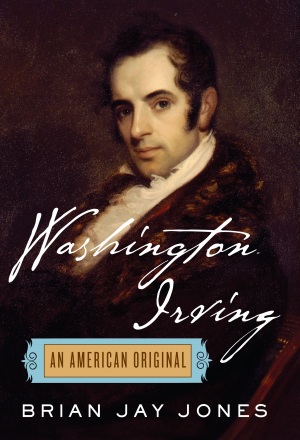
In the meantime, here’s a short interview with me over at the Hudson Valley blog, where you can hear me talk about Irving as the 19th century Elvis, and who I think would win in a fight between Batman and Spider-Man.
I’ll be back here on Monday with plenty of pictures, I hope. The Blaze should look particularly creepy in the mist and snow….
One of our favorite things to do at this time of year is to get lost in an enormous corn maze. Almost every year since Madi was a wee sprite, we’ve managed to find a corn maze at Halloween time where we can spend an hour–or sometimes hours–trying to find our way out.
Each year, the Boys and Girls Club at the town down just the road hosts an enormous Halloween festival with haunted houses, hay rides, and, yes, a corn maze. We went through their corn maze two years ago and got really, really lost — so lost, in fact, that we ended up cheating our way out, ducking down low and cutting out through some of the lower-growing corn at one corner. We finally emerged in a plowed field, then picked our way around the outside edge of the maze in the dark until we found society again.
This year, we decided to give their maze another try. Madi was having two friends over to work on Halloween costumes, so we agreed to head over to the corn maze at around 7:30 p.m., well enough after dark for the maze to be really spooky. I pocketed a flashlight this time, in the event we had to make another unauthorized escape, and at 7:30, all five of us — me, Barb, Madi, and two of her friends — stood just outside the entrance to this year’s enormous corn maze.
We had only made it about twenty yards inside when we saw a pile of hay bales stacked to one side–and as we approached it, someone in overalls and a creepy mask jumped out at us. All three girls screamed, and we cut quickly to our left, making our way around several turns in the dark until we came upon a small group of people huddled in a wide spot. There at the entrance to the next leg of the maze lay a body, very still. The group in front of us laughed nervously in the dark. There was no place to go but forward past the body, or turn back.
I clicked on the flashlight and ran the beam the length of the body. Sure enough, it was real person, laying very still and just waiting for someone to take a step forward so he could make a lunge for their legs.
Fair enough. I took a wide step forward, just barely out of his reach. He lunged anyway, and our girls screamed bloody murder.
Suffice it to say, we didn’t make it any further than that.
I’ll be speaking at 11:30 and again at 2:00–two very quick little chats about Irving and Sunnyside, with ample time for questions, which is usually the most fun part of any talk. And my thanks to Rob Schweitzer at HHV for his help arranging everything.
If you’re in Tarrytown next weekend, come say hello–and then enjoy a few hours at Sunnyside, or spend your evening at either the Great Jack O’Lantern Blaze at Van Cortlandt Manor, or a nighttime version of Legends over at Philipsburg Manor. You’ll have fun. Trust me.
Almost as if someone flipped a switch, the trees are suddenly changing colors and sloughing off their leaves like a raggy old coat. The chipmunks in our back yard are running back and forth between our two old chestnuts and their hole by an old stone wall, their mouths crammed with the big shiny nuts as they disappear, tails twirling, into their hidey-hole. And for the first time in half a year, a strong wind suddenly kicked up from the southwest, pounding against the stone chimney on our dining room, and making the flue rattle. Fall is here.
For those of you wondering how my battle with my cable/internet provider finally turned out: it was a war of attrition, but I finally won. (Getting Comcast to deactivate my account was just as infuriating as my numerous attempts to get someone out to fix anything, as I was told to leave my phone number and someone would get back to me on that. And then no one did.) I was later asked why I never called a friend of mine who heads up Comcast’s government affairs office to get him to push my requests along. My answer was simple: I always hope it doesn’t take connections for a customer to be treated decently.
Anyway, we’re officially done—I stood in line for an hour to return my cable box and modem—and we’re incredibly happy with our switch to Verizon. Plus, with our home phone on the system as well, we end up with a good deal of savings every month, even after the full price for the system kicks in after six months. So, well done all around. Now I’m just trying not to watch the Biography Channel 24/7.
As part of the research for my latest project, I’ve been closely scouring the Washington Post from the mid-1950s on. While doing research at the Library of Congress last year, one of their typically awesome librarians helpfully steered me away from the microfiche and over to the online resource ProQuest.
If you’re not a research nerd, I’ll explain. ProQuest is a database made up of tons of different newspapers — the Washington Post, New York Times, Wall Street Journal, Christian Science Monitor , to name just a few — with every page scanned into a pdf file. You can pull up a full page, look it over, and if you see something you want to read, you simply click on the article and a new pdf file will pop up with the article on it all by itself. Everything is clickable, from the crossword puzzle to the comics to the ads.
But what makes the system really useful is that you can type in search words — like the name of your subject, for example — hit RETURN, and the search engine scours all the pdfs for your search terms. That saves you from having to crank through a microfilm, scanning for an article or headline — the sort of thing that makes me motion sick when I do it for hours on end.
Anyhow, as I’ve been writing my sample chapters for my latest project, there have been times when I’ve wished I could get back into the ProQuest system to look some things up. Unfortunately, I didn’t have time to get down to the Library of Congress to log into their system.
Finally, I decided to see if my local library might at least have old microfilm of the Washington Post that I might be able to use, so I got onto the website of my county library to do a bit of poking around.
To my surprise, our county library system has ProQuest access to a few newspapers, including the Washington Post. Not only that, you don’t even have to come in to the library to use it. If you’ve got a library card (and I do), you can use your card’s ID number to log into the system from home. Fantastic, and just what I needed.
So, consider this a shout out for a job well done, Montgomery County Public Libraries. Just another reason to love your local library — and if you haven’t visited your local library in a while, or poked around on its website, go ahead and do so. They won’t mind a bit.
Fall seems to be officially here. Temperatures have settled squarely into the low- to mid-70s, and the air is starting to get that delicious crisp edge. Some evenings you can smell fireplace smoke, cutting its way through the chill to find your nose. The weather is that odd combination of brisk and balmy, so you can wear shorts as you work in the yard, but still need a sweatshirt, preferably with the sleeves pushed up to your elbows. It’s my favorite time of year.
Fall also means Halloween is just around the corner, as hard as that is to believe. My wife is an absolute Halloween Junkie. While she’s not a fan of the horrifying, she does delight in the goofy fake-scary decorations, from signs that say “EEK!” to life-size plastic skeletons we do all sorts of terrible things to. And at the end of the season, we’re always very careful to pack the skeletons up again with their upper bodies in one box and their legs in another. That way, if they come to life and want to go on a killing spree, we’ve at least made them easier to outrun. Because you can never be too sure.
If you’ve never been to either event, try like heck to make it. I’ll try to do a better job taking pictures this year so I can put up a few to give you an idea of just how neat these events can be. Plus, I’m working with Historic Hudson Valley to see if we can come up with something fun and Washington Irvingish to do when I’m there. I’ll keep you posted.
Finally, I’m working hard on some sample chapters for my latest project, to see if I can make anything come of it. I’m pleased with what I have so far — and Barb gave me some spectacularly good edits on the first chapter — but we’ll see what happens. If this comes together, I really will explain everything that’s been going on for the last 18 months. Hopefully, all will become clear at that time.
My internet connection has been down for a while, which would normally have done wonders for my productivity, except I was laid up with the flu for a few days and got nothing written anyway.
Normally when the internet goes down, I ride it out–it generally takes a while, but I have some oddly misplaced faith that the system will right itself. This time, that didn’t seem to be happening. I needed to call Comcast, but typically, I didn’t have Comcast’s number handy since that’s the sort of thing I would look up online. So I finally placed a call to Comcast from my office in Rockville, where I could look up their number then call them on my cell phone. My phone call went something like this:
Comcast: Thank you for calling Comcast. Please state the nature of your medical emergency.
Me: Yes, my internet doesn’t work.
Comcast: Did you try jiggling the handle?
Me: . . .
Comcast: Ha ha! I kid! Seriously, did you?
Me: The problem isn’t on my end. Everything here is working.
Comcast: I will be TOTALLY happy to help you with that! Please log onto your Comcast account and someone will help you immediately.
Me: Um. My internet doesn’ t work.
Comcast: The what?
Suffice it to say, the problem has not yet been fixed. While I had them on the phone, I asked to speak with someone about a problem I’ve been having with the OnDemand function of my cable, a feature that hasn’t worked on my system since a cable technician came over a year ago to fix a different problem. They referred me to their Live Chat function, where I had the following talk with a technician:
Comcast: Hello, I am DUNBAR3233. How are you today?
Me: Good, thank you.
Comcast: I am glad to hear that. I hope you are having an outstanding day.
Me: Thank you.
Comcast: Are you having an outstanding day?
Me: Can we get on with this please?
Comcast: I am happy to help. Please state the nature of your medical emergency.
Me: That joke has been used already.
Comcast: …
Me: My OnDemand doesn’t work.
Comcast: I am sorry to hear that. We at Comcast sympathize that you cannot watch episodes of America’s Most Violent Cake Wrecks on demand.
Me: Me too. Anyway, can someone come fix it?
Comcast: Account number, please.
Me: I’m not at home. I have no idea.
Comcast: That is not a problem. I have your account number here, along with your sixth grade report card. Ha ha! You failed math! No WONDER you can’t get your OnDemand to work.
Me: Get on with it.
Comcast: I am happy to help. Please turn on your television and cable box.
Me: I told you before that I wasn’t at home.
Comcast: Is there any chance your home is being burgled at the moment? Perhaps the robber could turn on the television.
Me: No, he’d probably just take it. Never mind, I’ll call back when it’s more convenient for you.
Fans of Scooby Doo generally agree that the show jumped the shark with the introduction of Scooby’s annoying nephew, Scrappy Doo. And if you’ve ever asked the universe rhetorically, “What in the hell were they thinking?” or, maybe better, “Who’s to blame?” then television writer Mark Evanier has an answer for you. In fact, it’s a confession—because Mark Evanier is, indeed, the guy who came up with Scrappy Doo. Or, at least, mostly. As he says over on his web site:
People ask me if I knew at the time I was contributing to the creation of a such a hated thing as Scrappy Doo. No, I didn’t and no, I still don’t. I am aware that there are some folks out there who, given the choice of seeing the execution of Osama bin Laden or Scrappy Doo, would opt for Scrappy and wonder why you even had to ask.
In a six-part series on his always-fascinating website, Mark takes you through the executive and creative process that brought about Scrappy—and he’ll also tell you how Scrappy might actually have saved Scooby Doo in the ratings. As much as it might pain you to know it.
Marks tells his story in six short installments, which he’s gathered right here for you to read. Go read it—and remember, the second suspect you meet is probably the ghost.
September 17, 2009 marks the 222nd anniversary of the day 39 delegates to the Constitutional Convention in Philadelphia signed their names to their completed document and, in a burst of what can only be called skeptical optimism, sent the Constitution to the states for formal ratification. (My home state of Maryland, I’m pleased to say, while it made a generally poor showing at the Convention itself—two of its five delegates didn’t even sign the thing — was the seventh state to ratify, officially approving the document on April 26, 1788.)
Constitution Day is one of those holidays like Flag Day—it gets a mention on most pre-printed calendars, but we rarely stop to reflect on what the day actually means. I want you to do so today, if only for a moment.
Just before the Constitution was signed, Benjamin Franklin asked to make a few remarks—which the ailing Franklin would have read aloud by fellow Pennsylvanian James Wilson. Franklin had issues with the Constitution, but indicated he would support and sign the document, for “having lived long,” he said, “I have experienced many instances of being obliged by better information, or fuller consideration, to change opinions even on important subjects, which I once thought right, but found to be otherwise.” In other words, even Ben Franklin can get it wrong from time to time.
The next part of Franklin’s speech is, I think, particularly appropriate today, given the increasingly rancorous partisan bickering that not only makes tempers flare, but also makes it seemingly impossible to agree on anything:
Most men indeed as well as most sects in Religion, think themselves in possession of all truth, and that wherever others differ from them it is so far error. Steele, a Protestant, in a Dedication tells the Pope, that the only difference between our Churches in their opinions of the certainty of their doctrines is, the Church of Rome is infallibleand the Church of England is never in the wrong. But though many private persons think almost as highly of their own infallibility as of that of their sect, few express it so naturally as a certain French lady, who in a dispute with her sister, said “I don’t know how it happens, Sister, but I meet with no body but myself, that’s always in the right.”
Ultimately, said Franklin, “I consent, Sir, to this Constitution because I expect no better, and because I am not sure, that it is not the best. The opinions I have had of its errors, I sacrifice to the public good.”
You can see Franklin’s statement in its entirety here.
If you’re looking for a good read on the Constitutional Convention, I’m going to buck the trend here and recommend David O. Stewart’s The Summer of 1787 over Catherine Drinker Bowen’s Miracle At Philadelphia. While Bowen’s book will probably always be the definitive version of events, I like Stewart’s decision to concentrate on personalities and politics, and not just process. And I say that not because David’s a friend, but because it’s the truth.
And once you finish reading about the creation of the Constitution, the Library of America will give you the rest of the story in two gorgeous volumes, The Debate on the Constitution: Federalist and Antifederalist Speeches, Articles, and Letters During the Struggle over Ratification. As I said of these books years ago, if you think that mud-slinging, negative campaigning, and assaults on the integrity of the opponent are modern day creations, you’ll need to think again. Our 18th century pundits could be just as nitpicky, petty, and ascerbic as their present day decendants. And they did it all in more than 140 characters.
Finally, pause for a moment and remember the Founding Fathers who created the greatest system of government in the world–and did it in only four pages, no less. We have a tendency to elevate our Founders to near-mythical status—just as Thomas Jefferson (who was not at the Convention) called those in attendance an “assembly of demigods.” But the truth is, they were something much more wonderful, much more interesting: human beings. They bickered, they politicked, they called each other names, they rushed through work when they wanted to go home, and yes, just as politicians do today, they postured and swaggered, even behind closed doors.
But they could also listen, compromise, see the greater good, argue persuasively, and write beautifully — and those qualities, ultimately, are what make the Constitution such a wonderfully human — and, in this case, uniquely American — invention. And thanks to them, that unique invention is all yours. Take good care of it.
Let’s go out on a little something for my fellow Gen Xers:
Welcome to the official website of Brian Jay Jones - that’s me, the writer and biographer and not the dead Rolling Stone. Or the live aeronaut. Keep trying.

 I’m pleased to announce I’m officially confirmed to give two talks at Washington Irving’s
  Fans of Scooby Doo generally agree that the show jumped the shark with the introduction of Scooby’s annoying nephew, Scrappy Doo. And if you’ve ever asked the universe rhetorically, “What in the hell were they thinking?” or, maybe better, “Who’s to blame?” then television writer Mark Evanier has an answer for you. In fact, it’s a confession—because
  September 17, 2009 marks the 222nd anniversary of the day 39 delegates to the Constitutional Convention in Philadelphia signed their names to their completed document and, in a burst of what can only be called skeptical optimism, sent the Constitution to the states for formal ratification. (My home state of Maryland, I’m pleased to say, while it made a generally poor showing at the Convention itself—two of its five delegates didn’t even sign the thing — was the seventh state to ratify, officially approving the document on April 26, 1788.)
 over Catherine Drinker Bowen’s
  . While Bowen’s book will probably always be the definitive version of events, I like Stewart’s decision to concentrate on personalities and politics, and not just process. And I say that not because David’s a friend, but because it’s the truth.


 Brian Jay Jones