Father Christmas and Secret Origins

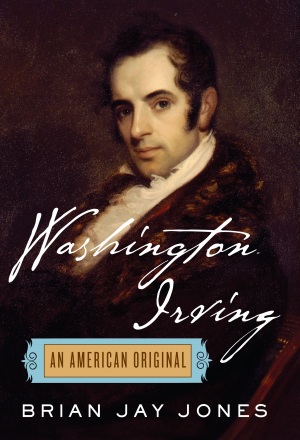
When I give talks about Washington Irving, inevitably, one of the first questions I get is, “Why did you choose Irving as your subject?” And my answer is, “Because I’m a Christmas junkie.”

About ten years ago, while browsing the paperbacks table at Trover Books on Capitol Hill, I came across Stephen Nissenbaum’s The Battle for Christmas, a book that — according to its back cover — “charts the invention of our current yuletide traditions, from St. Nicholas to the Christmas tree and, perhaps most radically, the practice of giving gifts to children.” That was enough for me. I paid at the register and it was mine.

Niseenbaum’s book is terrific for a number of reasons — if you’re even remotely interested in folklore, early American culture, or Christmas, I strongly encourage you to read it — and it goes a long way toward debunking some of the common mis-perceptions about my favorite holiday. For example, you’ll read how Christmas was actually outlawed in the United States until the early 19th century, mainly because Americans used the day as an opportunity to eat and drink to excess, then would go out and sing loudly, demanding food and drink of neighbors — and any neighbor who failed to deliver the goods risked being dragged out of the house and beaten up. Hence the lines in “We Wish You A Merry Christmas” in which carolers demand figgy pudding (“Bring some out here!”) and then declare that they “won’t go until we get some!”

But where the book really shines, however, is in its discussion of the dewy-eyed images of Christmas we Americans have conjured up and embraced as our own. All those Currier & Ives images, Nissenbaum tells us — sleigh rides over icy ponds, Yule logs burning in the fireplace, Santa Claus soaring over the treetops, children waking early and eagerly Christmas morning, and rambunctious Christmas dinner parties — never existed. They weren’t part of old English tradition, they were simply made up by an American writer named . . . Washington Irving.

Well. That was news to me, so I went out and looked for Irving’s Christmas stories. As it turns out, most of them are hiding in plain sight, right smack in the middle of The Sketch Book of Geoffrey Crayon, Gent., Irving’s collection of short stories and essays that’s remembered for “Rip Van Winkle” and “The Legend of Sleepy Hollow,” and, alas, not much else. But never mind.

In that section — five short stories in which Irving’s narrator, Geoffrey Crayon, experiences Christmas Eve and day in the home of Squire Bracebridge — Irving all but creates our modern day Christmas. Yule logs crackle in the fireplace, children sing carols on Christmas morning, good looking couples dance in old houses crammed with antique furniture, and on Christmas Day, the extended family surrounds an enormous table groaning under roast beef and turkey, puddings, and foaming tankards of beer. Squire Bracebridge, we’re told, celebrates Christmas in the old style — except it’s also made clear, through winks and a sly gesture that involves laying one’s finger on the side of one’s nose — that the Squire hasn’t quite got his facts right. But all is still right with the world.

I read Irving’s Christmas stories — which I’ll tell you more about — and loved them. Then I read some more Irving, and loved that, too. What surprised me most was his voice: this was no stilted, Puritan, 19th century prose; it was chatty, charming, and completely relaxed. And the more I read, the more I wanted to know about this guy. So I looked, and looked, and looked . . . and there wasn’t a thing available.

Finally, I found what was considered to be the last word on Irving, a 1935, two-volume biography by Yale English professor Stanley Williams. While the Williams biography is thorough, it’s clear that the more Williams wrote, the more he decided he didn’t like Irving very much. He regarded him as lazy, dopey, a hack, and mostly lucky — a writer who only succeeded when the competition was sparse. It wasn’t really the book I wanted to read.

So, borrowing a lesson from David McCullough — who, I think, borrowed it from Thorton Wilder — I decided to write the book I wanted to read — one that looked at Irving with a more modern eye, was more understanding and forgiving of his flaws, and which appreciated just how hard the guy had to work to succeed in a time when, yes, there was no competition, but there were also very few role models.

And it all started because of my love of Christmas. Really.

There’s Always A Nerd Table

The conversation I had with one of my sources yesterday — I always think of them as “conversations” rather than “interviews” — went spectacularly well. If this project pans out, and this is any indication of the caliber of people I’ll be dealing with — self-deprecating to a fault and bone-dry funny as hell — then this is going to be even more fun than I already thought it would be.

One of the best lines of the day came as we were talking about a particular conference that she and her fellow [AWESOME OCCUPATION REDACTED] attend each year. “Even all these years later, it’s still a small enough group that we mix together well,” she said.

“Ah. So, no Cool Kids Table, then?” I asked.

“Not really,” she said, then squinted in thought for a moment. “No, but there’s always a nerd table,” she said. “Always.

Don’t Go Away, I’ll Be Right Back . . .

I’m working under a deadline this week — as well as preparing my background materials and interview questions for another source for my work in progress — so I’m stepping away for just a bit. But I’ll do my best to be back here before the end of the week.

In the meantime, just because I think it’s funny, here’s video of Senator David Vitter of Louisiana — on the floor of the United States Senate during the debate on the auto bailout bill — struggling to use the term “bass-ackwards” and completely botching it.

Checking through the Congressional Record, I see some diligent staffer has gone through and cleaned up Vitter’s words for the official record of proceedings, removing from the speech any mention of the word “ass,” as well as Vitter’s bumbling attempts to come up with the right turn of phrase. Here’s the official transcript of Vitter’s speech, as it appeared on page S10844 of the December 10, 2008 Congressional Record (and you can follow along with the video above at the appropriate point):

Well, my reaction to that is pretty simple. I think the average American would say: What? Isn’t that putting the cart before the horse? $15 billion, and then later, after that is out the door, we will see a detailed restructuring plan? Secondly, even more important than that, it means that the impetus, the pressure to make that restructuring truly fundamental, truly to the core, which is absolutely necessary for these companies to survive, that pressure is not nearly as great as if we held the money until that detailed restructuring plan was presented.

What? You didn’t realize the Official Record could be edited and revised? I’ll talk about that some other time, then.

Have a good week.

Hi-Keeba!!!

My pal Scott Phillips is a staff writer for the new kids’ television series Kamen Rider Dragon Knight, and he gave me a heads up that there’ll be a “sneak preview” of the series — which is Officially Premiering in 2009 — on the CW Network this weekend. Check your local listings and write it down on your calendar now. In ink.

The premiere episode isn’t written by Scott — his first episode will be episode three — but Scott promises that the show is “dark and cool and has lots of Kung Fu and monster fights.” That’s enough for me.

When I saw Scott in Albuquerque last winter, I had the pleasure of watching the rough cut of the pilot episode — which Scott had a hand in writing — and I can vouch that the show promises to be loads of fun (plus, I got to watch it with writer commentary in my left ear the entire time, which made it all the more entertaining). If you’re a kid — or kid at heart — who digs the Power Rangers, kung fu, or just lots of cool comic book fighting, then you’ll like this. Plus, Scott’s a funny guy, and usually manages to stick in some funny bits or turns of phrase in every episode.

Give it a watch. And while you’re at it, check out Scott’s always-entertaining blog about his Netflix addiction, right here.

The Santa Dilemma

One of the most pressing moral dilemmas faced by parents is the Santa Claus Problem. You know how this works: as parents, we tell our children they should never lie, because lies make Baby Jesus cry and the world a rotten place. Yet, come Christmas time — the time of the year when lying should be last thing on our minds — we tell our kids an enormous fib — namely that a jolly, bearded man in a red suit — using some sort of mystical power that allows him not only to travel around the world in one night, but also gives him an ability to know whether our child is good and therefore deserving of swag — will come down the chimney on Christmas Eve and leave them presents.

This is a recent dilemma to be sure, born of what I guess one could call liberal guilt. Frankly, I don’t think any handwringing went into my own parents’ decision to fill my head with the Santa story. And to be honest, I never once wrestled with the problem, either. To me, it’s all part of the fun. I suppose if one were really struggling with the issue, it could be argued that parents are merely indulging in a time-honored tradition of passing folklore from one generation to the next, conveying a mythology so persuasively that children are convinced it’s real.

When you think about it, though, parents don’t really have to work that hard at it anyway. I mean, I never needed any help believing a drooling maniac waited in my closet every night after the lights went out, even though my parents did everything they could to convince me that wasn’t the case. If I could believe in something my parents were working like heck to convince me wasn’t real, it didn’t take much of a suggestion that something, or someone, did exist to make me embrace it entirely. I wanted to believe, and therefore I did.

Actually, I believed in Santa for a long time — probably longer than I should have — because my parents were just so darn good at it. They never did anything terribly elaborate, like stomp around on the roof on Christmas Eve, but they always did just enough to convince me that there was something going on that was beyond their control. One year, my dad found a ratty old gunny sack and left it next to our fireplace, with a note from Santa that our house had been the last one he had hit on the block, so he had left the empty bag behind. Nice touch.

Another time, my parents hired a young man to dress as Santa and visit our house a few days early — just dropping by to check on us, you know — and deliver a few presents. Both my brother and I bought it without question, though my parents had to do a bit of scrambling when my kid brother — who even at age five seemed to be able to play all the angles — demanded to see the reindeer.

But it was a masterful bit of misdirection — perpetrated when I was around seven years old, I would guess, when I was already becoming something of a Santa scoffer — that made me an absolute believer.

We were set to spend that particular Christmas with my grandparents in Kansas — two whole states away from our New Mexico home — and were scheduled to drive there three days before Christmas. My parents awoke my brother and me at about 6 a.m. and asked us to get in the car, which my dad already had idling in the driveway. As we staggered blearily through the living room where our Christmas tree stood, I carefully checked to make sure there were NO SANTA GIFTS sitting on the floor in front of the fireplace. There weren’t.

This was the test, then: if there really was a Santa, he would show up while we were out of town and leave behind the Mego Batcave I so desperately wanted. But if my parents were Santa, as I suspected, then our absence from town — or so my logic went — clearly meant they would have no opportunity to place our gifts in front of the tree. I was as certain as a 7-year-old boy can be certain of anything that when we returned to Albuquerque a few days after New Year’s, there would be no Santa gifts waiting for us. My parents’ jig was up. Smugly, I settled into the back seat of the car. Several moments later, my parents came out of the house carrying the last of the suitcases. My dad locked the house, loaded the car, and we drove away.

Of course, what I didn’t know was that in the 90 seconds it took my brother and I to pass through the living room and get into the car, my parents had immediately pulled everything out of a front closet and quickly set it up in front of the Christmas tree. When we returned to New Mexico a week later (fighting our way through an ice storm that sealed my dad’s decision to never drive anywhere for the holidays ever again), my brother and I walked slowly from the car into the house, and peeked skeptically into the living room . . . and oh my gosh Santa had come while we were gone!

For the next few years, then — again, for probably longer than I should have — I was one of the Jolly Old Elf’s most ardent defenders, once nearly getting into fisticuffs with Dan Duddingston for daring to challenge the veracity of St. Nick. I think I finally accepted Santa’s status as pure folklore — and then only grudgingly — by the fifth grade.

As I said earlier, I’ve never had a problem perpetuating the Santa story — but my own daughter is far more clever and observant than I ever was, and, despite my best efforts, was a Santa Skeptic by age six. Oddly, though, she had a harder time letting go of the Easter Bunny. A magical rabbit who somehow delivers candy and chocolate eggs? No problem. A white-haired old man in a flying sleigh delivering toys? No way.

Fortunately for me, now that she’s a worldly 12-year-old, she’s willing to indulge in Santa just for the pure fun of it. And for some reason, that’s made him even more real to her — and to me — than he ever was before. Santa Dilemma solved.

A Potency of Life

December 9, 2008, marks the 400th birthday of one of the most celebrated poets in the English language, John Milton. Colleges and universities around the world — and, appropriately, even a number of churches and cathedrals — are celebrating the day with marathon readings of Milton’s epic Paradise Lost. Hit the Googles and see if there’s one taking place near you, and then by all means go.

If you’re a fan of, say, Alan Moore, Neil Gaiman, or Kevin Smith, you’ll see in Milton the roots of much of their respective mythologies involving God, Satan, and Heaven and Hell. Moore’s epic battles of angels and demons, Smith’s very human archangels and devils, and Gaiman’s charismatic Lucifer Morningstar, for example, can trace their way back to the pages of Paradise Lost. Milton, who was blind at the time he composed the epic poem, dictated much of it aloud to other poets for transcribing — and that’s one of the reasons, I think, why Paradise Lost remains so exciting: Milton had to hear it in his head first before he had it put to paper. The language is colorful and electrifying to the extreme, and — though Milton had no inkling of such a term at the time — incredibly cinematic.

Milton loved the English language, and not only penned some memorable, oft-quoted phrases (most of which are now cliches), but created words we’re still using today. Ever told someone that it’s “better to reign in Hell than serve in Heaven”? You were quoting Milton. “A heaven on Earth”? Milton. Ever use the word “dreary”? Milton. “Self-esteem?” Milton. The title of Philip Pullman’s series “His Dark Materials”? That’s taken from Milton, too.

But it’s more than his love of language or his poetry that should endear Milton to writers. Milton was one of literature’s first great political radicals, with strong views on government, religion, and censorship. While it was stodgy government views on divorce (particularly, his own) that spurred Milton to write Areopagitica — drafted as a political speech to be delivered before Parliament — the tract remains one of the most stinging indictments of government censorship, as well as one of the most celebrated defenses of literature:

For books are not absolutely dead things, but do contain a potency of life in them to be as active as that soul whose progeny they are; nay, they do preserve as in a vial the purest efficacy and extraction of that living intellect that bred them.

As good almost kill a man as kill a good book: who kills a man kills a reasonable creature, God’s image; but he who destroys a good book, kills reason itself, kills the image of God, as it were, in the eye.

And though all the winds of doctrine were let loose to play on the earth, so Truth be in the field, we do injuriously by licensing and prohibiting misdoubt her strength. Let her and Falsehood grapple; who ever knew Truth put to the worse in a free and open encounter?

I cannot praise a fugitive and cloistered virtue, unexercised and unbreathed, that never sallies out and sees her adversary, but slinks out of the race, where that immortal garland is to be run for, not without dust and heat.

Go read John Milton. Now.

Happy 400th.

We’re All Misfits!

There are a number of questions that remain among life’s most imponderable. What is the true nature of good and evil? Why does God allow suffering? And the most important question of all — at least as it relates to western culture — in Rudolph The Red-Nosed Reindeer, what in the heck was wrong with the doll that it earned a place of shame on The Island of Misfit Toys?

For the benefit of those who’ve on another planet for the last forty years, one of the key conceits of the Rankin-Bass Rudolph The Red-Nosed Reindeer Christmas TV special is that “defective” toys that no child loves all end up on the Island of Misfit Toys, presided over by the kindly King Nightracer. Among the island’s disgraced residents are a squirt gun that shoots jelly, a cowboy that rides an ostrich, a spotted elephant, a train with square wheels . . . and a doll that appears to have absolutely nothing at all wrong with it.

My brother and I always pondered exactly what the doll’s problem might be. She didn’t appear to have any undergarments on, but we let that particular quirk slide. Perhaps, we thought, it suffered from some invisible ailment, like Tourette Syndrome, that caused her to unleash a stream of profanities instead of a plain “mama.” But then, we heard her speak normally to the rest of the toys — so, so much for that one. Finally, we decided we knew what her problem was.

To this day, we still refer to her as “Diarrhea Dolly.”

A Misfit Toy indeed.

The End of An Era

Last night’s Domenici staff celebration was an absolute delight. Lots of familiar faces, many of which I hadn’t seen in years, and plenty of opportunities — usually starting with the question, “How old are your kids now?” — to feel really, really old.

Domenici staffers — perhaps a reflection of the Senator’s own rather laid-back demeanor — always seem to always be among the funniest and most self-deprecating people around, and I spent much of the evening, as it seems I spent much of my seven years on the staff, in one hilarious conversation after another. As I chatted with one colleague, for example, who had served as one of my Legislative Correspondents before moving on to the private sector, our discussion went like this:

Me: “…so where did you go after leaving the Hill?”

Him: “I got into banking, and worked for a while at Lehman Brothers. But now I work for the federal government again.”

Me: “Oh really? For who?”

Him: “Citibank.”

*insert rimshot here*

That was par for the course for the evening. And also keeping with the habits that made us famous, the open bar was completely decimated — it looked like it had been hit by a bomb, frankly — while the free food remained largely untouched. Old habits die hard.

There was a hodgepodge of memorabilia for the taking — mostly plaques and awards that couldn’t be packed away, and framed artwork that had hung on the walls since . . . well, forever. And for collectors of political rarities, there was an enormous stack of campaign stickers for the 2008 Re-Election Campaign That Never Was:

The Senator himself made brief remarks, his formerly booming voice (the one I always called his “speechifyin’ voice”) now raspy but still authoritative. “I’m hoping I was able to give each of you a little something,” he said to us, “and I think you all gave a little bit of yourselves back to New Mexico, and to the country.”

The celebration was touted as commemorating “the end of an empire,” but I never really felt “empire” was the right word. It sounds a bit too . . . iron-fisted or militaristic, which was never the way Senator, or his staff, did things. Perhaps “the end of an era” is a better way of putting it — an era of unequalled service to New Mexico, to the United States Senate, and to the country, that spanned across four decades.

When we’ve had staff reunions in the past, we tended to break up into clusters defined, as I see it now, largely by Presidential terms. Always, it seems, standing closest to the Senator were the 70’s Staff — the cool kids, who got in the door first and went through the rough and tumble Nixon-Ford-Carter years. Then there was The 80’s Staff, composed of disciplined budgeteers, who worked through the Reagan era, sometimes shepherding Reagan’s budgets through, other times fighting his tax cuts. The 90’s Staff were the acerbic workhorses — an offbeat group that fenced and bantered in the tumultous politics of the Newt Gingrich/Bill Clinton era — while “The ‘Oughts”, serving from 2000 on, are the committed policy mavens of post 9/11 America. Last night, however, there were no cliques or clusters; instead, it was simply one enormous, extended family.

My evening ended on an entirely appropriate and fitting note. As a colleague and I were leaving, we stepped off of the elevator on the first floor of the Dirksen Building, only to run into Senator and Mrs. Domenici, who were on their way back in. “Senator forgot his coat,” Mrs. Domenici explained in that disarmingly apologetic way she has. Almost on autopilot, we steered the Domenicis off to one side, sitting them down near the security station in the care of two Capitol Police, then went back upstairs to retrieve the Senator’s coat.

We delivered it to him at the front door of the Dirksen Building, then — again, almost on autopilot — waited until he had squirmed his way into the wool topcoat, then held open the door as he and Mrs. Domenici passed through it and into the brisk December night.

Once a staffer, always a staffer. And I wouldn’t have it any other way.

People For Pete

Tonight, down on Capitol Hill, is the final gathering of former and current staff for my old boss, U.S. Senator Pete V. Domenici, who’s retiring from office. I wasn’t able to attend any of the similar events in New Mexico, so I’m glad Barb and I will be able to make tonight’s celebration.

While cleaning out my basement last month, I came across a manila folder crammed with mementos from my Hill years, and found this photo of the Senator’s personal staff, taken at the annual Christmas party in 1993:

That’s me in the back row, just right of center, with the dark red sweater and the beard, trying way too hard to look older than my 26 years.

Fifteen years later, I not only can still name nearly everyone in this picture, but I’m still good friends with many of them. This particular batch made up the Senator’s personal staff for much of the mid-1990s, and because we worked together for so long — a stretch of five years with a relatively cohesive staff is a rarity on the Hill — we were a tight knit group. To this day, we still refer to ourselves as the Domenici Mafia.

Of the members of our Mafia, Ari Fleischer — kneeling in the front row in the Santa hat — is probably the best known and most famous alumnus, serving as President George W. Bush’s press secretary in the early days of his administration. But the rest of the gang aren’t doing too shabbily, either. Some are serving in high-ranking positions in the federal government, while others are lobbyists. Some ran for — and won — locally-elected offices. There are attorneys and forest rangers and health care workers, retirees and stay-at-home parents. A few worked for the Senator right until the end. And there’s not a bad banana in the bunch.

I’m looking forward to seeing many of them tonight, along with countless others who made up the staff over the Senator’s 36 years in office. It’s always amazing to me how quickly we all fall together, even when we haven’t seen each other in over a decade. You’re never really out of the family.

Christmas, Here’s Your Cue…

Sit down cross-legged on the floor of the living room and pull a TV tray over in front of you. In the days before video tapes, DVDs, and cable television made it possible to watch Christmas specials year round or multiple times, you had exactly one shot a year at catching Rudolph The Red-Nosed Reindeer, The Year Without A Santa Claus, or A Charlie Brown Christmas. If you missed it, you were outta luck until the next December. If you were like me, then, you were on your butt in front of the television, a Swanson’s pot pie steaming in front of you, with five minutes to spare.

With that in mind, let’s kick off the Christmas season with an appropriate bit of fanfare. (And my fellow Gen Xers, prepare for flashbacks in 3…2…):

The Christmas Season is officially here!