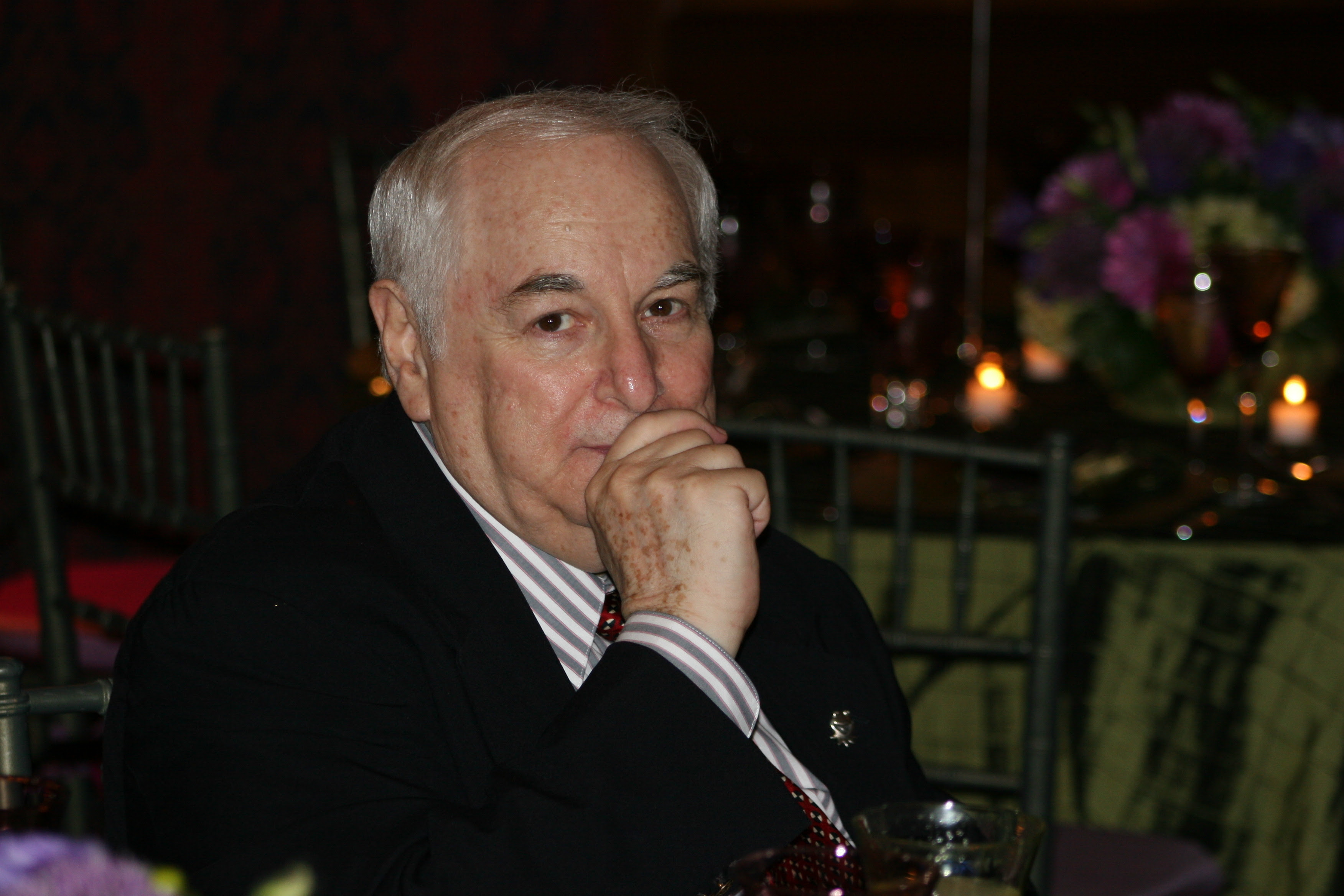
I was sad to hear the news this week of the passing of Arthur Novell, who served as Jim Henson’s publicist for almost two decades. Arthur was not only a publicist, but a confidante and one of Jim’s reliable “fixers”–as many inside the organization warmly described him to me–who could be counted on to solve problems quickly and quietly. No matter what time of day it was, or where in the world Arthur might have been, he could almost always make things better with a phone call, taking care of the business of business and letting Jim Henson be Jim Henson.
After Jim’s death in 1990, Arthur was chosen by Jane Henson to serve as one of the founding board members of The Jim Henson Legacy on its establishment in 1992. That’s actually where he was when I first came to know him; he was serving as president of the Legacy when I approached the organization in 2008 to talk about a biography of Jim. He was genuinely warm and encouraging–and always so patient with me–and once I got the okay to proceed with the project around 2010, Arthur was one of the book’s biggest fans and cheerleaders.
There’s a good reason I called him the spiritual father of the biography; it wouldn’t have happened without his careful attention. I loved getting his e-mails dispensing guidance on how to approach performers, giving me his perspective on Jim’s career, or calling me “just to check in.” And there were times, I’m sure, when his hand on my shoulder–or his working behind the scenes on something I’m probably not even aware of to this day–made a real difference in my conversations with the Henson family, friends, and colleagues. With Arthur on your side, you were a made man.
After the book was published, Arthur and I stayed in touch, sometimes just a line or two in an e-mail. Any time I was in New York, I would try to have dinner–usually Chinese food–with him and his husband, Eddie, lingering for hours just so I could listen to the man tell stories, whether it was of his dancing on stage in New York as a young man, taking phone calls from Jim at 2 in the morning, or ushering around guests for Muppets Tonight. One of the last times we tried to get together, my train to New York was impossibly delayed and prevented us from having dinner. But Arthur texted me well into the evening and told me he was sorry we wouldn’t be able to see each other and that he missed talking with me.
That’s how he was.
Arthur was a lovely, lovely man, a true gentleman, and I’m forever grateful to him and even luckier to have known him. Godspeed, Arthur Novell; you were one of the good ones.
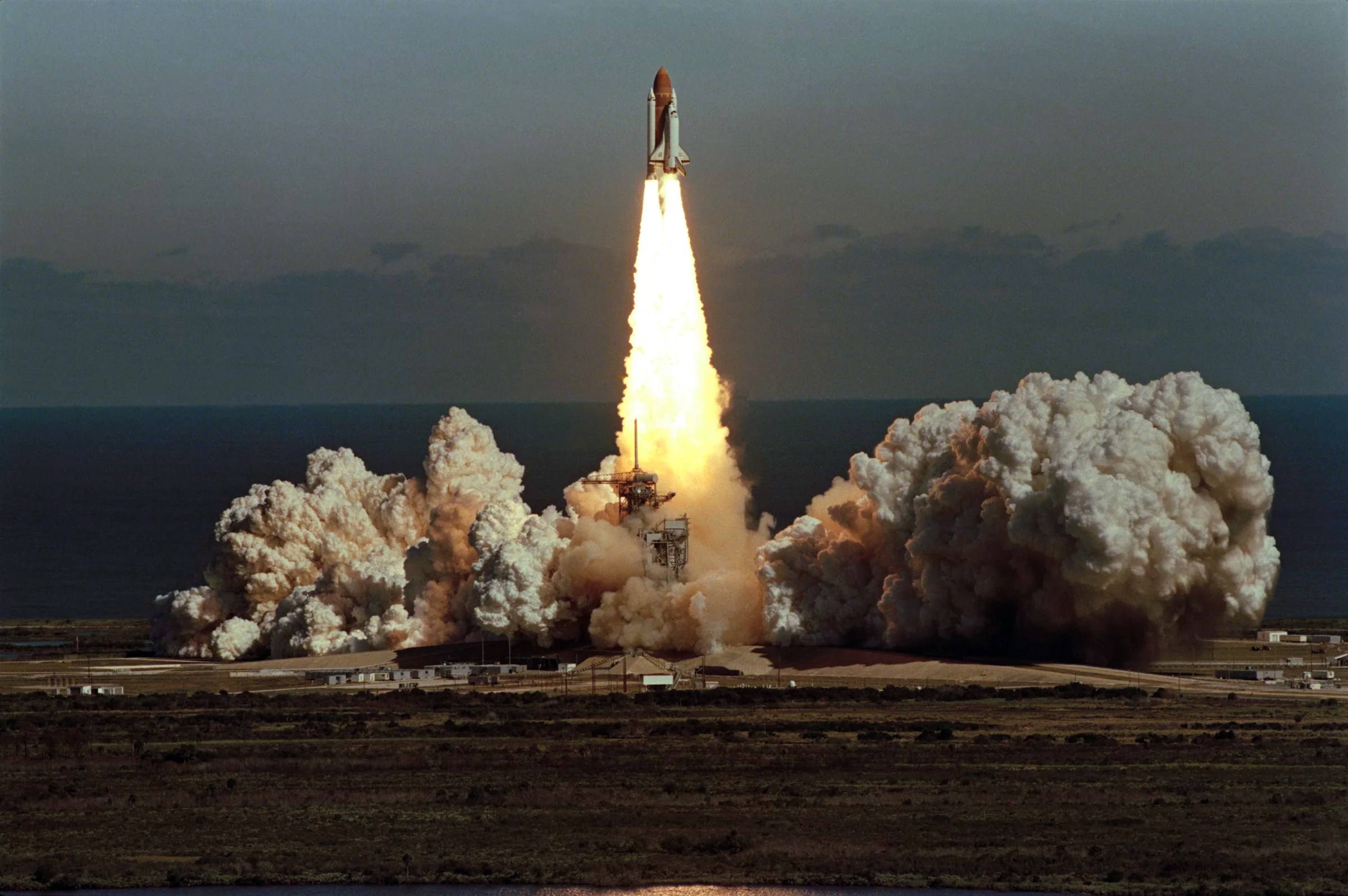
Forty years ago today, the Space Shuttle Challenger disintegrated nine miles above Cape Canaveral, seventy-three seconds after takeoff, following the explosion of its main booster rocket.
It was a pivotal moment in GenX’s collective memory, the one we thought was going to be “our JFK assassination”–the “where were you when…?” question–until a September morning 15 years later. But it’s still a moment seared into our psyche–and yeah, we all remember where we were, when . . .
Me, I didn’t see it happen live. In January of 1986, I was a freshman at The University of New Mexico (and wow, does that make me feel old) and had a job working as the night editor for the campus newspaper, which kept me up into the early morning hours nearly every day. So I was barely out of bed on Tuesday morning when a friend of mine came to pick me up in my dorm room to walk to our 11:00 a.m. class. He asked me if I’d heard the news about the space shuttle. I said I hadn’t.
“It blew up an hour ago,” he told me.
All I remember is stammering the stunned question, “Did the astronauts survive?” He shook his head sadly.
We walked to class not knowing much more–and in the days before cell phones and iPads and lightweight TVs hanging in nearly every classroom, we didn’t get to see any footage until we watched the news much later in the day.
That wasn’t true for a lot of my fellow GenXers, though. An awful lot of you watched in classrooms, on a television rolled in on a wobbly metal cart, to see the launch of the shuttle carrying the first civilian–a schoolteacher–into space. GenX saw the entire thing happen live, a communal cultural experience that shaped a generation as excitement and awe turned to shock and horror. And all broadcast live on CNN, which was the only 24-hour news channel at that time.
Here’s CNN’s live feed from that day–a morning that looked like just another regular January morning and a run-of-the-mill shuttle launch. What we didn’t know is that a combination of politics, parsimony, and publicity had likely made what happened 73 seconds after takeoff mostly inevitable.
I was absolutely captivated by the Challenger story, and over the next decades, read everything I could about it. I was always particularly fascinated by the investigation that happened afterwards, which featured its own kind of political intrigue and drama, with secret informers, passed documents, even a “Deep Throat” figure who would help break open the entire investigation into the cause of the explosion.
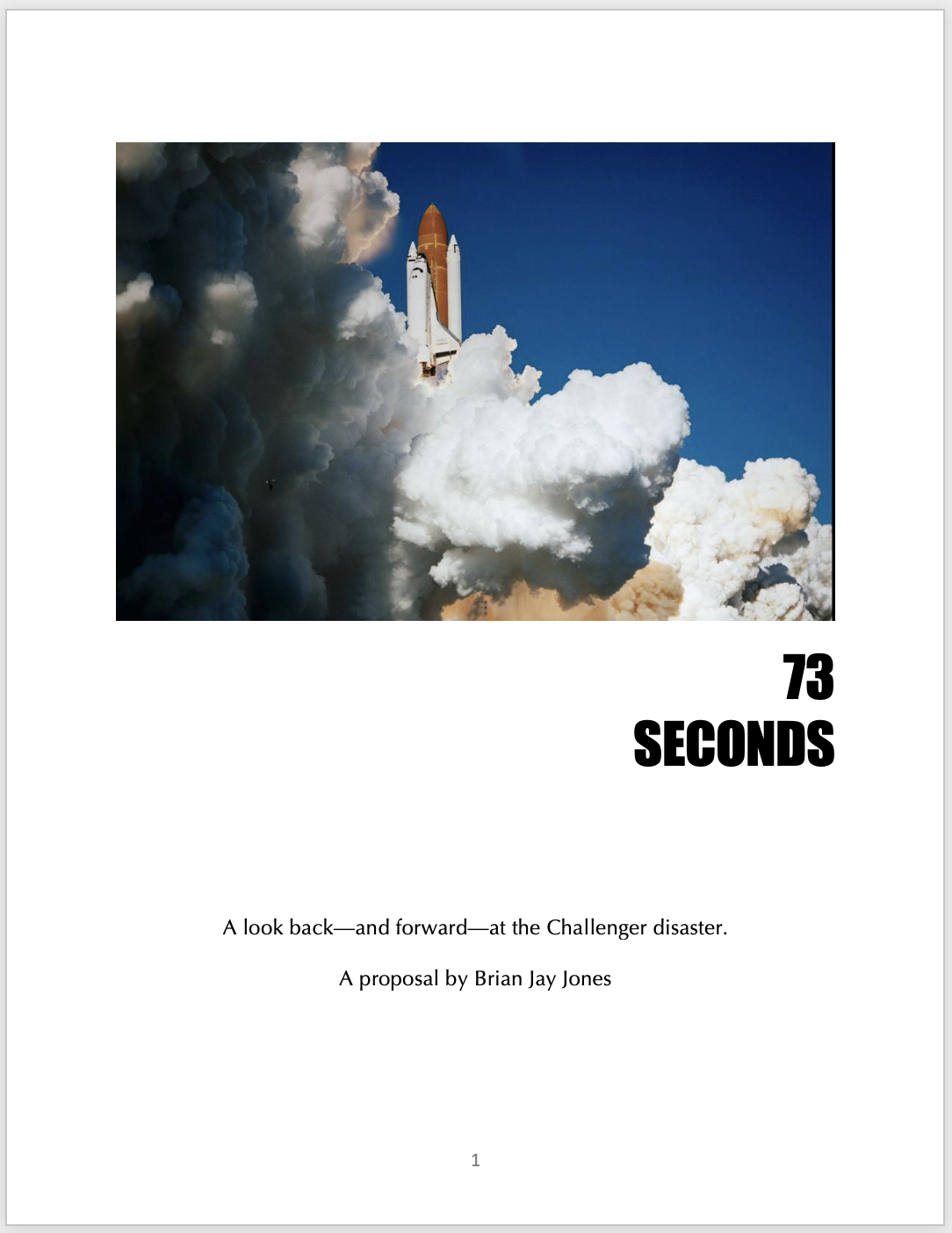
Back in early 2020, in fact, I briefly considered making the Challenger and the subsequent investigation my next Big Project, envisioning it as a kind of political thriller. I had even gotten as far as putting together a proposal for a project I was calling 73 Seconds that had been enthusiastically received by my editor . . . when we learned that Adam Higginbotham, the same author who had written the terrifyingly terrific Midnight in Chernobyl, was also taking on the subject.
I couldn’t even be mad about it; there are certain writers who are just made for certain subjects, and as far as I was concerned, there was no better writer to take on Challenger than Adam. I pulled my proposal, and moved on to The Capitol a little more than a year later. Adam, meanwhile, finished his book, which came out in 2024 to rave reviews. Go read it. That cat can write, man.
Anyway, that’s where I was on January 28, 1986 — a major turning point in American history and in the modern American identity. How about you?
Posted onJanuary 23, 2026|Comments Off on That’s Me on The George Lucas Talk Show
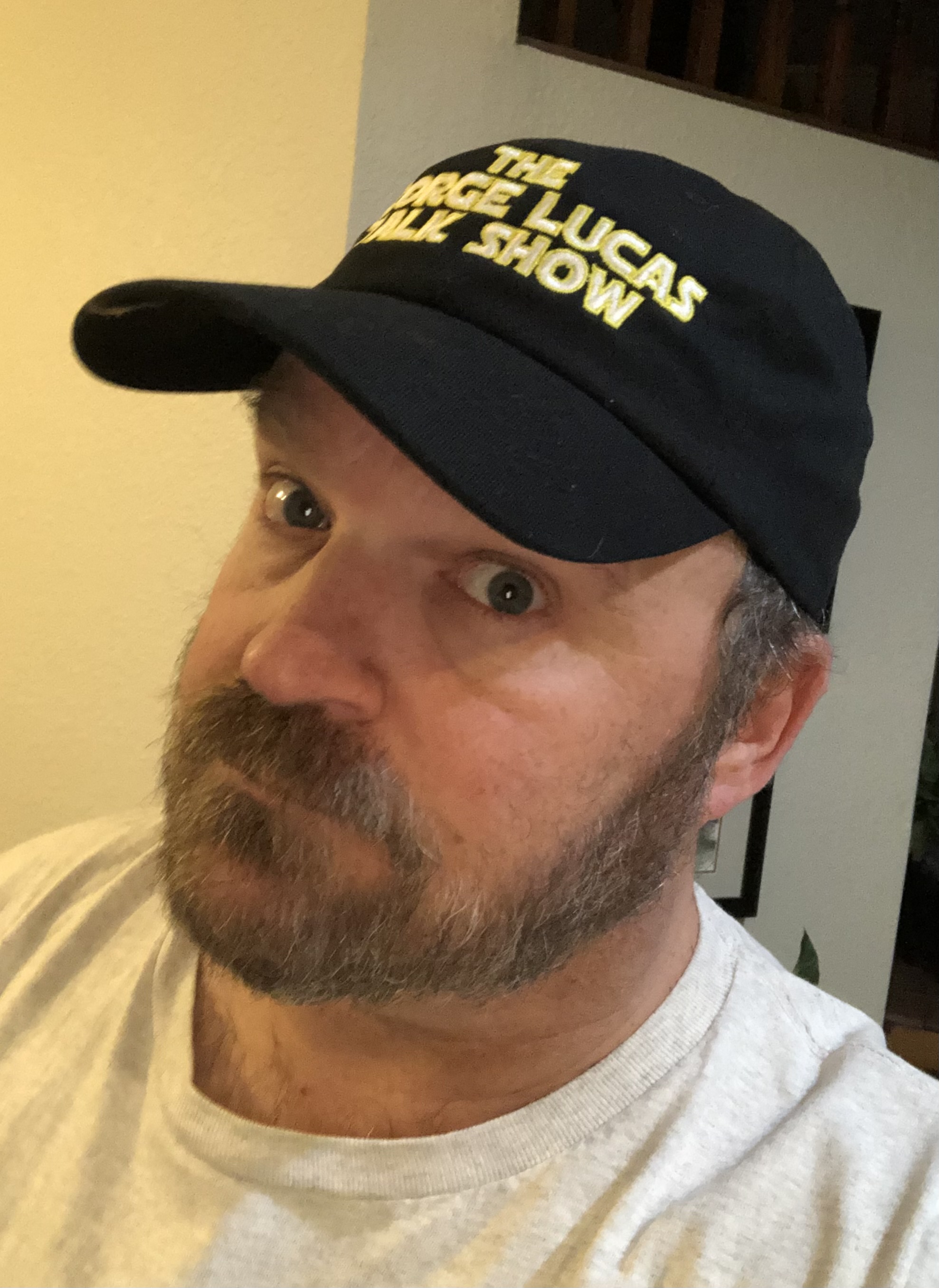
File this under Things I Thought I’d Posted Already About and Then Found Out I Didn’t: Over the past few years, I’ve made a number of appearances on the improv talk show The George LucasTalk Show, brought to you by the brilliant and hilarious team of Connor Ratliff, Griffin Newman, and Patrick Cotnoir. If you’ve somehow managed to miss seeing it come across your social media feed, the show features Ratliff convincingly playing “filmmaker George Lucas” interviewing very real celebrities, while Newman chimes in as a dead-on Watto and producer Cotnoir provides all other necessary support. It’s been going on since 2014, and the celebrity guest list just gets better and better with each passing episode.
Sometimes, however–and this is all part of the fun–he has on fans and other types of non-celebrities . . . like me. Ratliff told me that he uses my 2016 biography of George Lucas as part of his “show Bible” and from time to time, while in character, he’ll mention “my biographer Brian Jay Jones,” which makes me both incredibly happy and weirdly giddy at the same time. And so, I’ve been delighted to jump into the fray the several times I’ve been asked, as the show is an absolute blast and I hope they keep doing it forever.
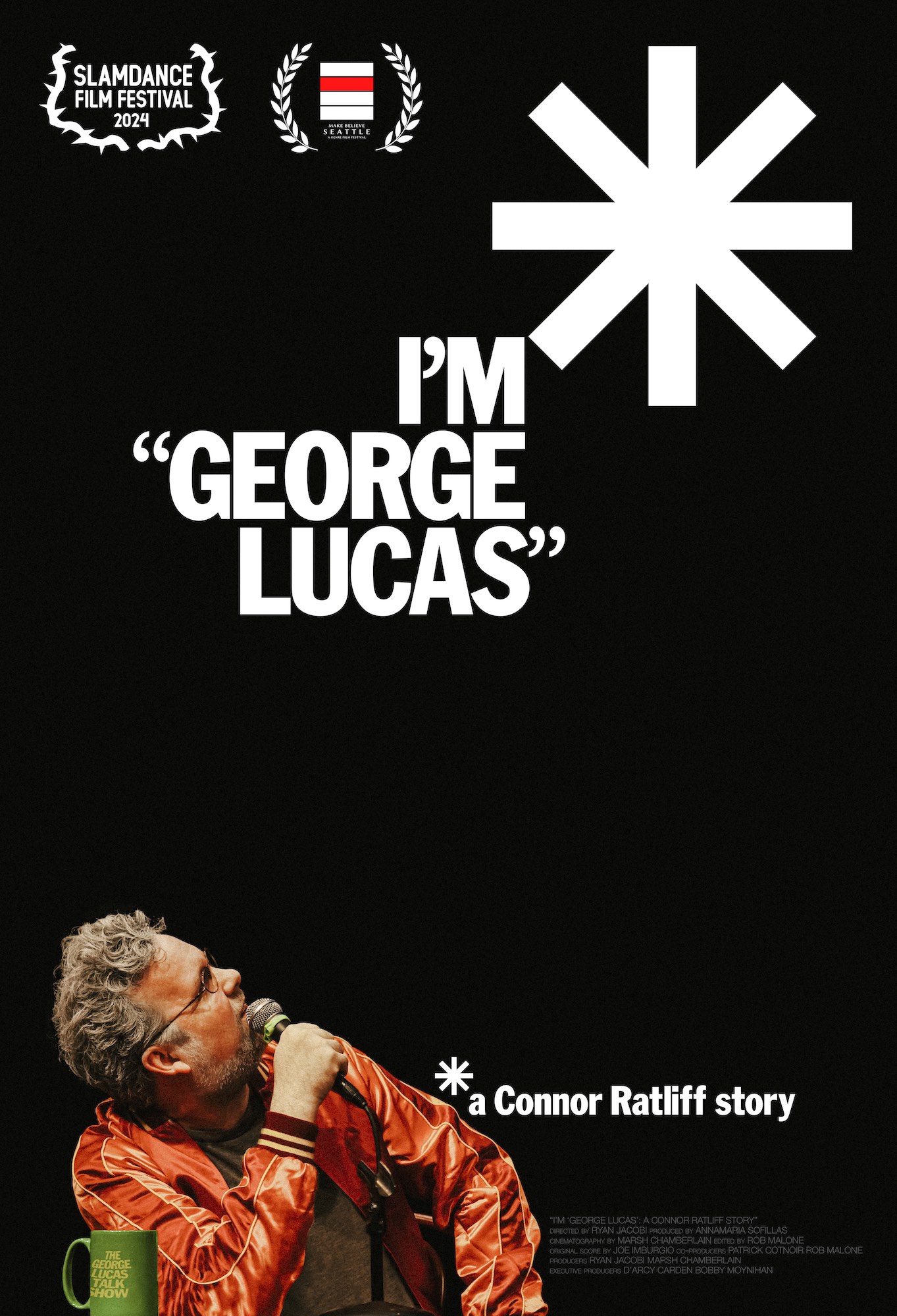
That’s all preface to telling you that in 2024, a team of documentarians released a really terrific film about the show, and Connor, called I’m George Lucas: The Connor Ratliff Story. At the moment, it’s available for download and streaming–but I’d really encourage you to invest in the 2-disc Blu-Ray from Kino Lorber which gives you not only the documentary, but tons and tons of extra features. Among those bonus features is more audio commentary tracks than you’ve ever seen anywhere else–Patrick Cotnoir actually wanted to set an official Guinness Book of World’s Records record for most commentary tracks, and I’m pretty sure he did so, since there are fifty-seven audio commentaries on this thing.
One of them is even by me. When Patrick asked me last year if I wanted to participate, my answer was, of course, um, yes, and I had a great time doing it. It’s the first and probably only time I will ever get to do a movie audio commentary–and as someone who has watched a lot of films with commentary, I didn’t want to disappoint. So I tried to tell stories about the real George Lucas that were relevant to what was being talked about on screen–including similarities between Connor’s story and Lucas’s own–as well as giving my impressions of having been on The George Lucas Talk Show.
And here’s one of the first things I talked about when it comes to being on the show: Connor Ratliff is absolutely committed to the bit. If you’re waiting for him to break character or even to wink knowingly at the audience, it’s not going to happen. He’s terrifyingly good; when he started giving me hell about writing in my biography about Lucas’s alleged lack of . . . er, enthusiasm in the bedroom, I stammered apologetically like I was being interrogated by the real George Lucas.
I also quickly learned to leave the funny to the professionals. I tried for a bit to be clever but quickly found I was in over my head. These guys are good at this stuff. They’ve got the funny under control; my job was to be the straight man.
Anyway, all this and more can be found in my commentary track–but there are plenty of others to choose from, too, including tracks from actual comedians like Chris Gethard, Bill Corbett, and Lane Moore. And for Muppet fans, you’ll also find a track by Craig Shemin and Stephanie D’Abruzzo.
I’m really proud to have been part of this in even a small way, and I’m delighted for the team at TGLTS, who keep right on regularly bringing you the funny. Check out the documentary, catch it live in New York if you can, or spend some time on the show’s YouTube Channel. You’re gonna love it.
I just handed in the final round of edits on Capitol, and, as always, I am delighted–and so lucky–to be working with an outstanding editor. I actually have a physical reaction–an escalation in pulse rate and general excitement–when I read through the pages she’s edited because she’s just so dang good at what she does.
I’m fairly easy on an editor when it comes to the line editing side of things–my copy is pretty clean, and I’m good about taking care of all the non-fiction-mechanics like endnotes–so her edits are more like a conversation about the manuscript via comments in the margins. She’ll ask questions, urge me to make something clearer, or even just write Ha ha this is great!, which is exactly the kind of thing writers like to hear. If there’s an MST3K version of editing, she’s got the Joel seat smack in the middle.
Who is she? Her name is Jill Schwartzman, and she’s the VP and Executive Editor at Dutton Books, as well as the Editorial Director at Plume. She’s edited lots of stuff you’ve probably read–including books by Nick Offerman, Drew Barrymore, and Jeff Tweedy–and now I’m lucky that one of those books gets to be mine.
While this is the first project we’ve worked on together, we’ve actually known each other for more than a decade. Back in 2010 or so, when my agent was out pitching the proposal for Jim Henson, there were a number of publishers interested in acquiring it–which meant I got to have phone conversations with several editors to decide which publishing house and which editor I thought might be the best fit for me and for the project. One of those editors I spoke with was Jill, who was then at Ballantine Books inside Random House–and the moment we started talking, I knew Ballantine was where I wanted to be. Jill was smart and funny and interesting and pop culture savvy. We talked for a long time, and I immediately called my agent back.
“That’s the one,” I told him.
A deal was made, paperwork was signed, and the book was officially nestled in its home at Ballantine.
Alas, just as I was starting my hardcore research for Jim Henson, another really smart publisher wisely hired Jill away, fully appreciating just how brilliant and funny she was–and immediately put her in the cleanup position in their editorial batting lineup. Jill and I promised to stay in touch–which we did and we have, even as we both changed publishing houses over the last decade–and vowed that we’d try to find an opportunity to work together in the future. (Oh, and the editing duties on Jim Henson went to another editor at Ballantine who I also enjoyed working with so . . . everything came out okay.)
Flash forward nearly 15 years to 2024. After Jim Henson, I’d written two more books, one at Little, Brown, and one with Dutton–but both with the same editor, an incredibly talented fellow named John Parsley, who’s now Dutton’s editor-in-chief. But apart from being a brilliant editor, John is one of the nicest guys you’ll ever meet–and if there’s anyone who truly deserves to have bestowed on them one of Jim Henson’s favorite compliments–lovely–it’s John. Just a lovely guy. But also a really smart and busy one.
At one point, then, I got a call from my agent who said, “John needs to talk. He’s gonna call you.”
Now, 99 percent of the time, an editor and author deal with each other directly–there’s usually no reason to bring in your agent as a third party. No reason, that is, unless there’s something major going on, in which case they’ll usually call your agent first. In my head, then, I played out all the worst case scenarios, from Oh my god John is leaving to Oh my god they don’t like me any more and I’m going to die alone and unloved. You know–very rational stuff. But my agent could probably hear the catch in my voice as I stammered out, “What–?” because he immediately laughed and said, “No no no, it’s nothing to worry about. In fact, I think you’re gonna be really happy.”
John called me moments later to have a chat–I always love just chit-chatting with him, especially as I know he’s super busy, so I appreciate the time he spends to just flap, as they say–and after a few minutes he got to the point of the call: he’d been promoted to a new role that was going to demand a lot of his time and attention across several imprints, which was gonna make his day-to-day work as an editor tougher. “Now, I’m still your editor, dammit,” he said, laughing–but he added that he also wanted to make sure he put me and my book in the hands of another great editor who could oversee the day-to-day work of editing and steering the book through publication. And he told me he thought I’d be very happy with the editor he’d had a conversation with–a vice president and executive editor, who had agreed to add me and my project to her current roster of writers and projects.
Come on, I already gave away who it is: it’s Jill Schwartzman, who I’d wanted to work with all those years ago–and now, through a circuitous serendipity that put us back under the same editorial roof at the same time, we’ve managed to come full circle, albeit with a different project. To say I’m delighted would be an understatement; working with her has been just as fun and meaningful and educational as I thought it would be. Better, even. Plus, she’ll let me chat-chat on the phone, even when I know she’s super busy.
We’ve had some really good conversations about the book, and while I’m not sure if the last round of edits made the book any shorter (if you’ve read my stuff, you know my books tend to be on the longish side), I know they definitely made the book better. We’re now moving on to discussing photos while we put the manuscript in the hands of a copyeditor.
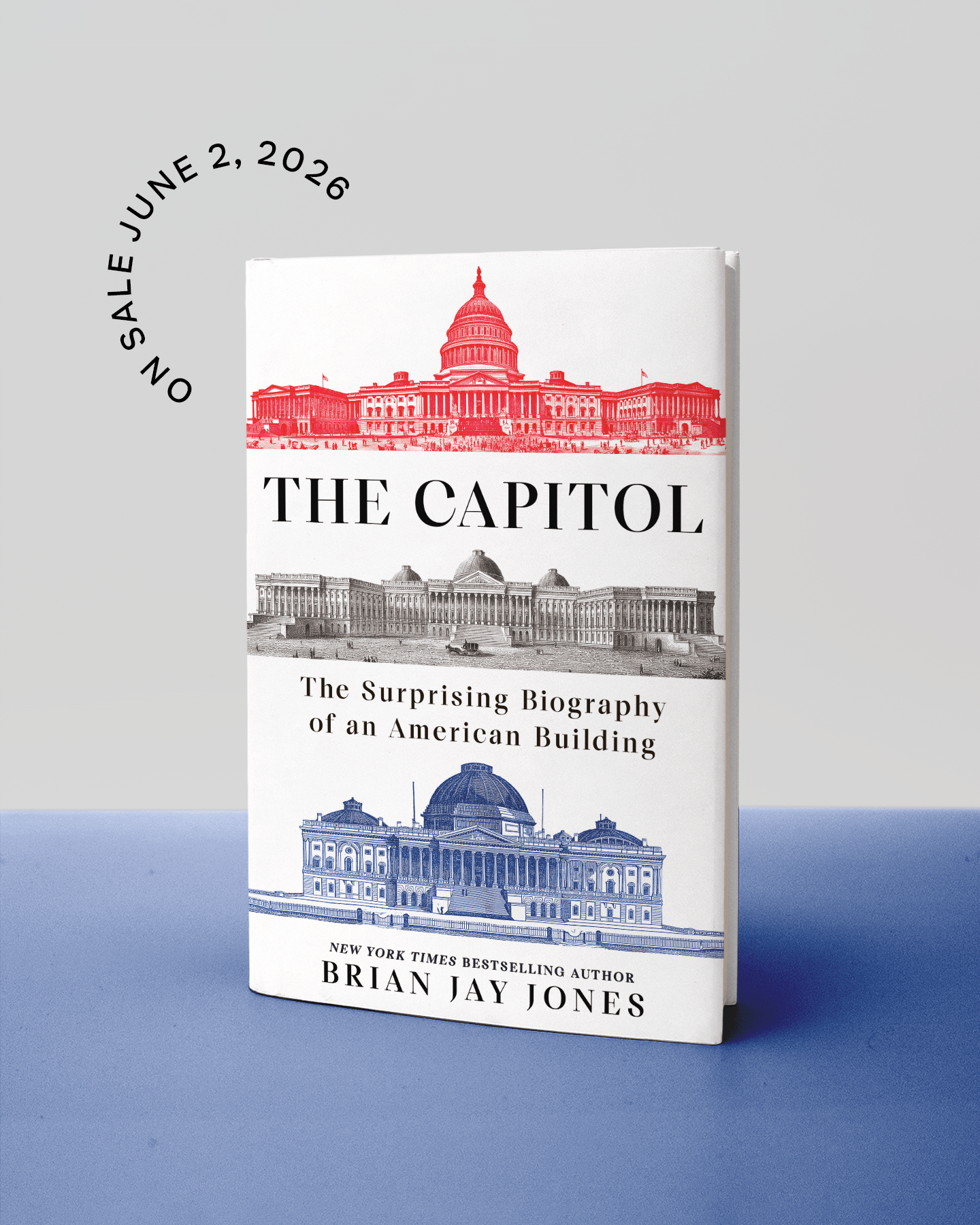
Oh, and did I tell you we’ve got a publication date? And a cover?
And hello again. It’s been a while since I provided any kind of update of the Current Project, but there’s finally some news to tell you. As of Friday afternoon, this happened:
Yeah, it’s been a long time coming, I know.
I initially pitched the idea for Capitol: An American Biography to my agent in the months after January 6, 2021 for one simple reason: the building is really important to me, and January 6 hit me hard. As I think I’ve talked about here before, I was a staffer in the U.S. Senate for nearly ten years, spending plenty of time in the Capitol building–and this was in the years before 9/11, when access to the building was much looser, especially for staff, than it has been over the last 25 years.
Nearly every evening, I rode my bike from the Capitol to the Lincoln Memorial and back again–always stopping on the way to get a drink at the drinking fountains in the grotto on the Capitol’s northwest lawn, home to the coldest drinking fountains in DC. In the days when you could still do so, I’d ride along the western terrace and just look out over the Mall. I was always trying not to take that view for granted.
As a Congressional staffer, your ID card could get you nearly anywhere in the building–and I’d always make the most of it, giving myself my own guided tour of the building, ducking under ropes to access areas tourists couldn’t go. I loved how I could feel the wear in the marble steps as I walked up them, and I would almost always stop in the Old Senate Chamber and try to imagine what it was like to sit in the chamber and listen to Daniel Webster–or imagine the chaos of the day when Senator Charles Sumner was severely caned by Congressman Preston Brooks. Or I’d stand in the Old House Chamber, now Statuary Hall, and try to picture the grandeur of the place as it was when painted by artist Samuel F.B. Morse (yes, that Samuel Morse) in 1822
Samuel F.B. Morse’s painting of the House in a night session, 1820 or so.
Some weekends, if the Congress was in session and I didn’t have a bill to worry about it, I’d walk up to the Capitol from the house I rented with two other Senate staffers at 6th and C Street NE. I’d walk up those gigantic stairs at the East Front, head for the north wing, and then sit in the staff gallery above the floor and just watch. Working in the Senate was my job, yeah, but I never stopped appreciating how special it was to work in, and just be in, that building.
And any time a bill you were staffing was coming up for consideration–in my case, that meant it probably came out of the Labor & Human Resources Committee (now Health, Education, Labor & Pensions, a name change that came along right about the time I was leaving the Hill)–well, that meant you got to head over to the Senate floor to provide any needed staffing. As a Congressional staffer, you lived for those moments–or, at least, I know *I* did.
I loved everything about going to the floor: the subway ride over, taking the elevators up from the subway level to the main level, checking in with the floor clerk, entering through the cloakroom, and then . . . almost like curtains parting to reveal a gigantic theater set, you would push open the doors of the cloakroom and find yourself on the Senate floor, all dressed in blue and mahogany and marble. The space has been modernized and updated over the last 150 years or so, but it’s still the same room they’ve been using since 1859. This is a room where a lot of stuff has happened.
The floor of the United States Senate. The doors you see at the front don’t lead to the cloakrooms, but onto a really nice suite of meeting rooms. As a staffer, you enter from the cloakrooms at the rear of the chamber. In this photo, you’re overlooking the Republican side of the floor.
As a staffer, you would then generally proceed to take a seat on the benches behind the railings lining the outer edge of the room–that’s where staff sits when they’re not assisting their members. You had to speak to each other in hushed tones–anything louder than a stage whisper would get you a quick admonishment from a floor staffer we all called The Floor Nazi. And if you needed to make a call back to your office–at least in the 1990s era when I was there–you had to go back into the cloakroom and slide inside one of the phone booths that had a folding door you pulled shut behind you. (Six times out of ten, as I entered the phone booth, I would say, with my voice dropping an octave over the course of the sentence, “This . . . looks like a job for . . . Superman!” The clerks had no idea what to make of me.)
And when it was finally time to staff your boss . . . you’d get that little wave and you’d tuck your fat accordion folder stuffed with papers under your arm, walk slowly down the center aisle, then cross over to take your seat–and your seat was a chair which would be brought over to you by a Senate page (my first time on the floor, I sat down in a member’s chair, not knowing how it worked, and HOO BOY that was not good). And you’d sit there with your notebook in your lap and a pen in your hand and your accordion folder at your feet and try not to make eye contact with the C-SPAN cameras, or arch your eyebrows in response to a comment, or even scratch an itchy nose–you didn’t want to do anything to call attention to yourself. Every once in a while, you might nod your head if your boss looked back at you to make sure a fact was correct, or hand up a hastily-scribbled note with a relevant fact or point you wanted to be made. Your job is to be indispensable, but invisible.
So, as you can imagine, the events of that January 6 really, REALLY affected me. I was sitting at my desk that day, watching things unspool on the television in my home office, and I remember standing up at one point and screaming “YOU HAVE NO RIGHT!” when someone plunked down in the Vice President’s chair in the Senate chamber. My phone rang constantly with calls from one old Senate colleague after another–and every call started the same way: Oh my god can you believe this? And no, I couldn’t. It was too surreal. I only knew I felt awful. I felt awful for me. I felt awful for us as a nation. And I felt terrible for that building.
It sounds funny, I know, but after that day, I wanted to do something, to say something, that might do right by that building. In 2021, it had been two years since my last book (Becoming Dr. Seuss, still available at fine booksellers everywhere) and, ever since hunkering down for COVID (remember those days?), I had been looking for another subject to write about. In the Spring of 2021, I started a conversation with my agent about taking on the Capitol as a possible subject–but I was nervous about it, because, hey, I’m a biographer and this sort of thing feels more like history.
“Then treat it like a biography,” my agent said. “Think of the building as your main character and work from there.”
Whoa. I hadn’t really thought of it that way. But as I started to put the proposal together around June–which entailed several months of a lot of reading, a lot of research, and a lot of poring through articles on newspapers.com–I was pretty sure I knew how this could work. By the first week of August 2021, I had a proposal I was happy enough with to let my agent take it to my amazing editor–my same editor for George Lucas and Becoming Dr. Seuss–who quickly said yes, let’s do it. And then . . . I had a horrific case of writer’s block for nearly two years.
Fortunately, one of the nice things about writing non-fiction is that you can keep researching even when you’re not writing–research is actually the fun part–so I just kept researching and reading and looking stuff up, even as I continued to not get a word written. Eventually, the words started coming, albeit slowly — but thanks to the prodding and enthusiasm of another fantastic and very patient editor (I’ll tell that story at another time, but it’s amazing) as well as the support and cheerleading of friends and family . . . well, here we are, three years and nine months after a yes to the proposal with the completed first draft.
Now it’s in my editor’s hands, and together we’re shooting for a publication date of June 2026–and I so appreciated all of you who kept kindly asking when is the book coming out? when all I could say was: soon because oof, I still had no idea when I was gonna finish.
We’re on a fast enough track, too, that I should soon have a cover to show you, along with a title change. Yeah, Capitol:A Biography was the title I pitched it under, and the title that kept me in the proper mindset while writing–but now it’s having its title changed and I know what it is and I love it. But that’ll all have to wait.
For now, I wanted to let you know that everything is moving along, and I appreciate you patiently waiting me out these past few years. Not much longer, okay? Really.
For me, the toughest part of writing anything is always the opening lines or opening paragraphs. They’re hugely important; do it wrong, you might lose the interest of a reader who will never come back.
Endings? I’m good there. I almost always know where I’m going. Usually when I start any chapter, I have a pretty good idea of what the final “scene” will be, and sometimes even the last line. But that first step to getting there? Ugh. I stare at the page forever. Usually, in fact, I write the opening pages last.
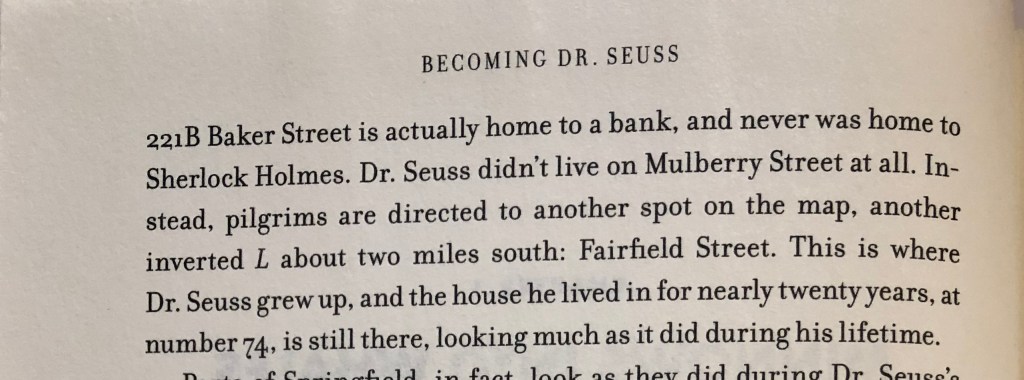
The opening paragraphs of Becoming Dr. Seuss, however, actually came about relatively early in the process, when I was still thinking about how to frame the narrative. In fact, they were born in an airport bar in September 2017 as I was coming back from one of my research trips to Dr. Seuss’s hometown of Springfield, Massachusetts. While in Springfield, several locals had laughed as they told me how disappointed tourists were when they pointed their cars toward Mulberry Street, expecting to find the Seuss household preserved there as a relic, much like a visit to Monticello, only to discover he’d actually lived on Fairfield Street, several blocks away.
Sitting at the bar, I unfolded a little map of Springfield I’d printed out, and looked at the locations of Fairfield and Mulberry Street and nearly said aloud to my beer, “I need a map of imaginary locations.”
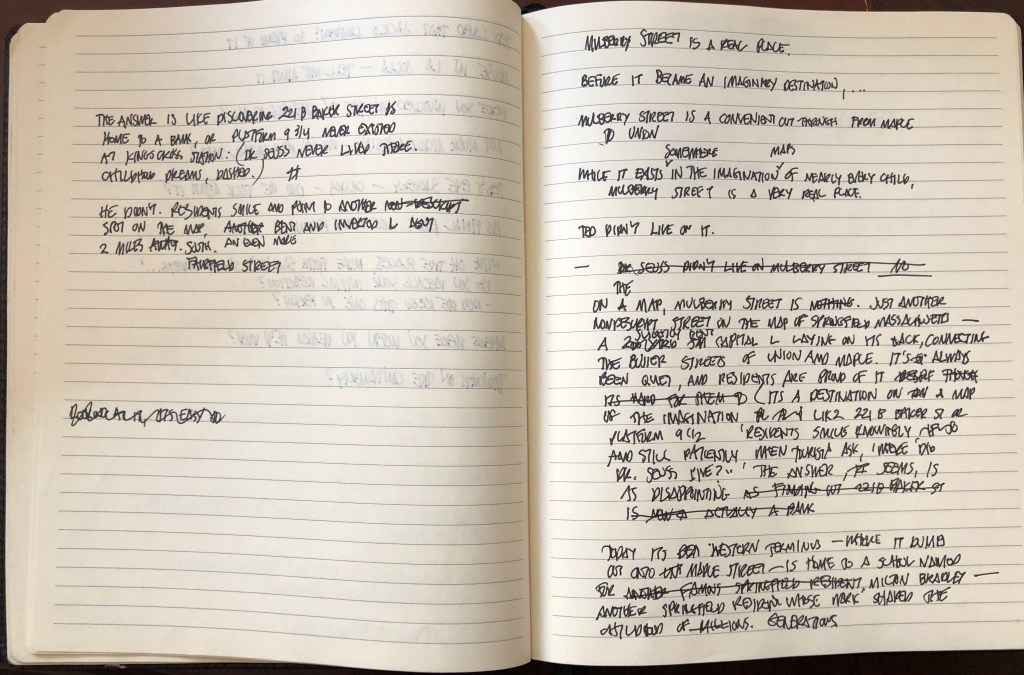
Not the most brilliant of observations, but it was enough of an aha moment that I pulled out a black notebook and pen and started handwriting an opening paragraph wrapped around that idea:
The messy first pass in my notebook.
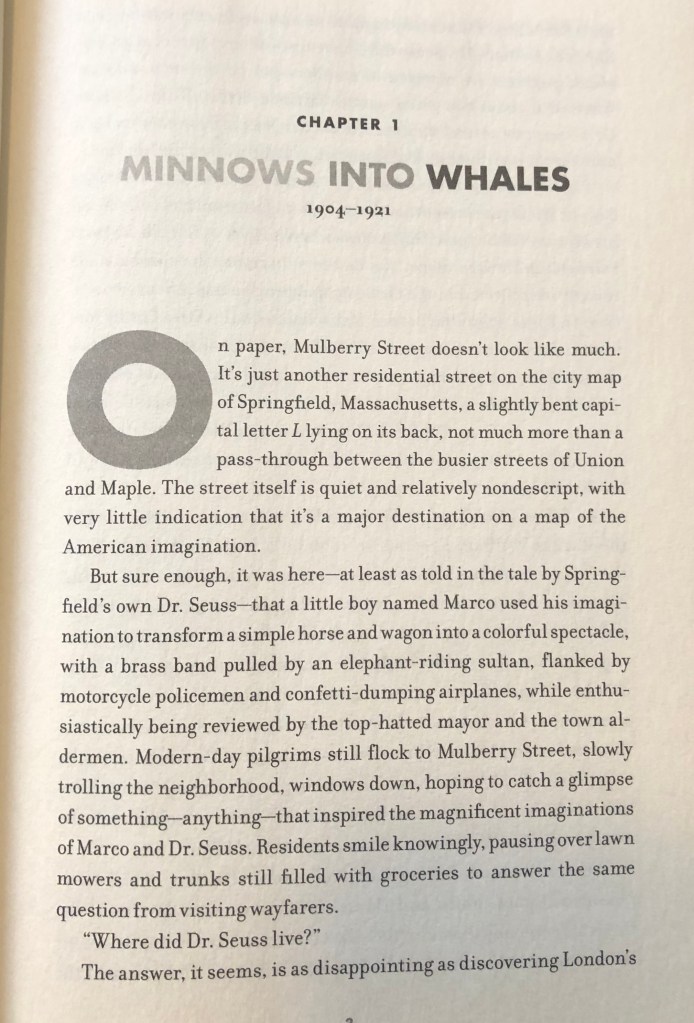
It’s not entirely formed, but it there’s enough to serve as what I call a “guiding vocal”–so that when I sat down to write the opening paragraphs months later, I at least had a good idea of where I wanted to go. Here’s what those opening paragraphs ultimately looked like:
It’s not exactly the same, but you can see the original idea is still there, along with a bit of the language.
Oh, and I should note, too, that I don’t handwrite notes or drafts very much–and looking at it, you can probably see why: it’s a complete mess. I usually write the first draft and then edit right in the Word document I’m using. But there are times when you get sufficiently inspired and need to start noodling around with whatever you’ve got on hand in an airport bar.
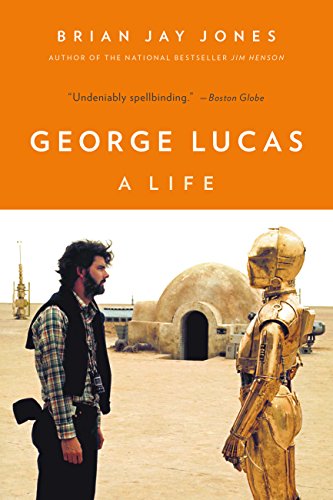
Back in December, I sat down for an extended interview with a Polish journalist to discuss George Lucas: A Life — but we also talked quite a bit about biography, fandom, choosing subjects for books, and the writing process. The original interview is somewhere on the Interwebz, translated into Polish, so I’m posting it here in three parts, and in English (and if my original interviewer wants me to take it down, please shoot me an e-mail).
Here’s part 1. I’ll post the next part shortly.
When I went to see your official website I’ve notice these words: Many Bothans Died To Bring You This Website. I immediately thought: he must be a Star Wars fan so George Lucas’s biography is really in good hands. Am I right? Are you a Star Wars fan?
You’re right indeed. I’m Star Wars Generation 1.0. I was nine years old when Star Wars premiered in theaters in May 1977. I was George Lucas’s target audience. It was a film aimed right at me, and I even remember seeing the preview and what an impact it made on me. My brother and I had all the Kenner Star Wars toys, we had posters, bedsheets, trading cards . . . you name it, we probably had it. Since then, I’ve seen every film in the theater. Star Wars is part of my pop culture nerd DNA.
Lucas created a unique phenomenon in pop culture. I know that for many people Star Wars is not a movie, but a way of life. What does this creation mean for you?
As I said, it’s sort of in my own pop culture DNA, too. However, I’m not one of those fans who can name every planet or spaceship, and I’m terrible when it comes to what’s known as the “Expanded Universe.” But I can geek out pretty hard on the original three. For me, Star Wars is fun and familiar. It’s a mythology that we all feel we own a piece of, and we can discuss it and debate it endlessly. That’s all part of the fun.
George Lucas is one of the most iconic names in pop culture. Was there a moment in your process when you thought it might be too difficult of a challenge? Millions of fans around the whole world will probably analyze every detail in your book, and they sometimes can be scary . . .
Well, fortunately, with Jim Henson, I’d already written about another hugely iconic figure with an equally as devoted fan base, so I knew the dangers of jumping into that particular pool. Still, as I did when writing about Jim Henson, when writing the Lucas book, I’d look at my reflection in the mirror each morning and tell myself “Do NOT mess this up.” Lucas and his work are too important to too many people.
Can you describe your writing process?
I hope people aren’t disappointed when they find out I don’t have some high-tech system for all this – because when it comes to writing and research, I’m horribly analog. I do a lot of archival research, and I still like to make hard copies of everything — whether it’s an interview Lucas did with Starlog in 1980, an article about the SIGGRAPH conference in 1985, or even a Kenner Star Wars toy ad. Then I three-hole-punch the papers and file everything in black binders in my office, usually organized chronologically, though sometimes I do it by topic.
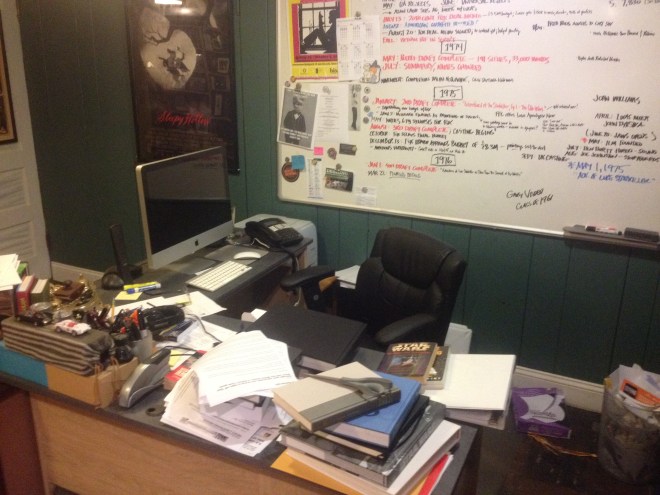
While I’m researching, I type my notes on the laptop, but I still write my chapter outlines in longhand. And then, when I finally write that particular chapter, I write the outline up on a gigantic white dry-erase board so I can see the entire thing, move pieces around, or note other areas I want to make sure I cover.
My process hasn’t really changed all that much over the last decade. It’s horribly messy, I know, and many of my fellow biographers swear by electronic organizers or programs, but it all feels like a forced extra step to me. But as I always tell anyone who’ll listen, the right way to organize your research is the way that works best for you.
Did you meet George Lucas in person when you were writing this book? If yes, can you say something about that situation?
No, I’ve never met him. I’d like to.
I know that readers in Poland would like to know this: Is your Lucas biography only for fans of Star Wars and his other movies? Or maybe normal person who know who he is will also have a blast with that book? Or maybe it is a little bit for both?
It’s for more than just fans of Star Wars or Indiana Jones. Readers might know a little about Lucas, but perhaps not much beyond what he’s done beyond those movies. But Lucas is actually a really big story – he’s the story of modern filmmaking. This book for those who want to know more about the trials and tribulations that go with filmmaking, and how Lucas really kicked down the door for creator-driven films.
It’s also for artists who value the creative process and want to learn how Lucas fought, sometimes painfully, to maintain as much control over his own art as he could. Lucas is all about giving artists what they need to realize their own projects, without interference from meddlers – in Lucas’s case, the Hollywood studios — who, he feels, don’t appreciate the artist.
Finally, it’s also a business manual, about running a company absolutely aligned with your own artistic priorities, investing in yourself and your vision, and resisting the constant appeals to compromise that vision in the name of the bottom line.
I know that sometimes biography books can be boring as hell and you can have an impression that you are reading Wikipedia — that a book can be empty facts without a heart, you know? But your book is different because you read it with fascination. What is for you the most important aspect of biography book? What do want to achieve during your process?
Biography, even more than history and other non-fiction, really needs a great narrative. That often demands great organization of your materials. I often tell aspiring biographers that it’s not just what materials you use, but how you use them. Can you present them in an interesting or dramatic fashion? You don’t want your book to be a textbook or a recitation of facts – that’s a user’s manual, not a biography. What’s the drama in your subject’s life? The humor? The compassion? What did you learn, and how much of yourself will you inject into the narrative? These are all the questions we deal with as we wrestle with telling someone else’s story.
Still, it does amuse me when reviewers and readers complain that a biography or history has “too many facts in it.” That’s almost like the moment in Amadeus when the Emperor complains that an opera has “too many notes.” Just as musical notes are the foundation of opera, facts are the building blocks of biography and non-fiction. I think my job as a biographer is to take those facts and put them in context with each other, see how they relate to the overall story and life we’re telling.
We tend to think of Lucas in silos – “he did Star Wars and then he did Empire Strikes Back and then he did Raiders of the Lost Ark” — but real life is never actually that neat. Lucas was juggling lots of projects all at once all of the time. He was building a company and producing one movie and developing another one, all at the same time. The man is constantly in motion, and I wanted readers to see Lucas in that light.
Up next: The Empire Strikes Back! (yay!) The Star Wars Holiday Special! (yay?)
Over at the Washington Independent Review of Books, my colleague Charles J. Shields discusses the art and craft of research in biography—from rooting through personal belongings and private letters and papers, to rummaging through newspapers and digital archives. Has the rise of the internet and online sources made it easier to research a life? Or has it merely made for more “I Wake Up Screaming” moments?
Charles discusses it all with his usual good humor (and a really great headline), and picks the brains of other biographers—including, I must humbly admit, yours truly. But don’t let that stop you from reading it. Go get it — and there’s more to come, so stay tuned.
That’s biographer Robert Caro, one of my all-time favorite writers, in the pic above, standing in the New York office where he does all of his writing. Does a writer’s space need to be ritzy? Does it need to be crammed with bookshelves or filing cabinets or piles of notes? Nope. It just needs to work for him. Considering Caro’s won the Pulitzer twice, I’d say this space has done its job.
Caro does his writing on an old Smith-Corona 210 typewriter, which you can see on his desk just right of center. I don’t envy him that–I haven’t had to use a typewriter since 1984, and while I love the way they look, I don’t really miss using one–but I do love that he’s a notebook and binder type of guy.
I’m often asked how I organize my notes and resources, and which computer program I use to keep things straight. I keep hearing the merits of a program called Scrivener, where you can use a virtual bulletin board and Post It notes and outlines to keep everything straight. Thanks, but no thanks — I like to use actual paper, notebooks, Post It notes, and journals. It’s a mess, but so far, it works for me.
And that’s why I love this picture of Caro. His office is a place that works — a reflection of Caro’s own work ethic (he wears coat and tie to his office every day, to remind himself that writing is his job and that he’s there to work). Perhaps a visitor to the office might not be able to find anything, but that doesn’t matter. He doesn’t have to.
Caro has his own order to things. There’s a method for shelving his books (as he told Newsweek, general non-fiction on the post-Cold War is farthest away from his desk, while those on his subject are closest). The binders crammed with his interview transcripts and notes are stacked in an orderly manner by oldest to newest. And I love those pages tacked to the wall behind him: a gigantic outline, mapping out Caro’s progress from book one of his biography of Lyndon Johnson, through his still unfinished fourth volume.
A mess? Maybe. But it’s Caro’s mess — and he knows every inch of it. “I trained myself to be organized,” Caro explained. “If you’re fumbling around trying to remember what notebook has what quote, you can’t be in the room with the people you’re writing about.”
Welcome to the official website of Brian Jay Jones - that’s me, the writer and biographer and not the dead Rolling Stone. Or the live aeronaut. Keep trying.
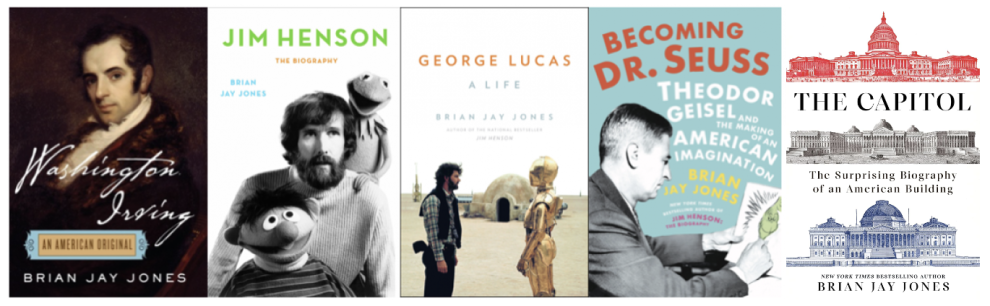


 Yup, it’s still a mess.


 Brian Jay Jones