Scott, Stink, Skelter, and ScreamTV

Naw, it’s not the Four Horsemen of the Nerd Apocalypse; it’s just screenwriter, director, Friday the 13th novelist, comic book writer-and-drawer, and good pal Scott Phillips (“the other one,” he says) being interviewed over at ScreamTV.net, where he talks about writing, killer hippies, filmmaking on a budget, Kamen Rider, and why ComiCon doesn’t suck, in spite of the commercialism.

Scott’s a talented fellow and one of the funniest guys I know (check out his latest comic, Drawtard), but he’s also quick to dispense with steaming buckets of good advice like this:

And if you’re one of those people who says things like, “If I just didn’t have to work my day job, I could get so much done,” stop making excuses and start DOING STUFF. When I was younger, I worked a physically exhausting job installing gas pumps and underground tanks, came home, washed the gasoline off myself, then sat down and wrote. Put away the videogames and write a script or make a movie. I know some very talented people who talk all the time about the various projects they want to do, but they never get off their asses and work on anything. Talent is great, but it doesn’t mean as much as determination and discipline, in the long run.

Check out Scott’s interview right here, and visit his webpage by diving in here. While you’re at it, order Scott’s latest film, Gimme Skelter, or at least Netflix the thing, for cryin’ out loud.

Booze Up and Riot!

In no particular order — and for no particular reason (I’m not even in a bad mood!) — here are Things That Bug Me:

* Child Actors Who Shout Their Lines.

Shouting your dialogue does not make it funny or more entertaining. Yes, I am talking to you, Cole and Dylan Sprouse from The Suite Life of Dumb and Dumber. It didn’t work for Larry Mathews from The Dick Van Dyke Show, nor for Christopher Olsen from The Man Who Knew Too Much. Cut it out.

* Debit Card Readers That Ask Too Many Questions

You know what I’m talking about. You’ve waited in line at CVS for twenty minutes just so you can buy a lousy Coke Zero. You get to the register, swipe your card in the card reader, and punch in your four digit code.

Want cash back? the machine asks.

You push the button for “No.”

>Total is $1.59. Is this okay?

Yes.

>Are you sure?

Yes.

>Are you REALLY sure?

YES.

>Cuz I can do this over again. Want to start over?

NO!

>Are you sure?

YES, GODDAMMIT.

>Is that, ‘Yes, I’m sure I want to start over?’ or ‘Yes, I’m sure I don’t?”

Wait, what? CANCEL! CANCEL! *mashes keys with palm*

>HA HA HA CARD READING ERROR PLEASE SWIPE AGAIN

Repeat.

* Learning That Wonderfully Crappy 80s bands like Loverboy, A Flock of Seagulls, Bananarama, and Men Without Hats, are “Back In The Studio Working on a New Album.”

Trust me, Haircut 100, no one is really all that excited about your new songs or a new album. Just sing “Love Plus One,” collect your check, and move on.

* Getting DVDs From Netflix That Skip

This is happening more frequently as Netflix gets more and more popular. Really, there can’t be that many people renting The Pacifier, can there? Then why does each disc show up looking like it’s been used in an Ultimate Frisbee competition? And why does every defective disc seem to stop working right as the movie approaches its denouement? I need closure, darn it.

* The Phrase “Whole ‘Nother.”

The word you want is “another.” That’s it. You say, “that’s another topic,” and not “That’s a whole ‘nother topic.” I know, I know — it’s sorta dropped into the vernacular. But that doesn’t mean it doesn’t drive me crazy.

And while we’re on the subject . . .

* Talking Heads Who Repeatedly Use The Phrase “Drank The Kool-Aid”

I’m not a fan of this phrase to begin with, but Anderson Cooper must have said it 200 times during the Democratic convention — and the more he used it, the more his co-anchors followed his lead and dropped it into their own comments. Enough already. After ten references, it just sounds dumb.

* Those Weird Infomercials That Use Sets Resembling Larry King Live

Have you seen these yet? They’re usually for get rick quick schemes or dietary supplements, and the producers of the infomercials have very cleverly decorated the set to resemble a somewhat generic Larry King Live set, complete with the colored dot map in the background, the curved interview table, and the big microphones. Like we’re gonna be fooled into thinking Larry King wants to discuss the value of coffee enemas on his show.

Oh. Wait.

The Trophy Room

Does anyone here really follow the sage advice “Never read your reviews?” It’s advice nearly as old as the printed word itself (“Gutenberg! Put down that copy of Ye Kirkus Reviews, and don’t believe a word they say about ‘making religion too common…’!”) and while many writers over the centuries have both dispensed the advice and claimed to follow it, the truth is, most of them read their reviews with a devoted fervor. Just like we do.

Do you keep them, though? I’ll be the first to admit to being a packrat and collector — while I finally threw out copies of articles I’d written for my college newspaper, I still have copies of an old Batman fanzine I wrote for back in the late 1980s — but when it came to reviews of my own work, I wasn’t sure how I was going to feel about them. At the very least, I was going to clip them out and save hard copies in a file some place — unless, of course, they were all bad reviews, in which case I would claim I never read them, throw out my laptop, curl up in the fetal position, and suck my thumb.

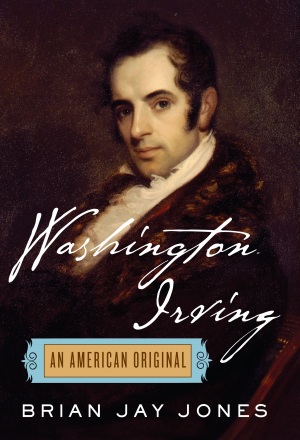
Fortunately, that didn’t happen. But apart from filing it away, what do you do with a good review? Within weeks of its release, Washington Irving was featured in the “Required Reading” section of the New York Post, and I was so thrilled, I printed it out and framed it. Then came a positive review from the Associated Press. Great, that goes on the wall, too. The New York Times? You bet. The Washington Post Book World? And it was on the cover? Absolutely.

I’m torn about it, though. Because while I’m a packrat, I’m not, for example, one of those people who ever hung up my college diploma. The Big Official Certificate I received when I was awarded a Presidential Scholarship sits in a manila folder in a box in the basement. Even letters I received from several Senators thanking me for help on one piece of legislation or another are languishing in a cardboard box. I treasure them all, certainly, and they’re all saved and valued as important mile markers on the road of my life. While I never put them out on display, neither could I bring myself to throw them out.

I hope, and think, my approach to reviews — both good and bad — will be similar to that of our next door neighbor, a feisty New Zealander, who is not only one of my favorite people in the world, but also happens to be a first class rock and roll drummer. Since the early 1970s, he’s recorded and toured with the best, and he was the drummer of preference for Eva Cassidy, a dynamite, up-and-coming jazz singer who died too young in 1996.

One evening, while Barb and I were enjoying a terrific dinner at his home with him and his wife, I excused myself to use their downstairs restroom, a small half-bath only slightly larger than a closet. And there on the wall of this little bathroom was a gold record he had been awarded for playing drums on Eva’s Songbird album.

A gold record.

In the bathroom.

That, more than anything, should help us all keep things in perspective. That gold record was a beautiful reminder of something he had accomplished — but, as our friend always points out, that was all part of his past. He was proud of it, but was still moving forward.

Reviews and awards are nice — and, I would argue, important. But they’re also a tribute to your past. I’ve looked at mine on the walls for the last half year. But when I move to my new office space, I’ll likely put most of them (most of them) in a drawer, close it with a satisfied bang!, and start typing away on the next project.

How about you? What do you do with reviews and clippings?

Bill Melendez (1916-2008)

If you love Charlie Brown, you loved Bill Melendez. But you probably didn’t know it.

Back in the 1960s, when it came time to turn Charles Schulz’s hyper-successful Peanuts comic strip into the animated cartoon that would eventually be called A Charlie Brown Christmas, animator José Cuauhtemoc “Bill” Melendez was the man hand-picked by Schulz for the job. Taking Schulz’s almost impossibly simple lines and turning them into moving images was tough, but Melendez — who had cut his teeth at an upstart animation studio called Disney in the late 1930s — figured out the mechanics of making the images work.

“Charlie Brown has a big head, a little body and little feet,” Melendez told the LA Times in 2000. “Normally, a human takes a step every 16 frames — about two-thirds of a second. But Sparky’s [Schulz’s] characters would look like they were floating at that pace. After several experiments, I had them take a step every six frames — one-fourth of a second. . . . It was the only way that worked.”

Melendez’s fingerprints were all over the first Peanuts television specials — as well as the first full-length film, A Boy Named Charlie Brown — giving initially-skeptical studio heads confidence in the characters as a viable animation franchise. More importantly, Melendez gave life to characters that had previously existed only on the comics page, and created some of the most influential, and iconic, bits of animation in popular culture. (Listen to the jazz riff “Linus and Lucy” from A Charlie Brown Christmas and see if you can do it without immediately thinking of various characters dancing goofily, shoulders out, heads lolling from side to side. You can’t, can you? I’ll bet you even did those dances yourself.)

Technical prowess aside, Melendez also gave voice to Snoopy, providing him with the now-familiar groans, yips, and laughter.

Bill Melendez died on September 2, 2008, at age 91.

Good grief, indeed.

Into the Homestretch . . . But Still A Mess

From the Thanks for Asking! Department, we’re still in the process of installing the geothermal system, so we’re not yet basking in the luxury of indoor cooling — but we’re getting there. Two 350-foot wells have been drilled and a loop of black tubing has been run down each, then grouted into place inside each well. The two open ends of each black tube are now sticking out of each well, ready to be tied into the main system. And as you can see, it’s a complete mess:

That gray sludge you see is pulverized bedrock — which, once it mixed with the bit of water that came out of the ground, has now taken on the consistency of putty. At the moment, walking across this section of our yard is like walking on a waterbed. I’ve been assured that all this yucky stuff will be scraped off and buried in the trench that will connect the wells with the house.

Speaking of messes, our HVAC crew is doing yeoman’s work in removing the old boiler-based system from the house. The 80-year-old boiler — which was too heavy for me to remove from the basement myself — has been expertly dismantled and hauled away, and now the 4-year-old replacement boiler has also been disconnected and is waiting to be shipped to the Great Scrap Iron Heap in the Sky:


All that other junk in the background? Also stuff that came out of the boiler room. Yup, it’s gross.

The rest of the work is scheduled to be completed early next week, and the system should be fired up by mid-week. I’ll keep you posted.

I Love This Town!

Can it really be post-Labor Day already? Weather-wise, it doesn’t seem like it — although we’ve been blessed with cooler temperatures in Maryland for most of the summer, more heat is on the way, and the lack of rain has turned every yard in town a crispy brown. Still, it won’t be long before the flowers start to fade and trees start to shed.

In our neck of the woods, though, Labor Day marks more than just the start of the turn toward autumn; it’s also the beginning of the drop in tourists and out-of-town visitors that make Washington, D.C. such a mess during the summer. Suddenly, public parking lots near the monuments are empty. The Smithsonians look like abandoned, though perfectly-preserved, warehouses, giving you lots of time to stroll and read every sign. The Metro is all but deserted, giving you room to spread out and lay your bags or the newspaper in the seat next to you.

Barb, Madi and I went into the District on Saturday evening — not yet Labor Day at that time, I know, but the crowds were already down — for a leisurely walk through the Ripley Gallery, where there’s a terrific exhibit on the works of Jim Henson, and a slow stroll through the Natural History Museum, where there was a nature photo exhibit Madi wanted to see. After dinner at the DC Hard Rock Cafe (where we sat below a large frame holding . . . well, somebody’s bandana, we were never sure whose…), we then walked the west end of National Mall to visit some of the sites as the sun was going down.

It was dusk as we stood on the steps of the Lincoln Memorial, with a slight haze as the heat of the day burned off. Looking east from the steps, here’s the view we had:


And then this, directly behind us:


I love this town.

Roasted!

I’ve stepped away from Literary Conceits today to take a seat on the dais over at Book Roast, where they’re giving me a Sinatra-esque basting, but without tuxedos or the drinks. So bring your own.

The rules are simple: I’ve selected a short excerpt from the book (and given that two of the books featured this week were The Debs and Tan Lines, I decided to go with a bit of Irvingesque romance), which you will read, and then answer three questions, provided by my host and roastmaster Stephen Parrish.

I’ll be punching in from time to time to see what you’ve got to say, and to take an occassional poke back. And if I think you’re the funniest, cleverest, or smartest person in Puppetland, you’ll win an inscribed copy of Washington Irving: An American Original. I have a copy here on my desk, all ready to go, and I reeeeeally hope the winner’s name is Mike Tibbits, because that’s the name that’s already inscribed in the front of the book.*

What are you waiting for? Click here to join in on the fun.

A special thanks to Stephen Parrish for serving as my host and roastmaster. Stephen’s a good chap, not to mention a funny guy, so I won’t mention it. Stephen’s top-notch blog is right here.

* No, not really. It’s a brand new book, I promise.

Sleestak! Pakuni!

The latest from the Hollywood Messes With Another Childhood Memory Department: the Land of the Lost remake is officially underway, with Will Ferrell in the lead role of Will Marshall. In this new version, the Will and Holly rounding out the Marshall, Will and Holly triumvirate will be adult companions of Will Marshall, and not his children. Way to blow the initial conceit, Hollywood. Yeesh.

As a kid, Land of the Lost was one of those shows I adored. What’s that you say? The dinosaur was clearly a puppet? The waterfall was Tidy Bowl blue? The Sleestaks had seams at the necks? The acting was Shatneresque? None of it mattered; we accepted it all without question, and my brother and I tuned in dutifully every Saturday morning, that magical day of the week when television was just for us. We shuddered when the Marshalls tiptoed up to the Sleestak temple (or, better yet, battled Sleestaks in a pit filled with dry-ice-fog), scratched our heads at the Three Stooges-type antics of Chaka and his Pakuni brothers, and cheered when Will and Holly finally figured out how to get Dopey the Brontosaurus to tow a cart. And we couldn’t wait for that moment in every episode when the Marshalls would ram the “flyswatter” — a gigantic shaved tree trunk — down the throat of Grumpy, a raging T. Rex, knowing full well that he would be back next week for the same abuse. Brain the size of a walnut, indeed.

In the afternoons, my friend John and I would play Land of the Lost in his enormous sandbox (I always insisted on being Will), and the neighborhood kids would debate the question of why the Marshalls didn’t simply look for the waterfall and climb back to the top.

Still, while Land of the Lost was great, there was always something somewhat creepy about it. With its lost cities, shimmering pylons (where there was a foggy doorway leading back to our world, if you could juuuust figure out how to make the crystals work), and vaguely threatening music, there was always this sort of sinister undercurrent running through the whole thing, as if something dangerous were about to happen at any moment.

I had the opportunity to watch the first few episodes of the first season on DVD a while back, and, to my surprise, not only does the show still hold up (for what it is), but that same sense of creepiness is there — only now I understand what they were up to a bit better than I did at seven years old. With science fiction writers like David Gerrold, Ben Bova, Larry Niven, and Ted Sturgeon contributing scripts, the show had a surprisingly sophisticated mythology (remember Enik’s backstory?) and a weird internal logic. Basically, the Land was an alternate, closed universe that doubled back on itself — in other words, keep walking in one direction long enough, and you’ll end up back where you started. Truly bizarre.

Land of the Lost lasted only three seasons (from 1974 to 1976). Every kid on my block watched every episode with a religious-like devotion, though we all grudgingly agreed the show jumped the shark with the departure of Rick Marshall at the end of season two (we never saw him go) and the introduction of lame-o Uncle Jack for season three.

The Demise of Student Reading: Who’s To Blame?

Over the weekend, in a column in the Washington Post, high school English teacher Nancy Schnog pondered the disturbing finding — which we discussed in this very blog several months ago — that a vast majority of high school students don’t read anything for pleasure. In fact, as she points out (citing a report from the National Endowment for the Arts), the percentage of 17-year olds who read nothing at all for pleasure has doubled in the past 20 years. (Schnog’s column, “We’re Teaching Books That Don’t Stack Up,” can be seen here. Registration may be needed.)

What happened? Is it the usual boogeymen of video games, the Internet, and other electronic media? Nope. Schnog lays much of the blame for this backslide squarely on the shoulders of those who share her profession:

…it’s time to acknowledge that the lure of visual media isn’t the only thing pushing our kids away from the page and toward the screen. We’ve shied away from discussing a most unfortunate culprit in the saga of diminishing teen reading: the high-school English classroom. As much as I hate to admit it, all too often it’s English teachers like me — as able and well-intentioned as we may be — who close down teen interest in reading.

Part of the problem, Schnog continues, is that the books selected for the reading curriculum are, to your average teenager, inaccessible, unrelatable, or just plain lame:

I watched this play out last year when the junior reading list at my school, consisting mainly of major American authors, was fortified with readings in Shakespeare, Ibsen and the British Romantic poets. When I handed my students two weeks of readings by William Wordsworth and Samuel Taylor Coleridge after a month-long study of American transcendentalists, it became clear that they had overdosed on verse packed with nature description and emotional reflection. “When will we read something with a plot?” asked one agitated boy, obviously yearning for afternoon lacrosse to begin.

Schnog doesn’t cop out by blaming the requirements of No Child Left Behind; rather, it’s teachers, principals, and school administrators who are out of touch with teens’ tastes and interests. It’s not that teens aren’t interested in reading, or even in reading the classics; what they want to read, for example, is works by Issac Asimov, J.R.R. Tolkien, Neil Gaiman, or Stephen King — the kind of stuff that has traditionally (though unfairly) been poo-pooed by stifflips, but that teens consume faster than toaster streudel.

Think back to your own experience. Even if you considered yourself a hardcore reader in high school, chances are good that many of the books on the Required Reading list left you cold or actively disinterested. I was annoyed by the heavyhanded symbolism of Lord of the Flies, for example, but loved Stephen King’s The Stand. Other classmates of mine, who teachers had written off as hopeless because they refused to read Shakespeare, had no problems soaking up multiple volumes by writers like Stephen R. Donaldson or Piers Anthony.

Schnog concludes like so:

But if we really want to recruit teen readers, we’re going to have to be strenuous advocates for fresh and innovative reading incentives. If that means an end to business as usual — abolishing dry-bones literature tests, cutting back on fact-based quizzes, adding works of science fiction or popular nonfiction to the reading list — so be it. We can continue to alienate teen readers, or we can hear them, acknowledge their tastes, engage directly with their resistance to serious reading and move gradually, with sensitivity to what’s age-appropriate, toward the realm of great literature.

I think she’s right. She’s not proposing scrapping the classics altogether, but balancing them against more modern — and yes, popular — fare. There’s nothing wrong with providing teens with a bit of dessert with the spinach, especially if the dessert is actually good for you.

(Need proof that teenagers can read for pleasure when properly inspired? Go to your local Borders or Barnes & Noble and look at the number of teens — many of them girls — sprawled on the floor in front of the anime and graphic novels sections, poring through volumes the size of small phone books. What’s that? Only illiterates read comics? No, illiterates don’t read anything.)

What A Mess!

We’re entering the homestretch of our HVAC retrofit here at Chestnut Hill, as we continue the work to install a modern geothermal heating and cooling system in our decidedly stubborn 70-year-old house.

Most of the major ductwork has been completed, but ensuring that air could move between the top and bottom floors of an old house meant sacrificing the closet in the downstairs bedroom, which is actually one of the few closets we have in the entire house. As you can see in the picture just above, the return duct is on the left, and the supply is on the right. That leaves about two feet of closet between the ducts and the door — which, I suppose, isn’t all that bad by closet standards. Look closely, and you can see where the shelves lining the walls were ripped out to make way for the ductwork.

The main unit will sit in the basement directly below this closet. We’ve been assured the system we’re installing is whisper quiet. We’ll see. They’re still working this week, finishing up the ductwork in the basement — including in the area where my new air conditioned and heated office will be — and, to our delight, disassembling the old boiler-based system we have squatting in a back room in our basement. I swear, after burning 70 years of fuel oil back there, it’s gotta be a Superfund site. I’ll be thrilled to get the huge 250-gallon holding tank out of there.

But the current mess in the house is nothing compared to the disarray seen to your left. That, my friends, is the well-drilling machinery that will drill two 300-foot wells in our backyard, which will supply the rock-steady temperatures that make a geothermal system work. The thing sits about thirty feet high (you can measure it against the two huge chestnut trees you can see in our backyard just behind it), and the 20-foot lengths of drill bit rotate in, revolver-style, to be screwed onto the end of each bit as it drills itself further into the ground. Yeah, it’s noisy.

As the drill moves into the ground, shale, bedrock and gunk come gushing out — which are then blown through the flexhose you see in the photo into an enormous bin for removal. While the system works well, our yard is already a mess of dust, clay, and mud. Fortunately, the lack of rain here has kept everything dry, so the yard’s not turning into a pigpen. There’s rain in the forecast for later this week, but the drilling is supposed to be completed by Tuesday. Let’s hope.

Messy? You bet. But worth it, if only to get off of the annual 1,100 Gallons of Heating Fuel addiction this house had. Feeling like the junkie who calls his dealer to announce he’s going cold turkey, I called our local fuel company this past weekend to tell them we wouldn’t be needing their services anymore.

“Right,” the woman on the phone said. “That’s what they all say. You’ll be back, you hear me? YOU’LL BE BA–“

I hung up on her, and went outside to look at my wells again, quivering.*

* Dramatization. Actual event may not have happened.