And Laying His Finger Aside of His Nose…

“And the sage Oloffe dreamed a dream–and lo, the good St. Nicholas came riding over the tops of the trees, in that self-same wagon wherein he brings yearly presents to children, and he descended hard by where the heroes of Communipaw had made their late repast. And he lit his pipe by the fire, and sat himself down and smoked . . . And when St. Nicholas had smoked his pipe, he twisted it in his hat-band, and laying his finger beside his nose, gave the astonished Van Kortlandt a very signifcant look, then mounting his wagon, he returned over the tree-tops and disappeared.”

– Washington Irving
A History of New York (1812 edition)
Book II, Chapter V


Odds and Ends

It’s funny, when I started this blog several years ago, I was fairly good about updating and posting — on a good week, I might post three times, sometimes daily.  At the time I was doing the political job by day, while promoting Washington Irving and working behind the scenes on Jim Henson. And I thought, “Man, if I ever get to the point where I can stay home and write full time, I can blog daily! I’ll be a blogging machine!”

Yeah.  Well.  Not so much, sorry.  But I think you’ll thank me in the end, since it means I’m devoting more of my writing time to my current project than to the blog.  Still, that’s not to say there isn’t plenty else going on.  Like for instance:

–  Early registration is already open for the second annual Biographers International Organization (BIO) conference, which will take place in Washington, DC on May 21, 2011.  Home base for the event will be the National Press Club, but conference sessions will also be held at the National Archives and the Library of Congress.  More information — including a tentative list of panels — is available at the BIO website, by clicking here.

– Barb and I attended an absolutely spectacular lecture at the Smithsonian the other night, where we got to listen to Bob Hirst, the general editor of the new Mark Twain Autobiography, discuss Twain’s life, work, and the problems an editor stumbles across when trying to decide exactly what is meant by an “authoritative” autobiography.  To a packed house at the Natural History Museum, Hirst showed photos of Twain’s original typed manuscripts, which had been written on by Twain, corrected by later typists, smudged by typesetters, and revised by previous editors who thought they knew better than Twain how to tell his life story.  Looking at the mess on each page, it was sometimes unclear which corrections were Twain’s — was the slash through a comma, for instance, really his correction or that of a later editor? — which really made you appreciate the hard work, and the detective work, that goes into a project like this.

– This Saturday, we’re attending a showing of A Christmas Carol over at Ford’s Theatre.  It’s one of those things that’s become something of a Christmas tradition with us, in the same way that we always watch Emmet Otter’s Jugband Christmas or A Christmas Story. Plus it’s an opportunity to go see the Christmas trees for each state over at the White House, and the huge tree at the Capitol.  The only wrench in the plan right now is the weather.  It was a whopping 19 degrees this morning here in Maryland, which is not conducive to strolls on the Mall.

– Finally, here’s a really interesting piece on Herman Melville over in the New York Times, courtesy of my colleague — and 19th century historian and fellow political speech writer — Ted Widmer.

The Look

For the past few weeks, we’ve had the hammers flying at our place as our trusty handyman and an excavator have been doing some work on the back of our 1930s-era stone farmhouse, installing new French doors,  filling a ravine, and pouring a patio.  I love watching them make progress — but I also brace myself for the inevitable disaster.  While our house has tons of character, it also has a pesky personality that almost flagrantly defies handymen, carpenters, electricians, and plumbers. 

It was built in the 1930s, and then was added on to several times over the next 20 years.  Consequently, the top floor doesn’t really match the first floor, and the basement is shorter than the upper floors of the house.   There are several short hallways marking where the pre-1950s version of the house ended, and in some rooms, you can see the plaster outline of a removed door — ghostly remnants of the old floorplan.  The first floor in particular twists and turns itself into several nooks and crannies, and we’ve seen more than one carpenter come up the basement steps, take three steps into the downstairs hall, and have no idea where the front door is.

The wiring is purely old school (though apparently incredibly safe and insulated), and the plumbing can often be cobbled together — ironic, considering the town plumber owned our house for fifty years.  All we can figure is he used whatever was left over in his truck to plumb his own house, resulting in the plumbing spiralling its way unnaturally through the walls and floor like a cast iron spiderweb.

In fact, once you’re inside the walls, chaos rules.  We once found a bucket sealed up inside a wall, where it had been used to catch water from a slow leak in a pipe . . . a pipe that had continued to leak for 30 years, until we moved in, found the pool of water and had the problem fixed and the bucket removed.  While redoing another room, we discovered that the previous owners hadn’t bothered to actually run power down one side of the room — instead, they had plugged an extension cord into one corner,  ran it along the inside of the wall for ten feet, sealed up the cord inside the wall, then poked it out a hole, creating — in their minds at least — an instant power socket.

Given all this, we’re used to carpenters, plumbers and contractors giving us what we call The Look

The Look usually shows up when (1) what should be a routine job suddenly becomes unnecessarily difficult due to a previously unseen bizarre jerry-rigging in the house (see the plumbing example above), or (2) an unbelievably dopey fix is discovered (cross reference:  The Bucket In The Wall Solution).  Usually I’ll catch the contractor emerging from the attic or down off a ladder with The Look on his face, shaking his head quizzically, mouth open, ready to ask, “What in the hell?”  All I can do at that point is shake my head in exasperation. “Don’t even ask,” I say, “just fix it.”

For example, several years ago we had a plugged drain in our upstairs shower.  We had lamely snaked it and run gallons of Drain-O down its throat, but it never got much better, so we called a plumber to carry out what we thought would be a routine power-snaking.  The plumber dutifully arrived and squatted over our tub, trying to cram his high-tech snake down the drain, only to find it buckling and bending after about three feet.  Puzzled, he wanted a closer look . . . and couldn’t find any access to the pipes.  A flash of The Look crossed his face, but he calmly decided cut a hole in the ceiling  just below the bathroom so he could stand on a ladder and  tinker with the pipes.

Crisis averted? Not even close.  Once he got a look at the pipes, he discovered that a series of L-shaped pieces of pipe had been welded together, creating an impossible maze of right angles for the snake to negotiate, rather than the sloping U-shaped curves that are normally installed.  To fix the problem and get our water moving down the drain again, then, the plumber was going to have to remove the mess of L-shaped pipes.

Making things even worse — and here’s where we finally got the full-blown Look — the pipes that had been used in that portion of the house were apparently only available between the years 1951 and 1953, making it nearly impossible to attach any modern pipes into the system.  As a result, he had to remove and replumb about sixteen feet of plumbing.  So much for a routine snaking.

Another time, we hired a contractor to come and do something fairly easy: install new insulation in the crawl space that runs along the side of the top floor of the house.  He and his crew stooped and tromped around for a while in our crawl space before emerging moments later with The Look clouding their faces.  Apparently the previous owners had applied insulation not to the kneeling wall, where it actually works, but against the sloping walls of the inside of the roof, where it succeeded only in holding cold air in a pocket against the walls of the house.  Which is pretty much the opposite of what you want to do.  “Don’t even ask,” I told the perplexed crew. “Just fix it.”

We ran into another odd problem during our current slate of projects — we discovered, after removing a bay window, that there was no supporting concrete beneath the structure, resulting in the need to repour an entire patio — but this particular quirk was discovered by our regular handyman, who’s used to such things.  He doesn’t give us The Look any more.  He just points and laughs.

Nonblogging

…and hello again. Sorry to be away so long — in the past week, I’ve been up to New York and back to carry out the first of what I hope are several interviews with Someone Wonderful (or someone “Super Cool,” to quote the adjective I apparently kept using over and over as I spoke with my wife on the phone afterwards) and I’m working now to get my notes organized.

Who was I talking with? While I’m not sworn to secrecy, I’ll just be coy and provide this hint — and add that it was one of the most memorable mornings of my life:

If I don’t see you until then, Happy Thanksgiving.

Thank You.

Somehow, this video seems entirely appropriate for Veterans Day — or, at least, I hope it is. Thank you, all you wonderful ladies and gentlemen, who gave — and give — so much.

Remembering Ted Sorensen (1928-2010)

Ted Sorensen — Presidential adviser, ghostwriter, biographer, and perhaps the finest political speechwriter in modern times — passed away yesterday at the age of 82. There’s a nice piece on him in The Boston Globe right here.

Sorensen — who often joked that his last name would be misspelled as “Sorenson” in his obituary (it wasn’t) — was not only one of the guiding hands behind Kennedy’s famous inaugural speech, but also collaborated on Kennedy’s Pulitzer Prize-winning Profiles in Courage. He was a classy guy who treated his work as a speechwriter and ghostwriter exactly the way one should: when asked which turns of phrase he was responsible for, Sorensen always deferred to his boss —

Is the author the person who did much of the research and helped choose the words in many of its sentences, or is the author the person who decided the substance, structure, and theme of the book; read and revised each draft; inspired, constructed, and improved the work? Like JFK’s speeches, ‘Profiles in Courage’ was a collaboration. . . I know exactly where the credit ultimately lies — with JFK.

Nice.

Sorensen was also one of the first biographers of Kennedy, publishing Kennedy in 1965.

I’m sorry he’s gone, but I’m sure glad he was here.  You probably didn’t know his name or his face, but you definitely knew his words.

Happy Halloween!

Happy Halloween from Muppet Labs!

Yellow Leaves and Red Books

Wow, has it really been more than two weeks since I last posted here?  Sorry to leave you hanging.  Apart from book work, we’ve been enjoying the fall, cleaning up the yard and flower beds, and preparing for Halloween.  Given our schedule this year (including Madi’s incredibly busy volleyball schedule, where’s she’s starting on the varsity squad as a freshman  — yeah, we’re pretty proud of her, too), we won’t make it to Sleepy Hollow for the first time in several years, so we’re decking out our place appropriately, including these two fellows near our back door:

Rest in pieces.

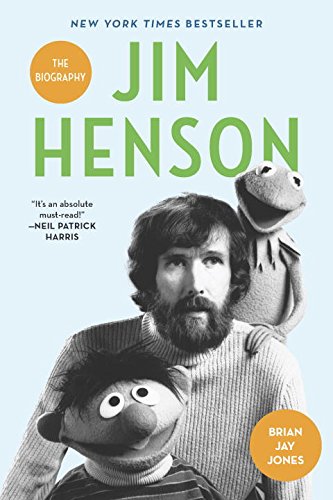
On a different note . . . if you’re a Jim Henson fan and you’re not reading the daily excerpts from Jim Henson’s Red Book . . . well, for shame, Doc, for shame.  What is the Red Book, you ask?  At the end of each year, Jim Henson would go through his personal calendar and write down in his red notebook everything that had happened during the previous year — or, at least, what he thought was interesting.  It’s a fascinating (and, oftentimes, funny) document — not quite a diary, but more than just a simple listing of events. Think of it this way: if Jim were alive today, these are the kinds of things he might put up on a Twitter feed.

Anyway, over at the Jim Henson Company, crack archivist Karen Falk is putting up daily entries — corresponding to actual dates, meaning if today is October 29, then she’ll put up an entry from October 29 — and, where appropriate or helpful, providing a bit of background.

Go get it — and if you’re on Facebook or Twitter, subscribe to it for daily updates. It’s fun.  Trust me.

R.I.P. Carla Cohen (1936-2010)

I was saddened this morning to learn that Carla Cohen — one of the co-founders of Politics & Prose, just about the coolest independent bookstore out there — passed away yesterday at age 74.  The Washington Post obituary is right here.

Politics & Prose — like Powell’s in Oregon — is one of great meccas for independent bookstore lovers.  It’s a place nearly every aspiring author — especially authors of non-fiction — wants to speak, especially on the off-chance that C-SPAN will be there to record the talk for broadcast.  It’s a place that’s unapologetically nerdy and erudite and just a bit eclectic.  Its clientele don’t come in looking for science fiction or romance novels; they want books of wonky politics, literary history, or economics.

I had the great pleasure of meeting Carla Cohen and her business partner, Barbara Meade, when I spoke about Washington Irving at P&P in early 2008.  She cared deeply about books, and even more about readers.  She’ll be missed.

Happy Birthday, John Lennon

You’re still missed. Perhaps more than ever.